



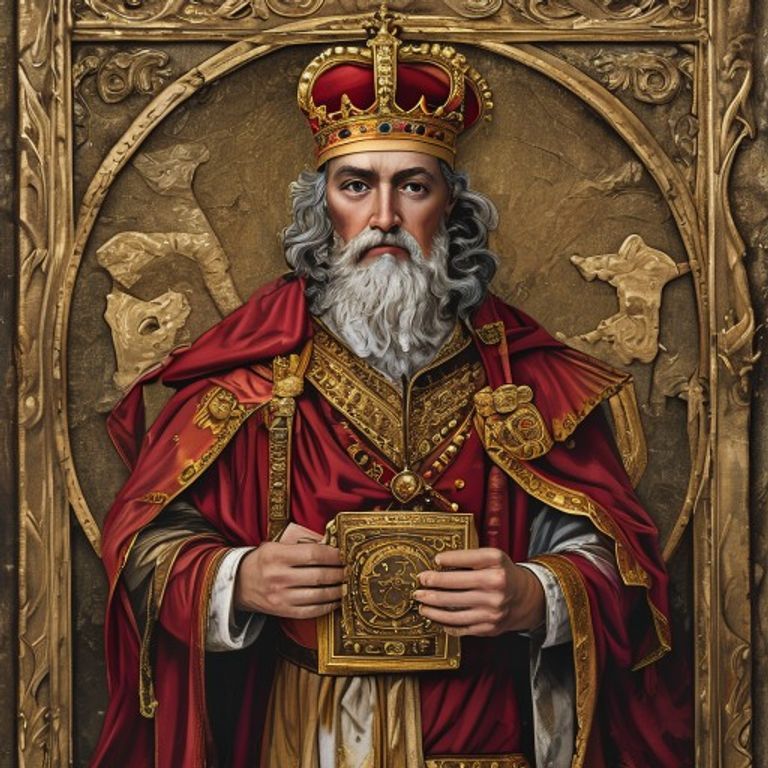
The English royal caravan lost the priceless Crown Jewels in turbulent waters in the thirteenth century, and the exact location of the fortune still frustrates archaeologists.
⚠️ Research conducted with the aid of Deep Research is subject to referential ambiguity.
🖥️Clean HTML code using a proprietary tool.
👥 Research by Guilherme Felipe, Curation by Sílvio Lôbo
The Case of King John's Treasure: An Enigma of Gold and Shadow
The Case of King John's Treasure, one of British history's most persistent and intriguing mysteries, evokes images of lost riches, betrayal, and a trail of clues that disintegrates over time. What began as the disappearance of a colossal load of royal treasure in October 1216 has transformed into a dark fairy tale, fueling speculation for over eight centuries.
1. The Context and the Incident: Gold Stolen by Nature or by Human Hands?
In the turbulent year of 1216, England was embroiled in conflict. King John, an unpopular monarch with serious financial problems, was on a desperate campaign to reassert his authority against the rebellious barons who had invited Prince Louis of France (later Louis VIII) to take the throne. Amidst this civil war, known as the First Barons' War, King John gathered a significant amount of his personal treasure and the kingdom's riches to transport from King's Lynn, in Norfolk, to Newark, where he hoped to reinforce his defenses.
The treasure, which included gold, silver, jewels, and other valuable assets, was loaded onto a large fleet of wagons and pack animals. However, during the crossing of the Wash, a vast and treacherous bay with dangerous tides and quicksand beds, nature intervened brutally. Historical accounts indicate that an exceptionally high and fast tide struck the entourage, sweeping many of the wagons and goods into the muddy depths of the estuary. The loss was catastrophic.
2. Timeline of Events: A Race Against the Tide and Time
- Early October 1216: King John, fleeing rebel forces and gathering his resources, organizes the transport of his treasure from King's Lynn.
- Exact date uncertain (but presumably mid-October 1216): The royal entourage crosses the Wash.
- The fateful incident: A full and violent tide hits the royal entourage while it is in the estuary. Many wagons and animals are lost.
- Immediate consequences: King John manages to reach Newark, but with a significant loss of financial and material resources, which is believed to have weakened his military position.
- King John's Death: On October 18, 1216, King John dies in Newark, possibly from dysentery aggravated by stress and the loss of the treasure. The exact cause of his death is still debated, but the loss of the treasure is often linked to his decline.
- Following centuries: The missing treasure becomes the subject of legends and intermittent searches.
3. The Main Theories: Between the Logic of Nature and the Fantasy of Concealment
Over the centuries, various theories have attempted to explain the fate of King John's Treasure. They range from explanations based on natural events to narratives of elaborate conspiracies.
Theories Based on Historical and Natural Evidence:
- The Undeniable Natural Disaster: This is the most accepted theory, supported by contemporary accounts and the geography of the Wash. The force of the tides in the region is notorious, and a sudden and severe flooding event could easily have swallowed a large part of the cargo and animals, dragging them to the seabed, where they would be buried by sediment over time. Proven facts: The geography of the Wash, accounts of a flooding event, and the tragic fate of part of the entourage.
- Partial Recovery and Concealment: A variation of the natural disaster theory suggests that part of the treasure may have been recovered by individuals who witnessed the event or arrived shortly after. These individuals might have, out of fear or greed, concealed a portion of the wealth, disguising it as lost. Speculation: There is no direct evidence of such large-scale recovery and concealment.
Alternative and Conspiracy Theories:
- The Treasure Stolen by the Rebel Barons: Some theories suggest that the rebel barons, aware of the treasure's route, could have ambushed the entourage before crossing the Wash or manipulated the event to appear as a natural disaster. Their followers might have intercepted most of the cargo. Speculation: The logistical difficulty of such an operation and the absence of reports of direct confrontations at the site do not strongly support this hypothesis.
- Internal Betrayal: Another line of speculation points to the possibility that members of King John's own entourage orchestrated the "accident" to steal the treasure, perhaps in collusion with the king's enemies. Speculation: Without concrete names or evidence of internal conspiracy, this remains in the realm of hypothesis.
- The Treasure Hidden in a Secret Location: Beyond the Wash, legends arose that the treasure, or part of it, was secretly taken to a safe place by order of King John himself or his advisors, to prevent it from falling into the hands of the rebels. Locations such as Castle Rising in Norfolk have often been mentioned. Speculation: No significant excavation or discovery has ever substantiated these claims.
Paranormal and Supernatural Theories:
- Curse or Divine Intervention: In an era where faith and the supernatural played significant roles, some may have interpreted the loss of the treasure as divine punishment or the result of a curse. Speculation: This is a metaphysical interpretation without empirical basis for the context of a journalistic investigation.
4. Controversies and Blind Spots: The Cracks in the Investigation
The main contradiction in the Case of King John's Treasure lies in the scarcity of robust and persistent official investigations. The loss occurred during a period of intense warfare, where survival and the continuation of power were paramount priorities.
- The Absence of a Deep Formal Investigation: Given the urgency of the war, it is unlikely that King John, or his immediate successors, had the resources or time to conduct a detailed forensic investigation into the disaster. The priority was the continuation of the fight against the French and their English allies.
- Fragmented and Second-Hand Accounts: The information that has reached us is largely chronicles written years or decades after the event, often by monks or historians with their own agendas or worldviews. The accuracy of these accounts can be questioned.
- The Mystery of the Exact Location: Despite countless searches over the centuries, the exact location of the treasure, even if buried, remains a mystery. The dynamics of the tides and the constant accumulation of sediment in the Wash make prospecting extremely challenging.
- Does Evidence Endure?: It is possible that if the treasure was swallowed by the sands, most of the physical evidence has been destroyed or permanently buried. Any significant recovery would have to be accidental and under specific conditions, which rarely happens.
5. Curiosities and Legacy: The Echo of a Lost Treasure
The Case of King John's Treasure has transcended its historical context to become a lasting cultural symbol.
- Inspiration for Legends and Novels: The story has inspired countless tales, legends, and adventure novels, fueling popular imagination about lost riches and unsolved mysteries.
- Frustrated Searches and Discoveries: Over the years, treasure hunters and amateur historians have undertaken extensive searches in the Wash and its surroundings, with some discoveries of medieval artifacts, but no conclusive proof of the royal treasure.
- Continued Relevance: The case continues to be a subject of fascination for historians and enthusiasts, with the possibility that new prospecting technologies and underwater archaeological research may one day shed light on this enigma.
- Current Status: The case is effectively shelved in terms of official investigations. However, it remains open in the sphere of public interest and academic and popular speculation. The possibility of rediscovery, though remote, keeps the mystery alive.
King John's Treasure continues to be a somber reminder of how nature, war, and time itself can conspire to erase from the world not only material wealth but also the certainty of historical events. What remains is an echo of gold and shadow, resonating through the centuries, a perpetual invitation to investigation and imagination.





