



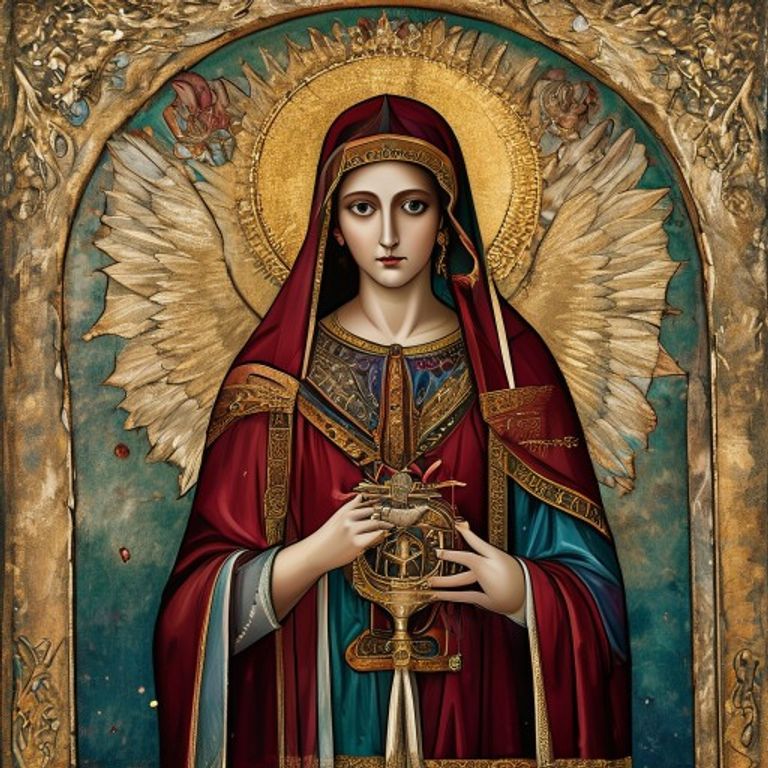
The 1917 event in Portugal where thousands of people claimed to have seen the sun spin and change color following prophecies made by three children regarding Marian apparitions.
⚠️ Research conducted with the aid of Deep Research is subject to referential ambiguity.
🖥️ Clean HTML code using a proprietary tool.
👥 Research by Guilherme Felipe, Curation by Sílvio Lôbo
The Miracle of Fátima: Under the Lens of Investigation
In the hills of Fátima, Portugal, in 1917, an event that defies logic and science unfolded, captivating crowds and sparking debates that persist to this day. The so-called "Miracle of Fátima" is an intricate puzzle composed of visions, prophecies, and a celestial spectacle that, according to witnesses, transformed the landscape and the faith of thousands. As an investigative journalist, I dive into the depths of this mystery, separating what can be proven from what remains in the realm of speculation.
1. The Context and the Incident: Where, When, and How the Mystery Began
The narrative begins in 1916, during the First World War, in a period of great uncertainty and suffering. Three children — Lúcia Santos, aged 10, and her younger cousins, Francisco Marto and Jacinta Marto — were herding sheep in a field known as Cova da Iria, near the village of Fátima. It was in this bucolic setting, yet heavy with global apprehension, that the apparitions began.
Initially, the apparitions were attributed to an "angel" who taught them how to pray. However, the climax of the mystery occurred starting on May 13, 1917, when the children claimed to have seen the Virgin Mary, who presented herself as "Our Lady of the Rosary." The apparitions reportedly repeated monthly, always on the 13th, until October of the same year. The most famous and debated point was the event of October 13, 1917, when the children reported the occurrence of a miracle — the so-called "Dance of the Sun" — witnessed by a crowd that, according to reports, numbered in the tens of thousands.
2. Timeline of Events
A chronological reconstruction of the central events:
- Spring 1916: The children report the first apparitions of an "angel" in the region.
- May 13, 1917: First apparition of the Virgin Mary (Our Lady) reported by the children at Cova da Iria.
- June 13, 1917: Second apparition. The Virgin Mary asks the children to return to the same place the following month.
- July 13, 1917: Third apparition. The Virgin Mary reveals three secrets.
- August 13, 1917: Fourth apparition. The children, detained by civil authorities on accusations of lying, could not attend. The Virgin appears to them in another location.
- September 13, 1917: Fifth apparition. Again, many people report seeing unusual celestial phenomena.
- October 13, 1917: Sixth and last reported apparition. The "Dance of the Sun" event is the main focus, with reports of an unusual solar spectacle.
3. Main Theories
The Fátima case triggered a myriad of interpretations, from those grounded in natural explanations to those delving into the paranormal.
3.1. Scientific and Police Hypotheses
- Atmospheric/Optical Phenomenon: The most skeptical theory suggests that the "Dance of the Sun" may have been a natural optical phenomenon, such as a solar halo, parhelion, or even light reflections on clouds or dust suspended in the air. The suggestion is that the faith and expectation of the crowd amplified the perception of these phenomena, leading them to interpret them as something extraordinary.
- Mass Hysteria and Suggestibility: The atmosphere of faith and the authority of the children, combined with the religious fervor of the time, could have induced a state of mass hysteria. Witnesses, expecting a miracle, would have interpreted any unusual event as a divine manifestation. Mutual suggestion among those present would be a crucial factor.
- Fraud or Deception (basic police theory): Although less sustainable given the apparent spontaneity and the lack of clear benefit for the children, the possibility of an elaborate hoax cannot be completely ruled out in initial police analyses. However, the consistency of the children's accounts and the magnitude of the event make this hypothesis difficult.
3.2. Alternative, Conspiracy, or Paranormal Theories
- Extraterrestrial Apparitions: Some ufological theories suggest that the "apparitions" could have been encounters with spacecraft or beings from another planet, who may have used the religious context to communicate. The visual and luminous nature of the events would fit this interpretation.
- Psychic/Telepathic Phenomenon: The possibility that the children had a profound psychic experience, perhaps shared telepathically with some more sensitive people in the crowd, is another angle. This theory is based on the idea that the human mind can generate perceptions without a direct external physical stimulus.
- Divine Message (Theological Perspective): The official explanation, accepted by the Catholic Church, is that the apparitions were genuine and the Virgin Mary manifested to the children, conveying messages of peace, prayer, and penance, in addition to predicting future events (the "secrets"). This is the interpretation that shaped the sanctuary and devotion in Fátima.
- Control or Manipulation Conspiracies: More conspiratorial theories, often devoid of concrete evidence, suggest that the event may have been orchestrated by power groups to influence public opinion or gain control over the population, using religion as a tool.
4. Controversies and Blind Spots
The investigation of the Fátima case is not free of flaws and gaps, which fuels the debate to this day.
- Contradictions in Testimonies: Although the children (especially Lúcia) maintained the essence of their accounts, small details in different testimonies, collected at different times, could raise questions. The fact that authorities initially detained the children suggests distrust and a flawed initial investigation.
- Ignorance of Potential Clues: There is no clear record of a detailed scientific examination of the area where the apparitions occurred or of the visual phenomena reported on October 13. The lack of rigorous forensic or meteorological analysis at the time is a significant blind spot.
- The "Secret" of Fátima: The three secrets revealed by the Virgin Mary to the children generated speculation for decades. The Catholic Church revealed the third secret only in 2000, and its interpretation is still a subject of debate and different theological views. The delay in the revelation and the different ways it was "interpreted" created a veil of mystery.
- Elusive Physical Evidence: Although many pilgrims claimed to have observed the "Dance of the Sun," the objectivity of the perception is difficult to prove. There are no clear and unquestionable photographic or cinematographic records of the phenomenon itself, only of the crowd's behavior.
5. Curiosities and Legacy
The impact of Fátima transcends the religious, shaping the culture and history of Portugal and influencing millions globally.
- The Sanctuary of Fátima: It has become one of the largest Catholic pilgrimage centers in the world, attracting millions of visitors annually. The Chapel of the Apparitions, built on the site of the apparitions, is the focal point.
- Prophecies and the Papacy: The secrets of Fátima were interpreted by many as prophecies, including the one related to attacks on the Pope. The 1981 assassination attempt on Pope John Paul II was associated by many with one of the prophecies.
- Academic and Scientific Study: Despite the religious nature of the event, scholars and scientists continue to study the accounts and possible explanations, seeking a deeper understanding of the human and psychological phenomenon behind the belief.
- Current Status: The Fátima case has not been reopened in terms of criminal investigation, as the official perspective is that of a miracle. However, the historical, sociological, and psychological analysis of the events remains active, keeping the mystery and fascination surrounding Fátima alive.
The Miracle of Fátima remains a fascinating enigma. Whether interpreted as a divine act, a poorly understood natural phenomenon, or a complex psychological game, the events of 1917 in the hills of Portugal continue to generate reverence, doubt, and an insatiable search for answers.





