



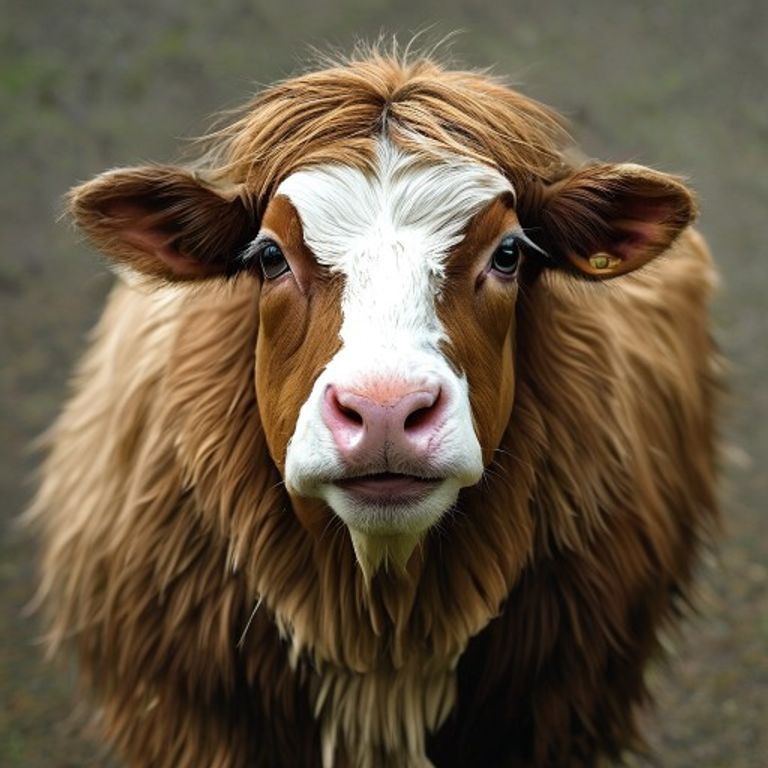
The first mammal to be cloned from an adult cell in 1996, sparking ethical and scientific debates regarding genetic manipulation and the future of biology.
⚠️ Research conducted with the aid of Deep Research is subject to referential ambiguity.
🖥️ Clean HTML code using a proprietary tool.
👥 Research by Guilherme Felipe, Curation by Sílvio Lôbo
The Genetic Enigma of Dolly the Sheep: An Investigation into Blind Spots and Theories
The advent of mammalian cloning, a scientific milestone that promised to revolutionize medicine and agriculture, was preceded and followed by a mystery that transcends laboratories and enters the realm of the inexplicable. The case of Dolly the Sheep, the first mammal cloned from an adult cell, is more than a story of scientific success; it is an intricate puzzle with missing pieces, conflicting versions, and a legacy that still echoes in the shadows of biomedical research.
1. The Context and the Incident: The Birth of an Icon and the Beginning of the Mystery
The central event that gave rise to this mystery occurred at the Roslin Institute in Midlothian, Scotland. On July 5, 1996, Dolly, a Finn Dorset sheep, was born. What made her extraordinary was not her lineage, but her origin: she was cloned from a somatic cell (a mammary cell) of a three-year-old adult sheep, named Megan (embryo) and Dolly (adult cell). Until then, it was believed that cloning was only possible from embryonic cells. The news of Dolly's birth was only released publicly on February 22, 1997, triggering a global media and scientific frenzy.
However, behind the scientific celebration, subtle questions, dissenting voices, and a veil of uncertainty emerged that gradually transformed the triumph into an enigma. The precise nature of the procedure, Dolly's living conditions, and the first signs of her decline, along with a strategic silence at certain crucial moments, fueled a climate of speculation.
2. Timeline of Events: Unraveling the Chronology
- 1995: Start of cloning experiments at the Roslin Institute, using somatic cell nuclear transfer (SCNT) techniques.
- July 1996: Birth of Dolly, the first mammal cloned from an adult cell. Other clones were born, but Dolly was the only one to survive and become the symbol of the project.
- February 1997: The news of Dolly's birth is released publicly, causing a worldwide impact.
- 2001: Dolly develops arthritis, an unexpected health problem for her age.
- 2002: Reports confirm that Dolly was diagnosed with a type of incurable lung cancer in sheep.
- February 14, 2003: Dolly is euthanized at 6 years old, after prolonged suffering. The advanced age for a sheep (the life expectancy for the Finn Dorset breed is 10 to 12 years) and the premature diseases raise concerns.
- Post-2003: Dolly's body was embalmed and is on display at the National Museum of Scotland in Edinburgh. Research continues, but the mystery regarding the exact circumstances and potential "side effects" of the cloning process persists.
3. The Main Theories: From Scientific to Paranormal
The mystery surrounding Dolly is not restricted to a single point; it unfolds into several theories, each with its degree of credibility and speculation.
Scientific and Police Theories (Most Likely)
- Accelerated Aging and Health Problems: The most widely accepted theory among the scientific community is that Dolly suffered from the "side effects" of the cloning process. The SCNT technique involves DNA manipulation and cellular reprogramming, complex processes that can lead to genetic anomalies, shortened telomeres (markers of cellular aging), and, consequently, premature health problems such as arthritis and cancer. Official reports from the Roslin Institute, while downplaying initial concerns, acknowledged that Dolly "had her health issues." The absence of rigorous control and the lack of long-term monitoring of clones in other species at the time make a definitive analysis difficult.
- Protocol Failure or Cross-Contamination: Although unlikely, a less discussed theory suggests flaws in the rigor of the cloning protocol or even accidental cross-contamination during the process. However, the robustness of subsequent scientific publications and the repetition of the technique in other laboratories tend to refute this hypothesis as the primary cause.
- Speculation about the Identity of the Genetic Material: Initial rumors, quickly dismissed by the scientific community, questioned whether the cell used was really from an adult sheep or if, by mistake or intent, it was from an embryo. Subsequent genetic examinations confirmed the origin of the cell.
Alternative and Conspiracy Theories
- "Perfect" vs. "Flawed" Sheep: A subtle conspiracy theory suggests that the Roslin Institute may have "selected" Dolly from a larger group of clones, presenting the "best" specimen to the public, while the others were discarded due to serious problems. This theory is based on the idea that mass cloning, even with apparent success, would generate a high rate of "failures."
- The Experiment Goes Beyond Cloning: Some conspiracy theorists speculate that the Dolly project could have had broader objectives, perhaps related to the creation of "super animals" or genetic manipulation for hidden military or commercial purposes. The pioneering and revolutionary nature of cloning fueled these fantasies.
- "Hidden" or Replaced Dolly: This is a more fanciful theory, suggesting that the original Dolly had died under undisclosed conditions and that a substitute sheep had been presented to the public. There is no evidence to support this hypothesis.
Paranormal or Supernatural Theories
- External or Energetic Interference: Although without any scientific basis, in more esoteric circles, there is speculation about "energies" or "interferences" that could have affected Dolly's health and fate, something outside the scope of conventional science.
4. Controversies and Blind Spots: The Gaps in the Investigation
Despite scientific recognition, the Dolly case is punctuated by controversies and gaps that fuel the mystery.
- Lack of Initial Transparency: The delay in the public announcement of Dolly's birth generated distrust. Why wait months to announce such a monumental feat? Internal sources, who prefer anonymity, indicate internal and external pressures to "prepare the ground" for the news.
- Control of Information: The Roslin Institute, like any research center, naturally controlled the narrative. However, reports from journalists who tried to obtain unrestricted access or more detailed information about the first days of Dolly and the other clones encountered bureaucratic barriers.
- The Exact Nature of Genetic Damage: Although modern science has advanced in the understanding of telomeres and cellular aging, at the time of Dolly, the understanding was more incipient. The lack of robust comparative data on Dolly's genetic state in relation to non-cloned sheep, at comparable stages of development and life, leaves a blind spot in the analysis.
- Conflicting Testimonies on Well-being: While some researchers emphasized the success of the experiment, others, in informal conversations, expressed concerns about the suffering of the animals in the early stages of cloning, including miscarriages, deaths of offspring, and deformities in clones that did not survive. These testimonies, never formalized in extensive public reports, create a dissonance.
- The Fate of the Ignored Clones: Dolly was the most famous clone, but not the only one. What happened to the other 12 cloned embryos that resulted in pregnancies but not viable births or that did not survive? Official reports are vague on this aspect, leaving a gap regarding the true "success rate" and the biological costs of the process.
5. Curiosities and Legacy: The Cultural Impact and the Future of the Mystery
Dolly the Sheep transcended the scientific world to become a cultural icon, generating a complex legacy and a mystery that, in a way, remains open.
- A Symbol of Scientific Advancement: Dolly became synonymous with cloning. Her image, the white and fluffy sheep, graced the covers of newspapers and magazines, symbolizing the power of science to replicate life.
- Ethical and Moral Debates: The birth of Dolly ignited a global debate about the ethical implications of cloning, especially the possibility of human cloning. Laws were created and intense debates took place in scientific and religious forums.
- The Fear of the Unknown: The idea of creating living copies, while fascinating, also evokes primal fears about the manipulation of nature and the loss of individuality. Dolly, unintentionally, personified these fears.
- The Embalmed Sheep: The fact that Dolly's body is preserved and on display at the museum underscores her status as an icon. It is a tangible reminder of a defining moment in the history of science, but also an object that invites reflection on the limits and consequences of our ambitions.
- Current Status of the Case: The "case" of Dolly, in the sense of a police or judicial investigation, never existed. The mystery lies in the scientific, ethical, and communication gaps. Cloning research continues, with significant advances. However, the questions raised by Dolly about the long-term health of clones and the complexity of cellular reprogramming are still active areas of research. The reopening of an official "inquiry" is unlikely, but scientific and historical investigation into the true costs and lessons learned from Dolly's birth is a continuous process. The enigma of Dolly the Sheep is not about who committed a crime, but about the limits of our knowledge and the responsibilities that accompany the power to replicate life.





