



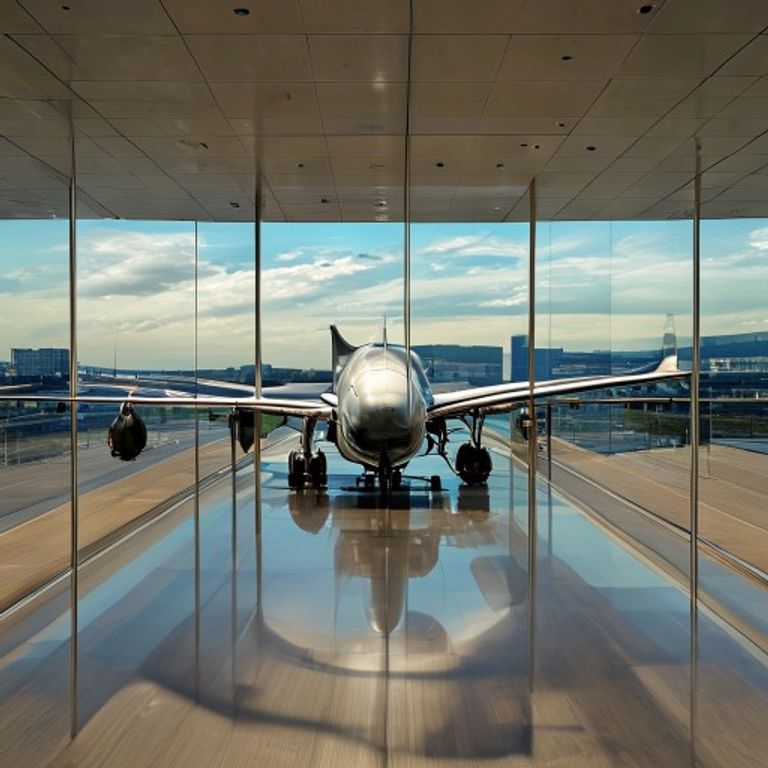
Conspiracy theories regarding the apocalyptic paintings and occult symbols present in the terminal, which many believe point to the existence of a secret bunker for the global elite.
⚠️ Research conducted with the aid of Deep Research is subject to referential ambiguity.
🖥️ Clean HTML code using a proprietary tool.
👥 Research by Guilherme Felipe, Curation by Sílvio Lôbo
The Enigma of the Murals: Unraveling the Unsolved Mystery of Denver Airport
In the heart of Colorado, nestled under an often-blue sky, lies a location that transcends the mere functionality of a transportation hub. Denver International Airport (DIA), inaugurated in 1995, is more than just a point of arrival and departure; it is a stage for one of the most persistent and speculative mysteries of our time. Since its inception, the airport has been the setting for an intricate visual and symbolic puzzle, embodied in its so-called "murals." These are not simple decorations, but a complex mosaic of enigmatic images that, for many, whisper secrets about a hidden agenda, future events, and a reality beyond our comprehension.
1. The Context and the Incident: An Underground Legacy
The construction of Denver International Airport, a monumental project that faced numerous delays and budget overruns, was completed in 1995. From the beginning, the airport was designed with a futuristic vision, incorporating architectural and artistic elements intended to impress and, perhaps, provoke. Among the most debated elements are the wall panels, a set of murals painted by German artist Hanns-Peter Gehr, which, from the perspective of many observers, were laden with disturbing and prophetic symbolism. The "incident" does not refer to a single isolated event, but rather to the discovery and interpretation of these murals, which quickly became the epicenter of conspiracy theories and speculation regarding the purpose and true nature of the airport.
2. Timeline of Events: The Threads of an Enigmatic Plot
- 1980s: Planning and design begin for a new airport in Denver, replacing the congested Stapleton.
- 1990s: Construction phase, marked by significant technical and financial challenges. The mural project is commissioned to artist Hanns-Peter Gehr.
- 1994: Some of the murals are completed and installed, generating mixed reactions and, subsequently, skepticism and astonishment.
- 1995: Official inauguration of Denver International Airport. The murals become a point of attraction and debate.
- Late 1990s and early 2000s: Popularization and spread of conspiracy theories surrounding the murals, fueled by the internet and popular culture.
- Subsequent years: The airport administration attempts to demystify the murals, explaining them as generic artistic representations, but the speculations continue to flourish.
3. The Main Theories: Deciphering the Symbols
The complexity and evocative nature of the Denver Airport murals have given rise to a myriad of interpretations, ranging from the mundane to the extraordinary.
3.1. Scientific and Official Hypotheses (Less Likely in the Current Context):
- Literal Artistic Interpretation: The official explanation suggests that the murals depict the history of humanity, the connection with nature, and peaceful coexistence. The images are seen as allegories of progress, peace, and hope.
- Social/Environmental Messages: Some interpret the murals as a commentary on the dangers of war, environmental destruction, and the need for a more sustainable future.
3.2. Alternative, Conspiracy, and Paranormal Theories:
- New World Order (NWO): This is the most widespread theory. The murals are interpreted as visions of a dark future where a global elite establishes an authoritarian regime. Elements such as figures dressed in black with gas masks, scenes of destruction, and occult symbols are seen as premonitions of an orchestrated catastrophic event.
- Illuminati and Freemasonry: Masonic symbols and references to secret societies are frequently pointed out in the murals, leading to the belief that the airport was built to serve the purposes of occult groups. The very architecture of the airport, with its pyramid-shaped roof, fuels this speculation.
- Aliens and Interdimensional Travel: Some interpretations suggest that the murals depict the arrival of extraterrestrial beings, the exploration of advanced technologies, or communication with other dimensions. The figure of the child holding a torch in front of a shadowy figure is seen by some as a harbinger of contact or conflict.
- Genocide and Population Control: Scenes of desolation and figures that appear to be in suffering are interpreted as visions of a future where the world population is drastically reduced, possibly through planned diseases or war.
- Secret Underground Facilities: A persistent belief is that the airport is a facade for a vast network of secret underground facilities, possibly used for military purposes or experiments. The murals themselves would be clues or "messages" about the true purpose of these facilities.
4. Controversies and Blind Spots: The Gaps in the Official Narrative
Despite attempts to rationalize the content of the murals, several inconsistencies and blind spots fuel distrust:
- The Ambiguous Nature of Art: The expressionist and symbolist style of the murals allows for an almost infinite range of interpretations. The artist, Hanns-Peter Gehr, has maintained a relatively low profile over the years, which has allowed the theories to gain strength without a definitive rebuttal.
- Ignored Clues and Conflicting Testimonies: Reports from construction workers who allegedly found tunnels and underground complexes during the work, but were silenced or ignored, are frequently cited. The lack of public access and the low transparency regarding the planning and construction phase add layers of mystery.
- Missing or Inaccessible Evidence: The lack of access to complete project documents and allegations that certain aspects of the construction were purposefully obscured raise suspicions about what may have been hidden.
- The Purpose of Architectural Design: The airport's design, with lines that resemble swastikas from certain aerial perspectives and its bunker-like architecture, is often cited as evidence of an underlying intent beyond the functionality of an airport.
5. Curiosities and Legacy: An Icon of Conspiracy Culture
The "Murals Case" has transcended the boundaries of the airport and become a cultural phenomenon, integrating itself into the popular imagination and conspiracy culture:
- Cultural Impact: The murals have inspired documentaries, books, articles, TV series episodes, and countless online discussions. Denver Airport has become a destination for enthusiasts of mysteries and conspiracy theories.
- Airport Response: Over the years, the airport administration has tried to mitigate the conspiracy fame by launching ironic marketing campaigns and even embracing the mystery in a playful way, such as the installation of a blue horse statue with red eyes that, for some, represents the "Horse of the Apocalypse."
- Current Status: The mural case remains unsolved in the sense that conspiracy theories continue to thrive. There is no official reopening of police investigations, but the mystery is kept alive by incessant curiosity and the search for answers in a place that, for many, holds secrets that go far beyond its flights.
The murals at Denver International Airport continue to be a blank canvas where human imagination projects its deepest fears and hopes. While science and logic seek rational explanations, the enigma persists, fueling the flame of speculation and reminding us that, sometimes, the most intriguing stories are hidden in plain sight, just waiting for an attentive eye to uncover them.





