




⚠️ Research conducted with the assistance of Deep Research may be subject to referential ambiguity.
🖥️ Clean HTML code using a proprietary tool.
👥 Research by Guilherme Felipe, Curation by Sílvio Lôbo
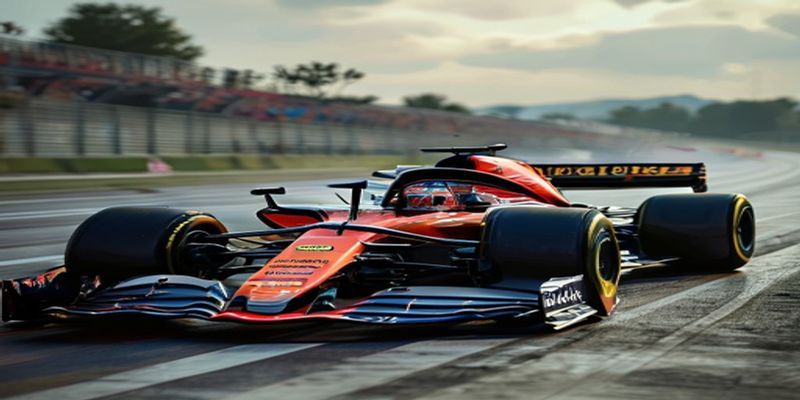
May 1st, 1994: The Imola Tragedy and the Search for the Cause of Ayrton Senna's Death
Today, May 1st, the motorsport world and Ayrton Senna's fans sadly remember the day that forever changed Formula 1 history. It was at Imola, during the 1994 San Marino Grand Prix, that the legendary Brazilian driver suffered the fatal accident that tragically claimed his life. More than two decades have passed, but the search for a definitive answer and a complete understanding of the circumstances that led to that tragedy continue to be subjects of intense analysis and debate.
The Context of the Hellish Weekend in Imola
The Imola weekend was already foreshadowing darkness. On Friday, Brazilian driver Rubens Barrichello suffered a serious accident during free practice, which took him out of the race. On Saturday, during qualifying, Austrian driver Roland Ratzenberger, from the Simtek team, lost his life after a strong impact against the wall at the Villeneuve corner. The atmosphere in Formula 1 was heavy and apprehensive, heralding what was to come on Sunday.
The Fatal Accident: The Moment of Disaster
Ayrton Senna, who had started from pole position, was leading the race when, on the seventh lap, on the high-speed section of the Tamburello corner, his car, the Williams FW16, went off the track and violently collided with the concrete wall. The force of the impact was overwhelming, and the live-broadcast images shocked the world. Senna, critically injured, was quickly attended to and taken to the Maggiore hospital in Bologna, but he did not survive his injuries, being declared dead hours later.
Analysis of Causes: A Complex Puzzle
The investigation into the cause of Ayrton Senna's death was long and exhaustive, involving Italian authorities, engineering experts, and Formula 1 itself. Several theories have emerged over the years, but the main consensus revolves around a combination of factors.
The Mechanics of the Accident: Technical and Circumstantial Details
One of the strongest and most widely accepted hypotheses points to the steering column of the Williams FW16. After the race, it was discovered that the car's steering column had been modified, possibly to improve Senna's driving position, as he had complained of discomfort. This alteration, according to some experts, may have weakened the structure, leading to a mechanical failure. As he entered the Tamburello corner at high speed, it is estimated that the steering column broke or dislodged, causing Senna to lose control of the vehicle.
Another crucial point is the characteristic of the Tamburello corner. At the time, it was a high-speed corner with no significant runoff areas, making any off-track excursion extremely dangerous. Senna's estimated speed at the moment of impact was approximately 300 km/h. The car, after leaving the track, hit the concrete wall head-on and violently. The G-force experienced by the driver, even with the helmet, was immense.
The engineering involved in the investigation sought to understand the dynamics of the accident. Telemetry data from the car, skid marks, debris, and track conditions were analyzed. The lack of aggressive kerbs on the Imola track in 1994 also contributed to the severity of the accident, as they would not have helped to "slow down" the car upon leaving the track.
Legacy and Reflection
Ayrton Senna's death led to profound reflection on safety in Formula 1. The tragedy spurred a series of significant changes in the sport, from the redesign of cars and the introduction of more advanced safety technologies to the reconfiguration of many tracks to offer more runoff areas. The safety measures implemented after 1994 have saved countless lives over the years.
While the exact and definitive cause of the crash may remain subject to nuanced debate, the technical consensus points to a mechanical failure, likely related to the steering column, exacerbated by the characteristics of the Imola track and the car's speed. The death of Ayrton Senna, one of the greatest talents the sport has ever seen, continues to be a painful landmark in motorsport history, a somber reminder of the thin line between glory and tragedy on the track.





