



The Eternal Enigma of the Brown Mountain Lights: A Seven-Lives Mystery in the Heart of North Carolina
Amidst the rolling hills and dense forests of North Carolina, a peculiar phenomenon has intrigued residents, scientists, and mystery hunters for over a century: the mysterious Brown Mountain Lights. This article aims to unravel the layers of this persistent enigma, rigorously separating proven facts from the speculations that fuel its fascination.
1. The Context and the Incident: Where, When, and How the Mystery Began
The stage for this mystery is Brown Mountain, a modest elevation located in the western part of North Carolina, between Burke and McDowell counties. Reports of unexplainable lights dancing over and around the mountain date back to periods before the 20th century, but it was from the beginning of the last century that the phenomenon began to gain national notoriety and attract the attention of investigators and the general public.
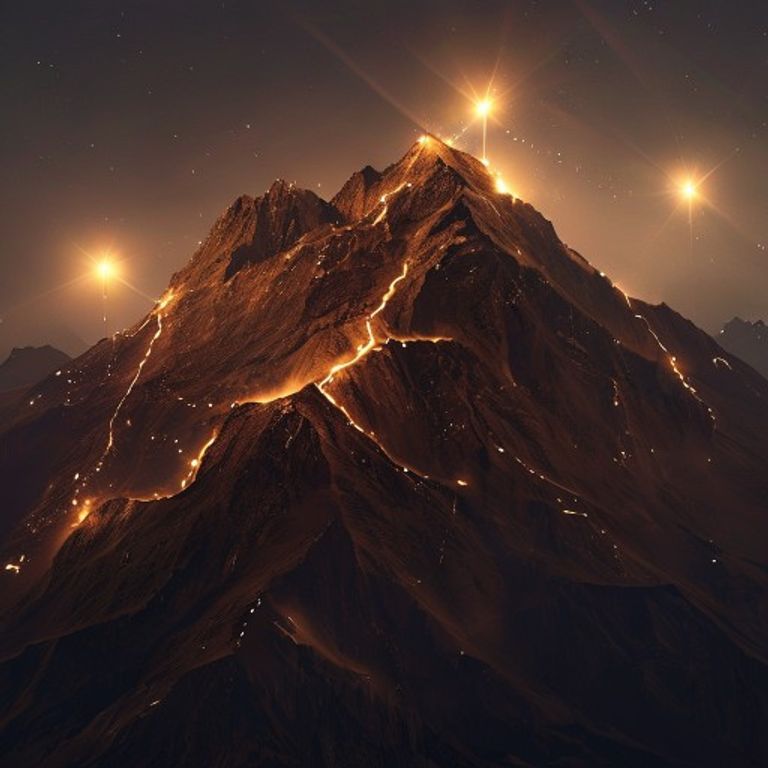
The first detailed reports emerged around 1913, when local and regional newspapers began publishing stories about the "ghostly lights" seen by residents and travelers. These narratives described luminous orbs of various colors – often white, blue, or red – moving erratically, hovering, or crossing the mountainous landscape, without an apparent source or logical pattern.
2. Timeline of Key Events
- Early 20th Century (approximately 1910-1920): First significant reports and widespread dissemination in local media. The legend of the lights begins to solidify.
- 1916: A report from the United States Geological Survey (USGS) investigated the phenomenon, concluding that the lights were likely train headlights or campfires. This was one of the first official attempts at a scientific explanation.
- 1940s-1950s: Public interest and military activity in the region during World War II and the Cold War led to new observations and theories. Reports from military pilots sighting the lights increased speculation.
- 1960s: The United States Geological Survey conducted a new and more in-depth investigation. This time, the research team, led by Arthur J. Doolittle, included more evidence and largely confirmed that the observed lights could be explained by natural phenomena and known human activities.
- 1970s-1980s: A series of articles and documentaries revived interest in the mystery, promoting more esoteric and paranormal theories.
- 2000s onwards: The phenomenon's popularity continues, with Brown Mountain becoming a tourist destination for light observers. New recording technologies and the proliferation of online reports keep the mystery alive.
3. Main Theories
Over the decades, a myriad of theories have attempted to explain the Brown Mountain Lights. They range from prosaic explanations to highly speculative conjectures:
Scientific and Law Enforcement Theories (Most Likely):
- Vehicle and Train Headlights: One of the oldest and most persistent explanations, suggesting that the lights seen are the headlights of cars traveling on the mountain's winding roads or the headlights of trains passing on nearby railway lines. The rugged terrain and altitude changes could create the illusion of inexplicable movement and origin.
- Campfires and Lanterns: Hikers, hunters, or campers in the area could be the source of the lights. Distance and atmospheric conditions could distort the perception of these lights, making them appear larger, brighter, or moving unusually.
- Natural Atmospheric Phenomena:
- Light Refraction and Reflection Effect: Specific atmospheric conditions, such as temperature inversions, can distort light from distant sources, creating phantom images or light spots that seem to appear out of nowhere.
- Ball Lightning: A rare and poorly understood atmospheric phenomenon that manifests as a luminous sphere, which can hover or move erratically. While possible, its occurrence is infrequent to explain all reports.
- Swamp Gas (Will-o'-the-wisp): The decomposition of organic matter in swampy or damp areas can release methane gas, which, upon contact with oxygen, can spontaneously ignite, creating a faint, dancing glow. However, the area is not predominantly swampy.
- Geological Activity: Some speculation suggests unusual geological activity, such as the release of underground gases that could interact with the atmosphere in a luminous way. However, there is no robust geological evidence to support this hypothesis at Brown Mountain.
Alternative, Conspiracy, or Paranormal Theories:
- Alien Spaceships (UFOs): This is one of the most popular theories, suggesting that the lights are artifacts of extraterrestrial technology being explored or passing through the area. The inexplicable nature and mobility of the lights fuel this interpretation.
- Ghosts and Spirits: Local legends often link the lights to stories of spirits, such as those of Native American warriors or Civil War soldiers. The idea is that the lights are supernatural manifestations of these beings.
- Secret Military Activity: The possibility of secret military technology tests, experimental lighting, or even unmanned reconnaissance aircraft has been raised, especially during periods of conflict.
- Portals to Other Dimensions: A more esoteric theory suggests that the lights are indicators of interdimensional or geographical portals that periodically open in the area.
4. Controversies and Blind Spots
Despite official investigations, the case of the Brown Mountain Lights is far from a resolved mystery. Several controversies and blind spots persist:
- Inconsistencies in Official Explanations: Although the USGS reports presented rational explanations, many sightings seem to defy the conclusions. The persistence of reports, even after investigations, suggests that not all observations were adequately explained.
- Ignored Clues: Critics point out that, in some investigations, witness accounts describing luminous behaviors very distinct from those explained were marginalized or disregarded.
- Missing or Poorly Documented Evidence: Over decades of observation and investigations, there are reports that some important photographs, video tapes, or documents may have been lost or not properly archived, hindering retrospective analysis.
- Conflicting Testimonies: The subjective nature of human perception, combined with the factor of fear and excitement, leads to varied descriptions of the same events, making it difficult to establish a consistent factual narrative.
- Lack of Concrete and Reproducible Evidence: One of the biggest obstacles is the lack of irrefutable physical evidence. The lights are fleeting and sporadic, making it impossible for scientists to study them in a controlled environment or reproduce the phenomenon on demand.
5. Curiosities and Legacy
The Brown Mountain Lights have transcended the status of a mere local sighting to become a long-standing cultural phenomenon:
- Cultural Impact: The mystery has inspired countless books, documentaries, articles, and even songs. Brown Mountain has become an icon of North Carolina folklore, attracting tourists in search of a supernatural experience.
- Current Status: The case has not been formally reopened as a "crime" or "police mystery" in the traditional sense, as there is no crime to solve. However, scientific and curious interest remains. Several organizations and enthusiasts continue to monitor the mountain for new appearances.
- The Power of Belief: The most enduring legacy of the Brown Mountain Lights lies in the power of belief and the human capacity to find wonder and mystery in the natural world. Whatever the definitive explanation, the lights continue to ignite the imagination and remind us that there is still much to be discovered and understood.
As scientists continue to seek explanations based on physical and geological laws, the legend of the Brown Mountain Lights persists, fueled by continuous sightings and the inherent human desire to unravel the inexplicable. The mountain, with its dancing lights, remains an eternal invitation to investigation and admiration, a testament that some mysteries, no matter how scrutinized, seem to have a life of their own.





