



Moratorium: a deferral of payment granted by a creditor to a debtor for the payment of a debt.
According to a brilliant summary by Célia A. N. Passoni from Editora Núcleo, the professor comments that the play "A Moratória" consists of three acts, with the stage divided into two planes. In one, a spacious room of an old and traditional coffee farm; in the other, a modest furnished room where, in the foreground, a sewing machine is visible. It is through these two settings that the author manages to convey the present and the recent past. The spectator, in the same instant, through the change of planes, comes into contact with two distinct realities, linked only by the characters. For the sake of the result, the story will be narrated linearly.
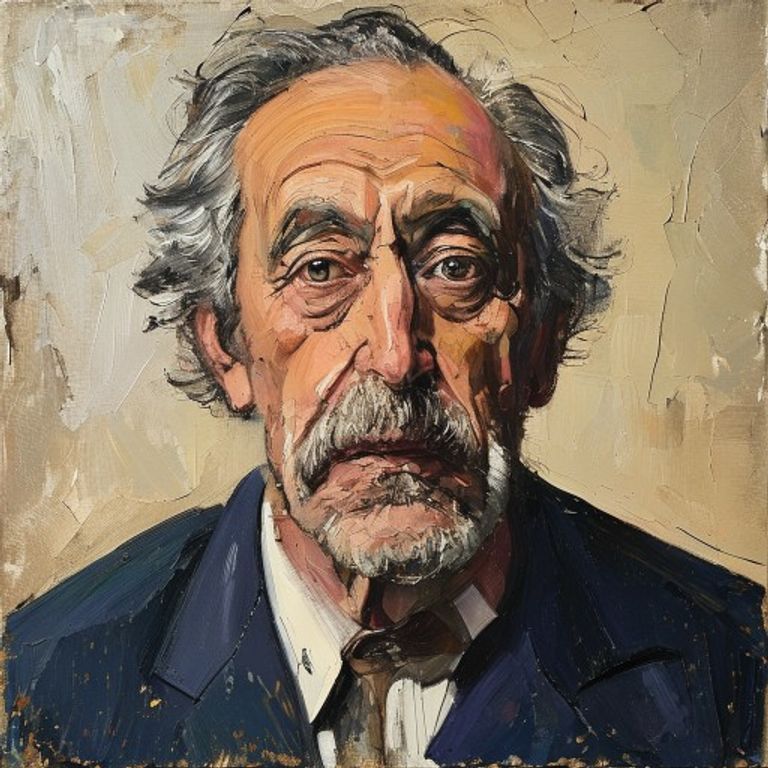
Quim [Joaquim] is a coffee farmer, attached to the land, but ends up ruined by bad business. He is seventy years old and represents the pride of a name, no longer finding support among the citizens of a city that has been transformed by the presence of elements foreign to the traditional caste. Joaquim says: 'I don't know how, my daughter, but suddenly, I felt as if I were alone in that city. It seemed that all doors were closed to me. I didn't know anyone anymore. I sensed that behind the windows everyone was looking at me and... nobody... nobody...' Immersed in his solitude, nurtured by the hope of recovery, he only finds support in his family. His wife Helena is the bravest, she managed to face the situation better, and his daughter Lucília became the family's support, now living off the proceeds of her sewing, as her brother, Marcelo, cannot adapt to any job.
Outside the family are Olímpio, a lawyer, son of Quim's political rival, but in love with Lucília. Elvira, Quim's sister, a rich and 'charitable' woman who gives coffee and other things from the farm in exchange for her niece's 'free' sewing. She has no children and is involved in the assistance given to a nursing home. In this small universe, the characters are placed at the mercy of a cruel fate. Quim, around whom the story revolves, harbors a hope of returning to the farm, which went to auction to pay off debts. The coffee crisis prevented its sale, the bloom was not good; the rain was late, the government did not set a minimum price for coffee, there is no money. All that remains is the hope of recovering the farm, the hope of a moratorium that everyone knows will not come.
Jorge Andrade's work constitutes an act of reflection on Paulista reality in its social, moral, and psychological aspects. The theme of the
decadence of coffee latifundia represents the end of an entire patriarchal and semi-feudal class of aristocrats succumbing to the economic crisis of 1929 and the new social order imposed by Vargas in 1930. At the same time, it focuses internally on the conflict of generations, the conflict of traditional values in a society experiencing rapid change brought about by rural exodus, urban expansion, and elite shifts. Marcelo is the hopeless, maladjusted son, the one who lives in another reality than his father's, the one capable of uttering rude yet true words, pointing out the terrible reality: 'You pretend not to notice that we no longer belong to anything, that our world is irrevocably destroyed... The rules for living are different, rules we neither understand nor accept... everything is different now, everything has changed. Only we haven't.
We are slowly dying here...'
Lucília is an unmarried daughter whose marriage to Olímpio is frustrated by paternal authoritarianism. She does not succumb to her father's dreams and hopes of recovering the farm. It is she who, with strength and conviction, recovers the family's dignity by sewing furiously. It is she who fights for brute reality, protecting her father against the storms:
'If you [Elvira] deserved respect, you would have had a little love for your brother, pity at least. I wish you had witnessed their arrival when they came from the farm. Only then could you understand how much they suffered! With the clock, the paintings, and this... this jabuticaba branch in their hands... they looked like two frightened children, afraid of being reprimanded. Through every gesture, every glance, there was a plea for forgiveness, as if I... I could scold them for anything. Selfish! You are a wicked woman. Father is really good-natured, he has a good heart, otherwise he would have thrown you out of here. What they suffered, you and Uncle Augusto will pay for.'
With simplicity, Jorge Andrade reaches the climax of the play, the hour of revelation and, consequently, the hour when Joaquim confronts the truth/reality, which we, the spectators, have known from the very first moment. The man's pain is overwhelming, and we are united with it by the indescribable capacity of art to make time/space identify with another space/time of the spectator.
[Joaquim returns to the room in the Second Plane and picks up the jabuticaba branch he had forgotten on the table. He leaves again, trying not to look at anything. After Joaquim leaves, the lights in the Second Plane dim little by little until the room is dark.]
FIRST PLANE
Lucília: [First Plane] Certainly, we missed each other.
Helena: I looked for Quim and couldn't find him.
Lucília: He must be with Olímpio.
Helena: I went to the store where he used to go, to church, everywhere!
Lucília: You shouldn't be so upset.
Helena: If only he weren't so violent.
Lucília: We need to let Father protest as much as he wants, and stay quiet. It's his right. Don't think about it anymore.
Helena: [Distressed] You know how Father is, Lucília! How can I not think about it?
Lucília: Nothing will happen, Mother. Calm down.
Helena: He's too old to face these things.
Lucília: All the more reason for us to remain calm. [Impatiently] We can't lose control. That way, he won't suffer so much.
[Returns to censure]
Helena: [Looking at the objects on the table] Wouldn't it be better to put all
this away?
Lucília: Why? Didn't he put it there himself?
Helena: He did, but now... maybe...
Lucília: He will have to see it one day; it's better for him to see it all at once. [Pause]
Helena: My God! Why are they taking so long?!
Lucília: Mother! Be calm.
Helena: [Giving in to despair] I can't take it anymore. I can't take it anymore,
my daughter.
Lucília: [Hugs Helena] Don't worry. Olímpio will know how to deliver the news.
Helena: [Distressed] I'd rather... I'd rather...
Lucília: What? Tell me, Mother.
Helena: I wish Olímpio would lie.
Lucília: No! Enough! Let's face reality once and for all.
Helena: I'm afraid, Lucília!
Lucília: We need to accept it and not think about it anymore.
Helena: A person like your father can't live without hope. And it was the only thing
he had left.
Lucília: [Losing patience] Mother! Please don't dwell on this, for God's sake!
Helena: I can't.
Lucília: Father is a strong man.
Helena: He always wanted to die in the field, like the late Martiniano, and now...!
Lucília: Where could he have gone? Did you go to the bus stop? He goes there every
day.
Helena: You're afraid too, my daughter?
Lucília: [Composing herself] No. He likes to watch the gardeners arriving and
departing for the farms.
Helena: He was there, but... [Stops and becomes very agitated]
Lucília: [Fearfully] What is it, Mother?
Helena: They've arrived!
Lucília: Please calm down.
Helena: Mother of God, pray for us!
Marcelo: [Voice] Sit down, Father. I'll call Mother.
Joaquim: [Voice] No.
[The sound of some things falling to the floor is heard. Lucília stands still, tense, looking towards the corridor. It is evident that Helena continues to pray. Joaquim appears in the corridor, stops, and his eyes are fixed on Helena. He makes a gesture as if to apologize; there is an inexpressible anguish in it.]
Lucília: [Bitterly] Father!
Helena: Quim!
[Joaquim walks to the table and leans against it.]
Lucília: Sit down, Father.
Helena: Quim, my old man! What did they do to you?
Lucília: [Trying to control herself] Father! [Marcelo and Olímpio appear in the
corridor]
Helena: Sit down, Quim. Won't you sit down?
Joaquim: [Trying to be forceful] Why does everyone want me to sit down?
Helena: For nothing, nothing!
[Joaquim, after picking up a rag from the table, sits down slowly. Long pause. Joaquim begins to unravel the rag.]
Lucília: [Advances towards her father] No! Not this! Father! Protest, shout, say something. Don't be like this! Don't be like this,
for God's sake!
Helena: Lucília!
Lucília: That's right. Protest. Protest, Father. You have the right, we have this right. The lands are ours, they have always been ours. No one can take them from us. Father! There is still hope, we'll find a
way; you must not accept it, we
cannot accept it.
Olímpio: [Tries to hold Lucília] Lucília!
Lucília: [Pushes Olímpio away] Leave me alone.
Helena: Daughter, respect your father's suffering.
Lucília: No! I don't want to see my father like this. I don't, I don't. There must
be a way. Olímpio! Say there is. Lie. You have to lie!
Olímpio: Lie how, Lucília?
Lucília: I don't want my father to be without hope. I don't. [Hits Olímpio's chest with her hands] I don't! I...
[Lucília falls seated at the machine, still repeating 'NO'. Little by little, she begins
to sob.]
Joaquim: [Looks at Lucília] I... I don't suffer anymore, I don't suffer anymore, my
daughter. You don't need to be afraid. I... I...
[Lucília can no longer resist and begins to sob violently. Her whole body is shaken by the explosion of despair, and she clings to Olímpio. Olímpio leads her out of the room. Helena walks slowly and stands behind Joaquim's chair; she places her hand on his shoulder. Marcelo sits on the bench.]
Joaquim: [Suddenly distressed] Helena! And my jabuticabas?
Helena: Don't think, Quim, don't think about it anymore. There will be no lack of rain.
Joaquim: [Pause] What month is it?
Marcelo: April.
Joaquim: April! [Pause] The coffee is being ruined!
[The lights dim slowly]
Marcelo: The cicadas' song can no longer be heard!
Joaquim: The dry beans are starting to pod!
Helena: Those who planted... will start harvesting!
[The voices turn into a murmur, and the lights go out completely.]
[Joaquim volta à sala no Segundo Plano e pega o galho da jabuticabeira que havia esquecido em cima da mesa. Torna a sair, procurando não olhar nada. Depois que Joaquim sai, as luzes do Segundo Plano vão diminuindo pouco a pouco até a sala ficar escura.]
PRIMEIRO PLANO
Lucília: [Primeiro Plano] Com certeza, desencontramos
Helena: Procurei o Quim e não consegui encontrar.
Lucília: Deve estar com o Olímpio.
Helena: Fui ao empório onde ele costumava ir, à igreja, a toda parte!
Lucília: A senhora não devia andar assim.
Helena: Se ele pelo menos não fosse tão violento.
Lucília: Precisamos deixar o papai protestar à vontade, e ficar quietas. É um direito que ele tem. Não pense mais nisto.
Helena: [Aflita] Você sabe como é o pai, Lucília! Como não hei de pensar?
Lucília: Não vai acontecer nada, mamãe. Acalme-se.
Helena: Ele já não tem idade para enfrentar essas coisas.
Lucília: Mais uma razão para nos mantermos calmas. [Impaciente] Não podemos se descontrolar. Assim ele não sofrerá tanto.
[Volta á censura]
Helena: [Olhando os objetos em cima da mesa] Não seria melhor guardar tudo
isto?
Lucília: Por quê? Não foi ele mesmo quem pôs aí?
Helena: Foi, mas agora... pode ser que...
Lucília: Ele terá que ver um dia; é preferível que veja de uma vez. [Pausa]
Helena: Meu Deus! por que é que demoram tanto?!
Lucília: Mamãe! Tenha calma.
Helena: [Entregando-se ao desespero] Não agüento mais. Não agüento mais,
minha filha.
Lucília: [Abraça Helena] Não se preocupe. O Olímpio saberá dar a notícia.
Helena: [Aflita] Preferia... preferia...
Lucília: O quê? Diga, mamãe.
Helena: Gostaria que o Olímpio mentisse.
Lucília: Não! Chega! Vamos enfrentar de uma vez a realidade.
Helena: Tenho medo, Lucília!
Lucília: Precisamos aceitar e não pensar mais nisto.
Helena: Uma pessoa como seu pai não vive sem esperança. E era a única coisa
que lhe restava.
Lucília: [Perde a paciência] Mamãe! Não fique pensando nisto, pelo amor de
Deus!
Helena: Não consigo.
Lucília: Papai é um homem forte.
Helena: Ele sempre desejou morrer no meio do campo, como o finado
Martiniano, e agora...!
Lucília: Onde terá ido? A senhora foi ao ponto das jardineiras? Ele vai lá todos
os dias.
Helena: Você também tem medo, minha filha?
Lucília: [Controla-se] Não. Ele gosta de ver as jardineiras que chegam e
partem para as fazendas.
Helena: Ele estava lá, mas... [Pára e fica muito excitada]
Lucília: [Temerosa] Que foi, mãe?
Helena: Chegaram!
Lucília: Por favor acalme-se.
Helena: Mãe de Deus, rogai por nós!
Marcelo: [Voz] sente-se papai. Vou chamar a mamãe.
Joaquim: [Voz] Não.
[Ouve-se o barulho de algumas coisas que cai no chão. Lucília fica imóvel, tesa, olhando para o corredor. Percebe-se que Helena continua rezando. Joaquim aparece no corredor, pára e fica com os olhos presos em Helena. Faz um gesto como se pedisse desculpa; há nele uma angústia inexprimível.]
Lucília: [Amargurada] Papai!
Helena: Quim!
[Joaquim vai até a mesa e encosta-se.]
Lucília: Sente-se papai.
Helena: Quim, meu velho! Que fizeram com você?
Lucília: [Procurando se conter] Papai! [Marcelo e Olímpio aparecem no
corredor]
Helena: Sente-se, Quim. Não quer se sentar?
Joaquim: [Tentando ser violento] Por que é que todos querem que eu me
sente?
Helena: Por nada, nada!
[Joaquim, depois de pegar um trapo na mesa, senta-se, lentamente. Pausa longa. Joaquim começa a desfiar o trapo.]
Lucília: [Avança na direção do pai] Não! Isso não! Papai! Proteste, grite, fale alguma coisa. Não fique assim! Não fique assim,
pelo amor de Deus!
Helena: Lucília!
Lucília: É isso mesmo. Proteste. Proteste, papai. O senhor tem direito, nós temos esse direito. As terras são nossas, sempre foram nossas. Ninguém pode nos tomar. Papai! Ainda há esperança, daremos um
jeito; é preciso que o senhor não aceite, nós
não podemos aceitar.
Olímpio: [Tente segurar Lucília] Lucília!
Lucília: [Repele Olímpio] deixe-me.
Helena: Minha filha respeite o sofrimento de seu pai.
Lucília: Não! Não quero ver meu pai assim. Não quero, não quero. Deve haver
um jeito. Olímpio! Diga que há. Minta. É preciso que você minta!
Olímpio: Mentir como, Lucília?
Lucília: Não quero que meu pai fique sem esperança. Não quero. [Bate com as
mãos no peito de Olímpio] Não quero! Não...
[Lucília caí sentada à máquina, ainda repetindo 'NÃO'. Pouco a pouco, começa
a soluçar.]
Joaquim: [Olha para Lucília] Eu... eu não sofro mais, não sofro mais, minha
filha. Não precisa ter medo. Eu... eu...
[Lucília não resiste mais e começa a soluçar fortemente. Todo seu corpo é sacudido pela explosão do desespero e ela se agarra em Olímpio. Olímpio leva-á para fora da sala. Helena caminha lentamente e vai ficar atrás da cadeira de Joaquim; põe a mão em seu ombro. Marcelo senta-se no banco.]
Joaquim: [Subitamente aflito] Helena! E as minhas jabuticabeiras?
Helena: Não pense, Quim, não pense mais nisto. Não faltará chuva.
Joaquim: [Pausa] Em que mês estamos?
Marcelo: Em abril.
Joaquim: Abril! [Pausa] O café está sendo arruado!
[As luzes vão abaixando lentamente]
Marcelo: Já não se ouve o canto das cigarras!
Joaquim: O feijão da seca começa a soltar vagens!
Helena: Os que plantaram... vão começar a colher!
[As vozes se transformam num murmúrio e as luzes apagam definitivamente.]





