



• About the Characters:
Bentinho: The main character, narrated in the first person, a boy who grows into a man throughout the story.
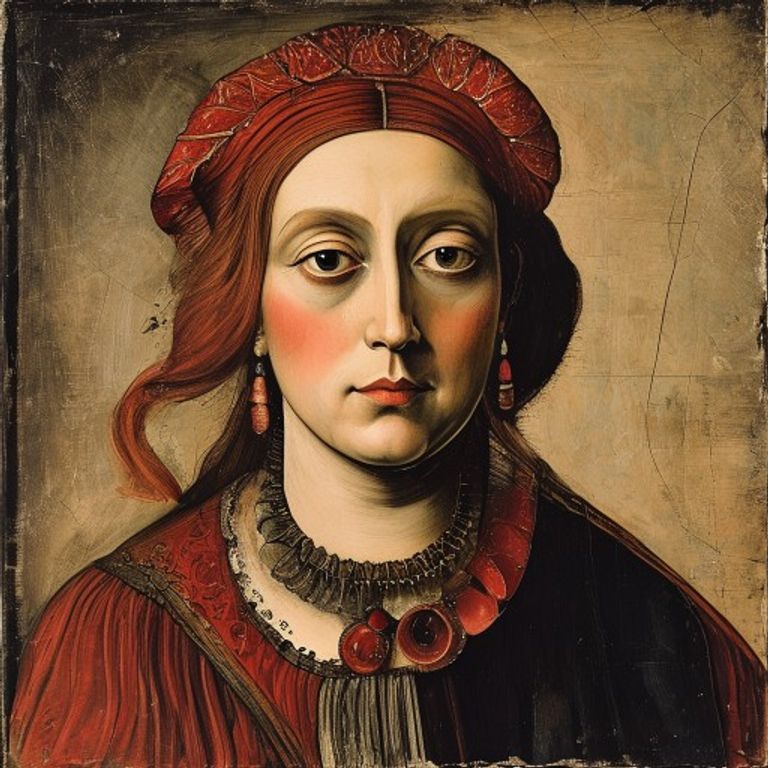
Capitu: Bentinho's muse. She was his neighbor, friend, and childhood companion. The reason Bentinho didn't want to go to the seminary. She eventually becomes his wife. Beautiful and Tempting.
Dona Glória: Bentinho's mother. Loving towards her son and God-fearing.
Uncle Cosme and Cousin Justina: Relatives of Bentinho's mother. They lived in her house.
Serving as her companions.
José Dias: A dependent of Bentinho's family. A fake doctor who, out of gratitude, stayed living with them.
As a companion and handyman. Remaining loyal and devoted to them.
Escobar: Bentinho's best friend, whom he met at the seminary. He becomes a merchant. He marries Capitu's best friend: Sinhá Sancha.
Ezequiel: Bentinho and Capitu's son. Born after many attempts to have a child. He bears this name in honor of Escobar's first name.
• About the Plot:
The plot is divided into 3 parts. Each directly linked to the other. It is about:
1. Bentinho in his home. Before going to the seminary.
Having encounters with Capitu.
Trying to escape the profession of a priest.
2. Bentinho at the seminary. When he meets Escobar. And makes visits to his house every weekend.
3. Bentinho married and some time after the separation. The so-called climax occurs when he marries Capitu, has a son, and begins to suspect that the son is not his.
• Data about the Author and the Work:
Author: Machado de Assis
Work Title: Dom Casmurro
Publisher: Ática
Edition: 32
About the Author: He was born on June 21, 1839.
On December 31, 1899, in Rio de Janeiro, during a New Year's Eve celebration, at the turn of the century, beliefs in change were reinforced, and the fear of the unknown was also crystallized. He was Joaquim Maria Machado de Assis but was known as Machado de Assis, this by 1899.
His life was normal; he wasn't rich but lived comfortably, worked hard, and was respected and famous. As a child, he was poor, the grandson of freed slaves, born on the hill, and from an early age, he experienced the first manifestations of epilepsy. At that time, Rio de Janeiro was different from what we know today; it had gas lighting but only in the center, and the city didn't smell good due to stagnant water, with very precarious transportation for a population of 300,000 inhabitants, half of whom were slaves.
In a society marked by very rigid social divisions, as was the case in Brazil at Machado de Assis's time. His destiny was already marked by race and even by the possibility or not of attending school. Joaquim Maria was a suburban boy, and the intellectual life of the suburbs was very different from the intellectual life of the court. This was what attracted Machado de Assis.
On January 6, 1855, Marmota Fluminense, a newspaper for news, variety, etc., published the poem "A Palmeira." It was just the beginning of Joaquim Maria Machado de Assis's literary debut. The newspaper where the poem was published was a meeting point for writers of the time. He gained patrons like Paula Brito, and his career grew. Soon, Machado de Assis was a member of the editorial staff of Marmota Fluminense, and other newspapers began to publish his works. Machado de Assis, a city man, gradually distanced himself from Joaquim Maria, the suburban boy. In his clothing, his posture, his expression. The literary circles of the Court gradually became a more familiar terrain for him, and he became better known in that sphere. Machado de Assis surprised with a subtly ironic style, which soon became the trademark of his work. Machado de Assis, as a chronicler, wrote for various newspapers, but don't imagine that it was possible to live by writing in Brazil at that time. To survive, he accepted a public job that guaranteed his livelihood. For 40 years, Machado wrote his chronicles. Using everyday stories, the writer reflected on the history unfolding around him. Over time, Machado de Assis worked in various places and wrote several books. Machado de Assis died old from an intestinal infection, with weak eyesight, at 3:20 AM on September 29, 1908.
• About the Message:
The work is a novella, not inherently educational. However, it contains comparative parts with Greco-Roman gods and passages from Shakespeare's "OTHELLO," leading to the conclusion that Machado de Assis didn't just write a novella but a work with cultural content. However, the message the group concluded, in terms of a moral lesson, is "Sometimes don't trust your best friend or a childhood companion," referring to the Capitu-Escobar case.
• About the Style and Setting:
It was a work in the Brazilian Realism literary style. It was set in an upper-middle-class environment at the end of the last century, taking place in Rio de Janeiro. Therefore, regional words were not used; only words used at the time, now out of use, caught attention, but there was no need for dictionaries to read the work because, in addition to having the vocabulary, the words were not too unfamiliar.
• Conclusion
The work was neither entirely good nor bad. It's just a novella that, if written today, could be considered unoriginal. The story of a boy escaping a priestly vocation imposed by his mother and a love triangle are common themes in television programs, which may have been inspired by the work, or perhaps not. Nevertheless, the work has good content because it depicts Brazilian society in the last century.
• Book Summary
The author recounts the life of a boy at the end of the last century, brilliantly narrated in the first person, leaving the reader to wonder if these events actually happened in the author's life.
In the beginning, he explains why he was nicknamed Dom Casmurro. (Casmurro) because people thought he was a quiet and withdrawn man. And (DOM) came ironically to attribute nobility to him. His father was on an old farm in Itaguaí, and Bentinho (Dom Casmurro) was just born when his father was in poor health. By chance, a homeopath doctor named José Dias appeared and cured him. He refused payment, so Bentinho's father proposed that José Dias stay with them, living with a small salary. He left but said he would return in a few months. He returned in two weeks and accepted to live in the house as the family doctor.
His father was elected deputy, and they moved to Rio de Janeiro with the family. José Dias also came, having his room at the back of the property.
His father fell ill again with a high fever. At this point, José Dias confessed he was not a doctor, but he liked homeopathic medicine, and it was a growing science. His father died shortly after. Nevertheless, Bentinho's mother asked José Dias to stay.
His mother's name was Dona Glória. From then on, the story tells that after losing her first child, Dona Glória made a vow that if she had another son, she would make him a priest in gratitude to God. Capitu, who was his neighbor, and Bentinho, still young, used to play at mass, dividing the host, etc. He began to like Capitu without her knowing. He discovered she liked him too when he read "Bento e Capitolina" scratched with a nail on the wall.
For various reasons, Bentinho promised he would pray a thousand Our Fathers and a thousand Hail Marys as a vow. The wishes came true, and the promises accumulated, without fulfilling any of them.
He does everything his mother asks, even becoming a bus driver, but anything but a priest, even though it was a noble career, it wasn't his calling.
Bentinho began to meet Capitu in secret, even risking being seen kissing.
His mother had already decided that Bentinho would enter the seminary with Father Cabral and that he would see his family on Saturdays and holidays. So, it was decided; he would go to the seminary in the first or second month of the following year, with only 3 months left.
Capitu was sad to know he was leaving and feared their love would end. There was still some time before he had to say goodbye and leave. They already made vows to each other that when he returned, they would marry, and for any reason, like illness or anything else, he would return at any time.
Bentinho, with Capitu, tried many outlandish ideas to escape the seminary, even asking the Emperor to speak to his mother and make her forget the idea. But it never worked. He spoke to José Dias to convince his mother, little by little. This pleased José Dias, who would travel with Bentinho to Europe to study at the best schools in the world. But it was all in vain; he had to go to the seminary soon. Months later, he went to the S. José seminary. Father Cabral said that if he didn't have a vocation within two years, he could choose something else.
Everyone who agreed with him going to the seminary thanked the priest for convincing Bentinho and offered their help for any problems. Bentinho went to the seminary but with resentment and regret. He only thought about leaving. But some months passed, and he wanted to escape before Father Cabral's deadline. He was desperate to go home until he arranged a Saturday when he could go home.
Capitu was indeed in love with Bentinho, and her plan was to wait for him to leave the seminary to get married. Bentinho was worried because they came to pick him up from the seminary, and he immediately thought it would be something bad. His mother fell ill, on the verge of death, and for Bentinho, this was terrible because she was his mother, but on the other hand, it was good because with his mother's death, he would leave the seminary, but he would be filled with remorse. But everything went well, and his mother eventually recovered.
Bentinho met Escobar, a friend he made at the seminary, and he was the only one he could confide in, besides Capitu, who was in love with him but far away.
Bentinho couldn't stand staying at the seminary anymore; he had to leave somehow. It was becoming impossible to only think about Capitu and the things he could do outside.
Bentinho went home and asked where Capitu was. His mother said she had gone to sleep at Sinházinha Sancha Gurgel's house, her friend, who lived on Rua dos Inválidos. Cousin Justina insinuated that she went there to date, making Bentinho crazy with jealousy. Seeing that Capitu was taking a long time, Bentinho waited until eleven o'clock and ran to Rua dos Inválidos. There, when he arrived, he saw old Gurgel worried about his daughter Sancha's health. Entering, he saw Capitu taking care of Sancha's fever. Old Gurgel even commented on how Capitu resembled his deceased wife and how she would be a good mother. Seeing that Capitu wasn't flirting with other boys, Bentinho became more reassured.
Time passed, with endless weeks at the seminary and weekends of rest at home. Escobar visited Bentinho's house a few times.
At one point, Bentinho couldn't stand it anymore and talked to Capitu about running away from the seminary. With ideas of sending José Dias to the Pope to cancel the vow. But Capitu put an end to this idea. She told him to think carefully before committing any madness.
So, Bentinho went to ask Escobar's opinion on the Pope idea. Then, Escobar had the great idea that got Bentinho out of the seminary. Escobar's idea was to take the vow literally: "If I have a son, I will make a priest," the vow says "will make a priest," not specifying that it would be his son.
This argument served Dona Glória, who took in an orphan to ordain him as a priest. Thus, after some time, both left the seminary.
The book skips the period when nothing important happened and goes to shortly after the marriage of Bentinho + Capitu and Escobar + Sancha Gurgel. Time passed, and everyone was relatively happy. Bentinho graduated in Law, and Escobar was in commerce. Some time later, Escobar had a daughter whom he named Capitu.
After many failed attempts, Capitu and Bentinho couldn't have a child. Capitu even called Escobar to settle their accounts so that if they had a child soon, everything would be ready.
Months later, they finally managed to have a son, whom they respectively named Ezequiel, which was Escobar's first name, as if it were a reciprocal tribute.
After that, with the families united, they even planned a trip to Europe with both families.
But the next day, on a tragic morning, Bentinho sat in his study to examine the cases he would use in his work. He noticed a photograph of Escobar he had at home and saw a strange resemblance between Escobar and his son. But he was interrupted when a slave knocked on the door and brought the news that Escobar had drowned at the beach.
Thus, Bentinho forgot his suspicion and went to see the body on the beach.
The funeral soon occurred. Bentinho even gave a speech about the deceased, so good that they wanted to publish it. But his doubt continued about the resemblance between the deceased and his son. Time passed, and his suspicion grew. After doing some calculations of time, he was almost certain of those meetings between Escobar and Capitu when they had to do those calculations. And also because the resemblances were also increasing. The feeling of betrayal was horrible, and Bentinho even tried to commit suicide. However, he noticed that although Ezequiel might be a bastard son, he remembered that the loving feeling between father and son still existed. This made Bentinho forget his suicide attempt and proceed with an amicable separation from Capitu.
He traveled with his family to Switzerland, returning later, leaving them there so his son could have a good education. After a long time, Capitu died there, and Ezequiel returned to tell his father the news. Ezequiel returned grown up and graduated in archaeology, now identical to Escobar.
He said his mother was buried in Switzerland and that he was leaving for the Middle East to study the pyramids. Some time later, he received the news that Ezequiel had died there of typhoid fever and was buried in sacred ground.
Ending there, the author emphasizes the idea that his novella is nothing more than a suburban story.
Things that happen every day, which are part of humanity's daily life.





