




Don't let all app drivers get a bad reputation because of a few infiltrated criminals. If any of these scams happen to you, report it.
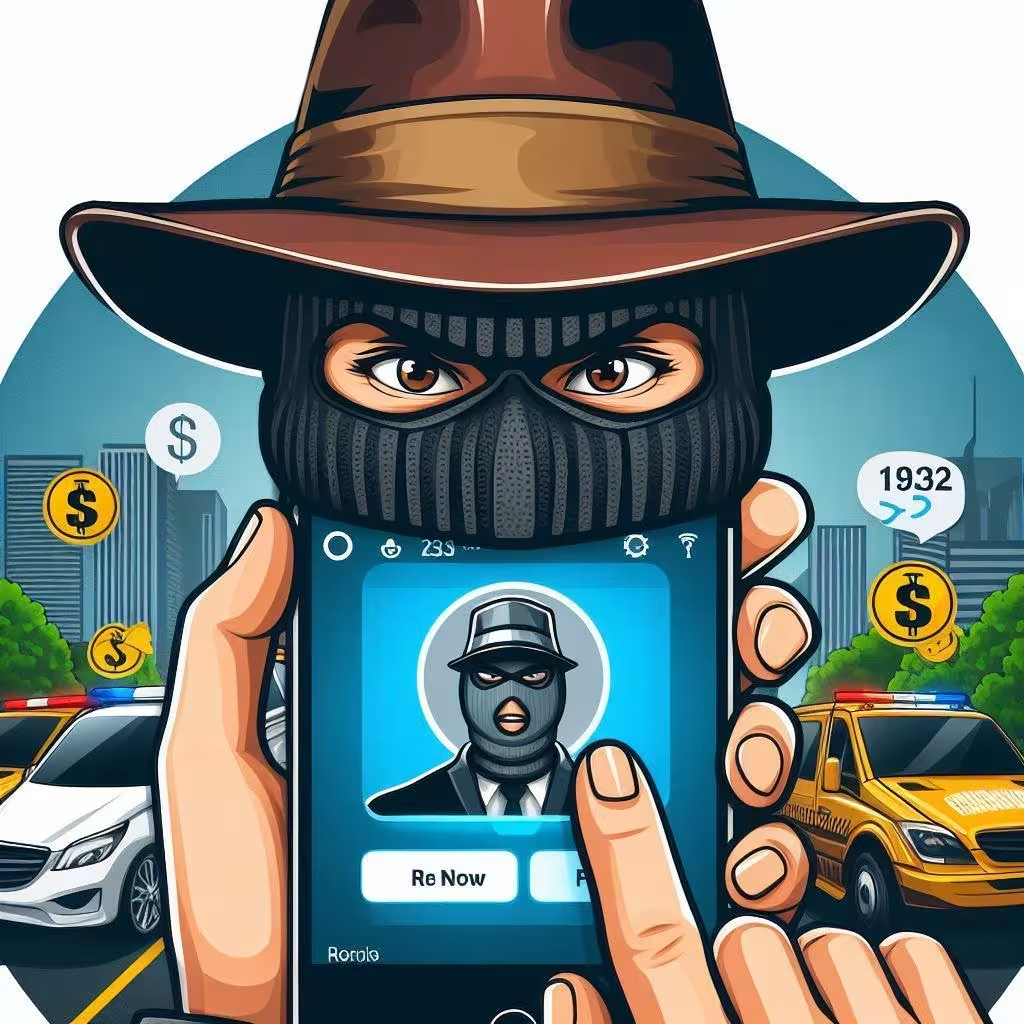
In this extremely common scam, the driver drops the passenger off at the agreed location but does not end the trip.
The first time it happened to me, I thought it was a driver's mistake. But after talking to friends, including some app drivers, I realized that this scam actually happens, mainly to the elderly and people who appear to be in a hurry.
Many people don't know that credit card payments are for the minimum fare, and this can increase depending on the trip's duration, waiting time at stops, or changes in the route.
Knowing this, the driver continues the trip for some time. And when the trip is finally ended, the price is adjusted.
A new charge occurs.
Scam or Oversight?
It's a scam because if it were an oversight, the driver would return your money and wouldn't wait for you to complain to return it, pretending to be clueless as if nothing wrong had happened.
If this happens, report it immediately through the app. Also, give the driver a negative rating.
One way to prevent this is to always check your phone to see if the trip has ended before getting out of the vehicle.
Variations of this scam:
- The driver claims the GPS stopped working and drives around unnecessarily.
- The driver starts the trip before arriving at the pickup location, making it seem like you kept them waiting, thus charging you a waiting/late fee.
- Delivery drivers leave your package at the destination and continue driving around with the vehicle to charge more.
⚠️ Research conducted with the assistance of Deep Research may be subject to referential ambiguity.
🖥️ Clean HTML code using proprietary tools.
👥 Research by Guilherme Felipe, Curation by Sílvio Lôbo
The Uber Scam: The Trip That Never Ends - An In-Depth Analysis of Mechanisms and Implications
The advent of ride-sharing services like Uber has revolutionized urban mobility, offering convenience and accessibility. However, this same technology has opened doors to new forms of fraud, with the "Uber scam: the trip that never ends" being one of the most notorious and disturbing. This essay aims to explore the key aspects of this scam, detailing its operational mechanisms, the motivations behind it, and its consequences for passengers, drivers, and the platform itself.
Operational Mechanisms of the Scam
The Uber scam of not ending a trip relies on the driver manipulating the app's functionality. The premise is simple but effective in exploiting perceived or actual system flaws:
- Trip Non-Completion: The core of the scam lies in the driver's refusal to end the trip in the app once the passenger reaches their destination. Instead, the driver keeps the ride active, virtually accumulating time and mileage.
- Incorrect Billing: With the trip ongoing, the app continues to record time and distance. When the driver finally decides to end the trip (often after picking up the next passenger or days later), the passenger is charged for a much longer period and/or distance than actually traveled.
- Location Manipulation: In some variations, the driver may attempt to simulate a greater distance by keeping the app open even after the passenger has disembarked, using techniques that alter the system's location perception.
- Pressure and Intimidation: In more aggressive cases, the driver might create uncomfortable situations or even intimidate the passenger into accepting the charge, claiming that "the system registered the trip."
Motivations Behind the Scam
The motivations for engaging in this scam are primarily financial, aiming to gain undue profits:
- Revenue Increase: The main motivation is to artificially increase revenue. By charging for a longer time and distance than real, the driver profits from the difference, exploiting the passenger's trust and potential loopholes in the platform's monitoring system.
- Financial Difficulties: For some drivers, this practice might be seen as a desperate way to supplement insufficient income, especially in more competitive markets.
- Platform Knowledge: Drivers with greater familiarity with the app's functionalities and potential loopholes are more prone to exploiting this type of fraud.
- Lack of Professional Ethics: The absence of a strong ethical compass and disregard for the well-being and rights of passengers are crucial factors.
Implications and Consequences
The Uber scam of not ending a trip leads to various negative implications for all involved parties:
- For Passengers:
- Financial Loss: The most direct impact is the incorrect billing, which can range from small amounts to significant sums, depending on how long the manipulation lasts.
- Loss of Trust: The traumatic experience erodes trust in the service, leading to hesitation in using ride-sharing apps in the future.
- Frustration and Stress: Dealing with unfair charges and the need to dispute amounts can cause significant frustration and stress.
- For Drivers:
- Suspension or Ban from the Platform: Detection of the scam typically results in severe penalties, including temporary suspension or permanent ban from the platform.
- Reputation Damage: The driver's reputation, essential for their business sustainability, is severely damaged.
- Legal Implications: In more serious and recurring cases, there may be legal repercussions, such as fraud charges.
- For the Uber Platform:
- Damage to Image and Reputation: The recurrence of these scams undermines Uber's credibility, affecting the trust of users and partners.
- Increased Costs for Support and Investigation: The platform needs to invest in teams and systems to investigate and resolve fraud complaints, increasing its operational costs.
- Need for System Improvement: The existence of these scams forces Uber to constantly seek improvements in its detection algorithms and security policies.
Final Considerations
The Uber scam of not ending a trip reflects the constant battle between technological innovation and human nature, where some individuals seek to exploit flaws for their own gain. To mitigate this practice, it is crucial for ride-sharing platforms to continue investing in more robust detection technologies, improve their verification processes, and rigorously sanction offenders. At the same time, passenger awareness of their rights and the importance of reporting any suspicious activity are vital to maintaining the integrity and safety of the ride-sharing ecosystem.





