



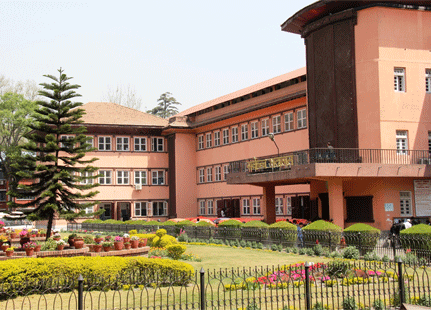
Building of the Supreme Court of Nepal.
Introduction
Nepal, a country located in South Asia, consolidated itself as a federal democratic republic in 2008, after the end of the monarchy. The 2015 Constitution established the fundamental principles of the State, including the separation of powers and the independence of the Judiciary. The Nepalese judicial system is essential for the preservation of the rule of law, for the protection of fundamental rights, and for the resolution of conflicts within a multicultural and diverse society. This article analyzes the structure and functioning of the Judiciary in Nepal, its characteristics, and the challenges faced today.
Structure of the Nepalese Judiciary
Nepal's judicial system is structured in three main levels, according to the 2015 Constitution:
Supreme Court
The Supreme Court of Nepal is the highest judicial body.
-
It is composed of a Chief Justice and other judges appointed according to constitutional criteria.
-
It has broad powers, including:
-
Adjudication of constitutional cases.
-
Final interpretation of the Constitution and laws.
-
Supervision over all courts in the country.
-
Exercise of judicial review power, including annulling laws and acts contrary to the Constitution.
-
The Supreme Court also plays an administrative role, regulating the conduct of judges and judicial officers.
Courts of Appeal
The High Courts function as a second instance.
-
They review decisions of lower courts.
-
They are distributed among the country's provinces, ensuring greater decentralization of justice.
District Courts
The District Courts form the base of the Judiciary.
-
They are present in all 77 districts of Nepal.
-
They are responsible for the initial trial of most civil and criminal cases.
This organization ensures the capillarity of the justice system, allowing for greater proximity of the population to access jurisdiction.
The Judicial Council
The Judicial Council plays an essential role in ensuring the independence of the Judiciary. It is responsible for:
-
Recommending judicial appointments.
-
Administering promotions and transfers.
-
Supervising the conduct and discipline of magistrates.
This mechanism seeks to reduce direct political interference in appointments, although there are still criticisms regarding the effectiveness of judicial independence in the country.
The Public Prosecutor's Office and the Attorney General
The justice system in Nepal also includes the action of the Attorney General, appointed by the Prime Minister. He acts as the legal advisor to the government and as the State's representative in judicial proceedings. The function of criminal prosecution is concentrated in prosecutors subordinate to the Attorney General.
Characteristics of the Nepalese Judicial System
Some aspects stand out in Nepal's Judiciary:
-
Strong judicial review: the Supreme Court has the power to declare any law or government act unconstitutional.
-
Protection of fundamental rights: the 2015 Constitution broadly guarantees civil, political, social, and cultural rights, whose protection falls to the Judiciary.
-
Decentralization: the creation of High Courts in the provinces strengthens federalism and expands access to justice.
-
Institutional challenges: despite advances, the Judiciary faces criticism related to slowness, political influence, and lack of resources.
Conclusion
The Judiciary of Nepal is a central institution for the country's democratic consolidation, with the Supreme Court at the top of a hierarchical structure that extends to the district courts. The strengthening of judicial independence, the decentralization of justice, and the role of guardian of the Constitution place the Judiciary as a fundamental pillar of the new Nepalese federal republic. However, challenges such as politicization, corruption, and case overload still need to be overcome for the system to become more efficient and accessible to the population.
References
-
CONSTITUTION of Nepal, 2015.
-
SUPREME COURT OF NEPAL. Official Website. Available at: https://supremecourt.gov.np. Accessed on: Sep. 2025.
-
INTERNATIONAL COMMISSION OF JURISTS. Nepal: The Functioning of the Supreme Court and Judicial Independence. Geneva, 2019.
-
BHATTARAI, Anup. Judicial System of Nepal: An Overview. Kathmandu: Nepal Law Society, 2020.
🖥️Clean HTML code using a proprietary tool.
Building of the Supreme Court of Nepal.
Introduction
Nepal, a country located in South Asia, consolidated itself as a federal democratic republic in 2008, after the end of the monarchy. The 2015 Constitution established the fundamental principles of the State, including the separation of powers and the independence of the Judiciary. The Nepalese judicial system is essential for the preservation of the rule of law, for the protection of fundamental rights, and for the resolution of conflicts within a multicultural and diverse society. This article analyzes the structure and functioning of the Judiciary in Nepal, its characteristics, and the challenges faced today.
Structure of the Nepalese Judiciary
Nepal's judicial system is structured in three main levels, according to the 2015 Constitution:
Supreme Court
The Supreme Court of Nepal is the highest judicial body.
-
It is composed of a Chief Justice and other judges appointed according to constitutional criteria.
-
It has broad powers, including:
-
Adjudication of constitutional cases.
-
Final interpretation of the Constitution and laws.
-
Supervision over all courts in the country.
-
Exercise of judicial review power, including annulling laws and acts contrary to the Constitution.
-
The Supreme Court also plays an administrative role, regulating the conduct of judges and judicial officers.
Courts of Appeal
The High Courts function as a second instance.
-
They review decisions of lower courts.
-
They are distributed among the country's provinces, ensuring greater decentralization of justice.
District Courts
The District Courts form the base of the Judiciary.
-
They are present in all 77 districts of Nepal.
-
They are responsible for the initial trial of most civil and criminal cases.
This organization ensures the capillarity of the justice system, allowing for greater proximity of the population to access jurisdiction.
The Judicial Council
The Judicial Council plays an essential role in ensuring the independence of the Judiciary. It is responsible for:
-
Recommending judicial appointments.
-
Administering promotions and transfers.
-
Supervising the conduct and discipline of magistrates.
This mechanism seeks to reduce direct political interference in appointments, although there are still criticisms regarding the effectiveness of judicial independence in the country.
The Public Prosecutor's Office and the Attorney General
The justice system in Nepal also includes the action of the Attorney General, appointed by the Prime Minister. He acts as the legal advisor to the government and as the State's representative in judicial proceedings. The function of criminal prosecution is concentrated in prosecutors subordinate to the Attorney General.
Characteristics of the Nepalese Judicial System
Some aspects stand out in Nepal's Judiciary:
-
Strong judicial review: the Supreme Court has the power to declare any law or government act unconstitutional.
-
Protection of fundamental rights: the 2015 Constitution broadly guarantees civil, political, social, and cultural rights, whose protection falls to the Judiciary.
-
Decentralization: the creation of High Courts in the provinces strengthens federalism and expands access to justice.
-
Institutional challenges: despite advances, the Judiciary faces criticism related to slowness, political influence, and lack of resources.
Conclusion
The Judiciary of Nepal is a central institution for the country's democratic consolidation, with the Supreme Court at the top of a hierarchical structure that extends to the district courts. The strengthening of judicial independence, the decentralization of justice, and the role of guardian of the Constitution place the Judiciary as a fundamental pillar of the new Nepalese federal republic. However, challenges such as politicization, corruption, and case overload still need to be overcome for the system to become more efficient and accessible to the population.
References
-
CONSTITUTION of Nepal, 2015.
-
SUPREME COURT OF NEPAL. Official Website. Available at: https://supremecourt.gov.np. Accessed on: Sep. 2025.
-
INTERNATIONAL COMMISSION OF JURISTS. Nepal: The Functioning of the Supreme Court and Judicial Independence. Geneva, 2019.
-
BHATTARAI, Anup. Judicial System of Nepal: An Overview. Kathmandu: Nepal Law Society, 2020.
🖥️Clean HTML code using a proprietary tool.





