



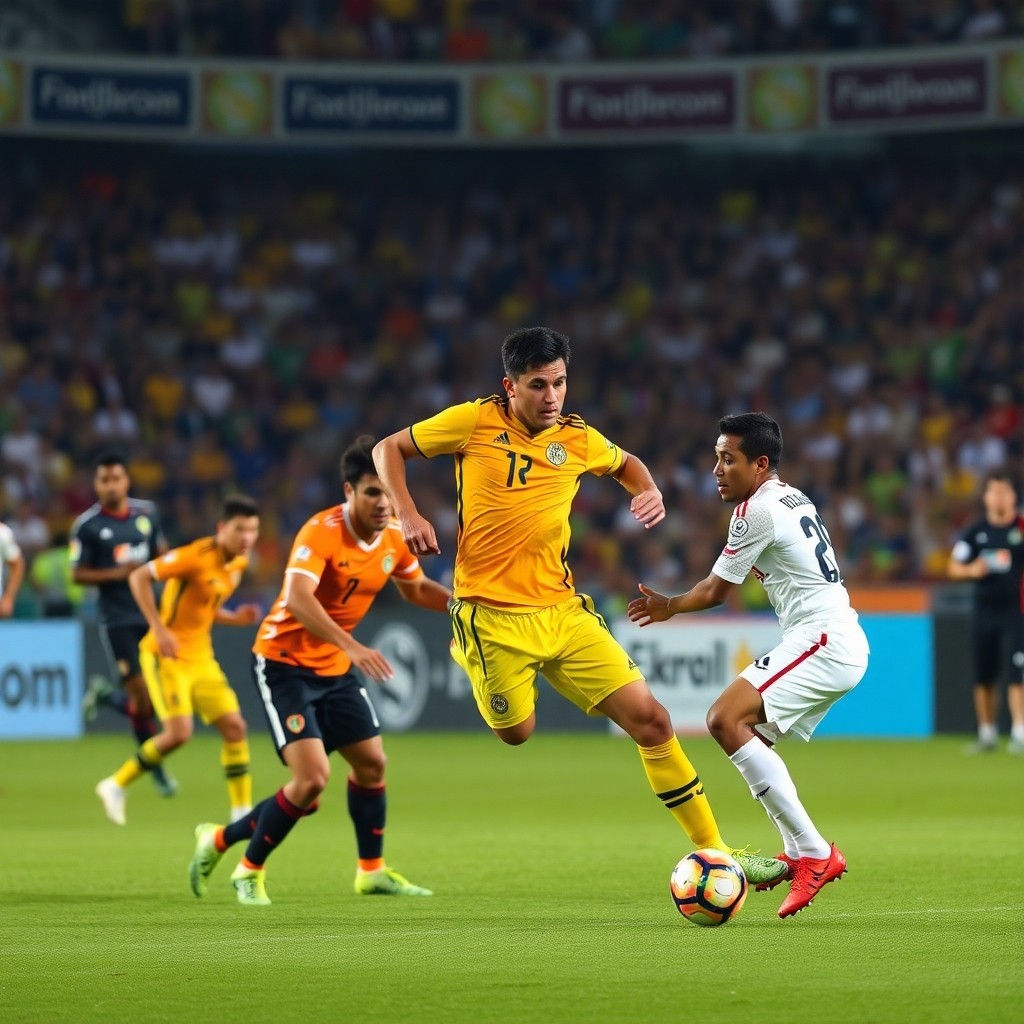
Amid the ruins of a country torn apart by one of the most severe humanitarian crises of the 21st century, football in Yemen survives not just as a sport, but as the last shred of social fabric holding a fragmented nation together. While geopolitics divides the territory between rival factions, foreign airstrikes, and tribal disputes, the Yemen national football team—affectionately known as "Al-Yaman" or the "Red Devils"—carries out a silent epic. Unable to play on its own soil since 2011 due to a lack of security, without a regularized national league, and with its athletes frequently facing hunger, unemployment, and the psychological trauma of war, the Yemeni national team defies the laws of sporting probability. It is a unique case study in international football: a nomadic team, precariously funded, that draws from its own tragedy the resilience needed to compete against the financial superpowers of the Persian Gulf. This dossier analyzes the political, historical, tactical, and social guts of a football culture that refuses to die, turning every match into an act of sovereign resistance.
1. Origins and the Formation of National Identity
To understand the complexity of Yemeni football, one must look back to the 19th century, when European colonial geopolitics planted the seeds of the sport on the Arabian Peninsula. The port city of Aden, in southern Yemen, became a British protectorate in 1839. It was through British sailors, soldiers, and colonial administrators that football was introduced to the region, long before it spread to neighbors now as wealthy as Saudi Arabia or Qatar. In 1905, Al-Tilal SC (originally known as Al-Ittihad Mohammaden) was founded, the oldest football club on the Arabian Peninsula and one of the pioneers in the entire Arab world. Aden transformed into a bustling sports hub, where football served both as a tool of colonial control and as a space for contestation and the assertion of local identity.
While the South developed a club culture under British influence, North Yemen remained under the isolationism of the Zaidi Imamate, a theocratic monarchy that viewed Western influences with suspicion. Only after the 1962 revolution, which established the Yemen Arab Republic (North Yemen), did football begin to formally structure itself in the northern region, with the founding of clubs in Sana'a and Taiz. This historical duality shaped two distinct federations and national teams during the Cold War: the North Yemen Football Association (affiliated with FIFA in 1980) and the Yemen People's Democratic Republic Football Association (South Yemen, of Marxist orientation, affiliated with FIFA in 1967).
South Yemen achieved considerably greater sporting success than its northern neighbor. Benefiting from a more consolidated urban infrastructure in Aden and sports exchanges with the Soviet bloc, the South Yemen team managed to qualify for the 1976 AFC Asian Cup, held in Iran. Although they were eliminated in the group stage after losses to Kuwait and the hosts, the participation represented the pinnacle of southern football and established a standard of competitiveness that the North had never managed to achieve in isolation.
The unification of the country, proclaimed on May 22, 1990, brought with it the herculean challenge of merging two radically different sporting structures. The new Yemen Football Association (YFA) had to integrate clubs that operated under distinct economic and political logics. Southern clubs, historically more professional and organized, found themselves progressively marginalized as political and financial power concentrated in Sana'a, the capital of the unified north. This internal tension was never completely resolved and is reflected to this day in the internal geopolitics of Yemeni football, where rivalries between northern clubs (such as Al-Ahli Sana'a and Al-Wehda Sana'a) and southern ones (like Al-Tilal) often mimic the country's sectarian and regional fractures.
The merger of the national teams created an expectation that a unified Yemen could consolidate itself as a mid-tier force in Asian football. However, chronic political instability, culminating in the 1994 civil war and successive economic crises, prevented the state from making the necessary investments in infrastructure. Yemeni football was born, therefore, under the sign of division, and its formal unification on paper never completely erased the historical scars that separate the mountainous north from the coastal south.
2. Golden Era, Great Campaigns, and Eternal Idols
Speaking of a "Golden Era" for Yemeni football requires an exercise in contextualization. Unlike continental powers, Yemen's glories are not measured in gleaming trophies, but in campaigns of extreme dignity and moments of individual brilliance that defied the logic of underdevelopment. The first great moment of national pride after unification occurred during the 1994 World Cup Qualifiers. Under the command of Algerian coach Rabah Saâdane, the unified Yemen team carried out a surprising campaign in the first round, finishing third in a group that included the strong Chinese national team, whom the Yemenis managed to defeat 1-0 in a historic match played in Irbid, Jordan, with an anthology goal by Saleh Al-Haj.
The greatest icon in the history of Yemeni football is, indisputably, striker Ali Al-Nono. Born in Sana'a in 1980, Al-Nono personified the raw talent and resilience of the Yemeni footballer. With stints in Egyptian (Al-Masry), Syrian (Tishreen), and Bahraini (Busaiteen) football, he became the top scorer in the history of the national team, with about 30 official goals. Al-Nono was a mobile center-forward, gifted with excellent positioning in the box and a rare ability to finish with both feet. His leadership during the 2000s kept Yemen competitive in regional tournaments, such as the Gulf Cup, where the team often acted as the "indomitable" force capable of snatching heroic draws against billionaire neighbors.
Another invaluable milestone occurred in the youth categories. In 2002, the Yemen U-17 team stunned the continent by finishing as runners-up in the AFC U-17 Championship, losing the final to South Korea on penalties. This campaign secured the country a historic qualification for the 2003 FIFA U-17 World Championship, held in Finland. Under the technical leadership of midfielder Abdulelah Sharyan, the young Yemenis, nicknamed the "Little Devils," won the sympathy of the international public. Although they were eliminated in the group stage, they managed a 1-1 draw with the Spain of Cesc Fàbregas and David Silva, as well as a 4-3 victory over Austria. This 2003 generation is considered, technically, the most talented the country has ever produced, although the transition to the senior team was severely hampered by the lack of structure in local clubs.
In the professional sphere, the senior team's greatest achievement occurred in 2018. Under the technical direction of Ethiopian coach Abraham Mebratu, Yemen reached a historic and unprecedented qualification for the 2019 AFC Asian Cup. Due to the civil war that began in 2014, the team was forced to play all its home matches in Doha, Qatar. Even without an active national league for years and with athletes training under devastating psychological conditions, Yemen finished the third round of qualifiers undefeated, overcoming Tajikistan and Nepal. The 2-1 victory over Nepal in March 2018 sealed the spot and sparked spontaneous celebrations in Yemeni cities that, for a few hours, silenced the sound of airstrikes to celebrate the sporting miracle.
More recently, in December 2021, the Yemen U-15 team won the West Asian Football Federation (WAFF) Championship, defeating hosts Saudi Arabia on penalties in the final held in Dammam. The triumph of a group of malnourished teenagers raised under bombardment against Saudi opulence transcended sport. The images of millions of Yemenis taking to the streets in Sana'a, Aden, Taiz, and Hodeidah, firing celebratory shots into the air and waving the national flag in a unified manner, demonstrated that football is the only institution capable of temporarily suspending the country's civil war.
3. Rivalries, Crises, and Behind-the-Scenes Power
Football in Yemen is intrinsically political, and its administrative crises reflect the institutional collapse of the state itself. The Yemen Football Association (YFA) has been presided over since 2005 by Ahmed Al-Eissa, a tycoon in the oil sector and an extremely controversial figure in Yemeni politics. Al-Eissa has been accused by local journalists and international organizations of running the federation as a personal fiefdom, using resources transferred by FIFA and the Asian Football Confederation (AFC) to consolidate his political and economic influence, while the basic infrastructure of the sport in the country remains in ruins.
The outbreak of the civil war in 2014, with the capture of Sana'a by Houthi rebels and the subsequent military intervention by a Saudi-led coalition, divided the country in a bloody manner. The impact on football was immediate and devastating. The country's main stadiums were destroyed or severely damaged by airstrikes. The Al-Thawra City Stadium in Sana'a, the country's largest sports complex, was bombed under the allegation that it was being used as an arms depot by Houthi forces. The 22 May Stadium in Aden, built to host the 2010 Gulf Cup, was turned into a combat zone and reduced to rubble.
Since 2015, the Yemeni national championship has been suspended repeatedly. Sporadic attempts to hold short transition tournaments in zones considered safer faced enormous logistical difficulties, with teams facing military checkpoints and destroyed roads to be able to play. The lack of regular professional activity pushed the overwhelming majority of Yemeni players into extreme poverty, forcing many to seek informal work to support their families, while others tried to flee the country in search of precarious contracts in lower-tier leagues in Oman, Bahrain, or Iraq.
On the international stage, Yemen's rivalries are shaped by regional geopolitics. The main one is against Saudi Arabia. It is a classic of extreme economic and political asymmetry. For Yemenis, facing Saudi Arabia in football carries an overwhelming emotional weight: it is the opportunity to face on the field the country that leads the military coalition responsible for the air and naval blockade that strangles Yemen's economy. Every match against the Saudis, whether in the Gulf Cup or in qualifiers, is treated as a battle for national survival. The same feeling of resistance applies to clashes against the United Arab Emirates, another central actor in the Yemeni conflict.
The behind-the-scenes of the national team are also marked by logistical oddities that expose the precariousness of the YFA. Due to the air blockade imposed on Sana'a airport, players living in Houthi-controlled areas often need to make land journeys of more than 24 hours over mountainous and dangerous roads to the airports of Aden or Seiyun to be able to board for international matches. Reports of athletes arriving at concentration hotels in other countries without proper training uniforms, without a full medical team, or suffering from severe fatigue due to travel are common. The very choice of coaches for the senior team is often dictated by political arrangements and the federation's ability to secure foreign sponsors to cover the salaries of international coaches, who rarely agree to remain in the position for long periods due to the country's instability.
4. The Current Moment: Tactics, Generation, and Challenges
The current technical moment of the Yemen senior team is one of transition and reconstruction under extreme conditions. Unable to enjoy the home-field advantage—the team plays its home games in countries like Saudi Arabia, Qatar, or Egypt—the team needs to adopt a pragmatic and defensive tactical approach to survive against more structured opponents. The Yemeni style of play is historically characterized by strong defensive compactness, quick transitions, and remarkable physical commitment, compensating for technical and tactical deficiencies with an unusual competitive intensity.
Under the recent command of foreign coaches, such as the Czech Miroslav Soukup—who has had multiple stints in charge of the team—Yemen has played predominantly in variations of the 4-5-1 or 5-4-1 system. The absolute priority is to close passing lanes in the middle third of the field, using a low block to deny space to opponents. The team relies heavily on quick breaks down the flanks, exploiting the speed of wingers who manage to play in neighboring foreign leagues. However, the lack of competitive match fitness of athletes playing domestically is a constant Achilles' heel, often resulting in sharp drops in physical performance in the second halves of international matches.
The backbone of the current team features names like goalkeeper and captain Salem Al-Harsh, whose secure performances under the posts have been fundamental to avoiding humiliating thrashings against Asian powers. In the midfield sector, Abdulwasea Al-Matari is the team's brain. Playing in Omani football, Al-Matari possesses excellent vision, quality on set pieces, and the ability to retain possession under pressure, functioning as the main link between defense and attack. In the offensive sector, young talents like Ahmed Al-Sarori try to bring greater dynamism and dribbling ability, although they often suffer from the isolation imposed by the team's excessively defensive tactical system.
The challenges for the tactical evolution of Yemen are structural. Without a competitive and continuous national league, the senior team's coaches face the impossibility of long-term work. Preparation periods are short and often interrupted by bureaucratic issues or a lack of funds for airfare. Furthermore, the coaching staff needs to deal with the psychological impact of the conflict on the athletes. Many players have family members living in active war zones, facing shortages of food, clean water, and electricity. Maintaining tactical focus and sporting discipline under such conditions of permanent post-traumatic stress is a feat that transcends any conventional tactical analysis.
Below, the main tactical pillars and operational challenges of the Yemeni national team in the contemporary scenario are highlighted:
- Low Block and Compactness: Systematic use of two lines of four or five defenders to protect the penalty area, prioritizing the interception of crosses and blocking mid-range shots.
- Dependence on the Sports Diaspora: The team relies crucially on athletes who secure contracts in leagues in Oman, Bahrain, Iraq, or lower divisions in Qatar to maintain a minimum level of competitive rhythm.
- Chronic Physical Deficit: The absence of modern physical preparation in local clubs results in a severe athletic disadvantage against high-intensity teams like Japan, South Korea, or Australia.
- Nomadic Logistics: The impossibility of playing in Sana'a or Aden deprives the team of the support of its fervent local fans, turning every "home" game into a neutral confrontation with empty gates.
5. Talent Development, Structure, and Future
The future of Yemeni football rests on a fascinating paradox: how does a country devastated by war continue to produce players gifted with refined technique and unwavering passion for the game? The answer lies in the street football culture, deeply rooted in Yemeni society. Faced with the destruction of official pitches and the lack of structured academies, the dusty streets of Sana'a, the historic alleys of Aden, and the improvised fields in the valleys of Hadramaut have become the country's true training schools. It is in this informal environment, characterized by uneven ground, tight spaces, and high demands for individual skill, that young Yemenis develop exceptional ball control and an ability to improvise that catches the attention of regional observers.
However, the raw talent of the streets faces an insurmountable ceiling due to the almost total absence of a transition structure to professional football. Yemen does not have organized youth leagues. The surviving clubs operate in an almost amateur manner, without resources to hire professionals in nutrition, physical preparation, or sports psychology. Talent scouting is done empirically, often depending on the enthusiasm of local coaches who work voluntarily to keep young people away from recruitment by armed militias. Football, in this sense, fulfills a vital social function of safeguarding Yemeni youth.
The export of players is the only path to financial salvation for the athletes and technical salvation for the national team. However, Yemeni players face severe international mobility restrictions. Obtaining work visas for European leagues or even for the main Persian Gulf leagues is an extremely bureaucratic process and is often made unfeasible by the political situation of the Yemeni passport. Most athletes end up migrating to the Oman Premier League or the Bahraini league, where salaries are modest but offer financial stability impossible to achieve in Yemen. Recently, some young people have sought opportunities in university leagues in the United States or in lower divisions of more stable Arab countries.
For Yemeni football to envision a future of real development, deep reforms and the end of the armed conflict are unavoidable prerequisites. FIFA has implemented financial assistance programs through the "FIFA Forward" fund, but oversight of the application of these resources within Yemeni territory continues to be a logistical and political challenge. There is an urgent need for the reconstruction of national training centers and the creation of a support fund for local clubs so they can safely reactivate their youth categories.
Despite all the adversities, Yemeni football refuses to capitulate. The people's passion for the sport is an inexhaustible fuel. As long as there is a football rolling on the improvised fields between the mountains and the desert of Yemen, there will be hope that the national team continues to be the mirror of a country that, even while bleeding, remains standing, proud of its history and determined to seek its place under the sun of international football.





