



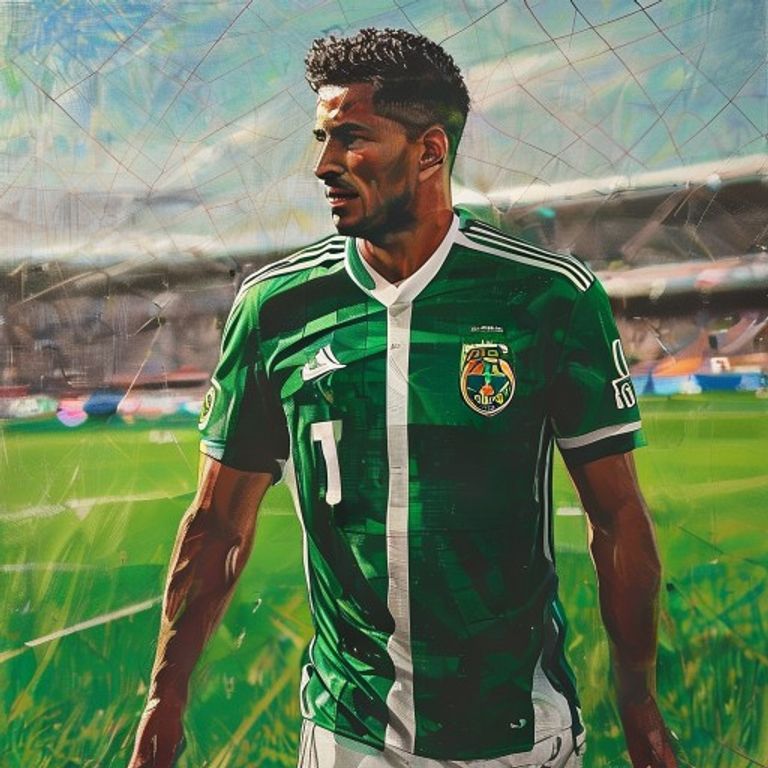
The greatest national champion (12 titles). Under solid management, Alviverde is the team to beat due to its tactical and mental consistency under Abel Ferreira.
⚠️ Research elaborated with the assistance of Deep Research is subject to referential ambiguity.
🖥️Clean HTML code using a proprietary tool.
👥 Research by Guilherme Felipe, Curation by Sílvio Lôbo
Sociedade Esportiva Palmeiras: A Saga of Glory, Struggle, and Identity
Founded on August 17, 1914, with the original name of Palestra Italia, the club we know today as Sociedade Esportiva Palmeiras is one of the most emblematic and victorious institutions in Brazilian and world football. Its trajectory is intrinsically linked to the history of Italian immigration in São Paulo and to crucial moments in Brazil's history, shaping a unique identity and a passionate fanbase that extends across the country.
Origins and Foundation: The Dream of an Italian Club in São Paulo
The founding of Palestra Italia was born from the desire of four Italian clubs in São Paulo – Club Athletico Paulistano, Sport Club Germânia, Club Athletico Esperia, and Clube Latino – to join forces to create an entity that would represent the Italian community in sports. The name Palestra Italia, chosen in homage to the passion for sports ("palestra") and the nation ("Italia"), echoed the pride and identity of its founders.
On August 17, 1914, in the noble hall of Circolo Italiano, the club's founding minutes were signed. The choice of green and white colors was inspired by the colors of the Italian flag, and the initial crest featured an emblem with the Italian cross and a lion. The first official match took place on January 24, 1915, against Botequim Futebol Clube, with Palestra Italia winning 2-0. The press of the time, such as the newspaper O Sport Illustrado, already enthusiastically registered the arrival of a new powerhouse on the São Paulo football scene.
Golden Eras and Historic Campaigns: A Collection of Memorable Achievements
Palmeiras' history is punctuated by periods of absolute dominance, known as "Golden Eras," where the club redefined standards and collected significant titles.
The First Great Era: The "Golden Team" and the 1920s and 1930s
In the 1920s and 1930s, Palestra Italia already demonstrated its strength. It won the São Paulo state championships in 1926 and 1927 with memorable campaigns. The rivalry with the traditional clubs of the time, such as Corinthians and Paulistano, was already intensifying. Documents and sports chronicles from newspapers like A Gazeta Esportiva and O Estado de S. Paulo portray the excellence of this first squad.
The Framing of Brazilian Football and Innovation: The 1940s
World War II brought a watershed moment. In 1942, Brazil entered the conflict alongside the Allies. As a consequence, the Brazilian government required all clubs with names of Axis countries to change their denominations. Palestra Italia was forced to become Sociedade Esportiva Palmeiras. The change was a moment of great apprehension, but the board and the fans embraced the new identity, maintaining the colors and the fighting spirit. The conquest of the 1942 São Paulo Championship, known as the "Victoria's Cup," with a 4-2 victory over São Paulo, with a member of the Brazilian Expeditionary Force (FEB) on the field, symbolized the strength and resilience of the new Palmeiras.
The Peak of the "Academy": 1960s and 1970s
The most glorious period in Palmeiras' history is undoubtedly the era known as the "Academy." The first Academy, in the 1960s, led by coach Oswaldo Brandão and driven by stars like Ademir da Guia, Djalma Santos, Valdir de Moraes, and Servílio, won the 1960 Brazilian Championship and the 1965 Rio-São Paulo Tournament. The second Academy, in the 1970s, under the command of Luiz Pereira, Leivinha, Jorge Mendonça, and the eternal Ademir da Guia, enchanted Brazil with engaging and offensive football. This team won the Brazilian championships in 1972 and 1973, marking an era with a style of play admired to this day, frequently cited in reports and documentaries of the time.
The Renaissance and Recent Achievements: 1990s to the Present
After a period of drought in major national titles, Palmeiras experienced a spectacular renaissance in the 1990s. Under the command of Vanderlei Luxemburgo, the team won the Brazilian Championships in 1993 and 1994, breaking a nearly 17-year drought without national titles. The team, formed by idols such as Edmundo, Rivaldo, Zinho, Cléber, and Alex, was nicknamed "Família Palmeiras" and regained the fans' affection and admiration. The following years brought the Copa Libertadores da América in 1999, an unprecedented and immensely important title for the club, with the memorable penalty shootout against Deportivo Cali.
In the 21st century, Palmeiras maintained its streak of achievements. The era of Luiz Felipe Scolari yielded the Copa Libertadores da América in 2020 and 2021, in addition to Brazilian Championship titles (2022) and Copa do Brasil (2020), consolidating the club as a recurring powerhouse in national and continental competitions. The club's modern structure, investment in youth academies, and professionalized management are factors that have contributed to this sequence of successes, widely documented in official reports, press releases, and archives from the CBF and CONMEBOL.
Context and Current Moment: A Firmly Established Powerhouse
Currently, Palmeiras stands as one of the powerhouses of Brazilian and South American football. Under the guidance of coaches like Abel Ferreira, the club has maintained impressive consistency in high-level competitions. The pragmatic playing philosophy, combined with a qualified and experienced squad, has yielded consistent results. Balanced financial management and investment in infrastructure, such as the modern training center, Allianz Parque, one of the most modern stadiums in the country, are pillars of its solidity.
The club is experiencing a cycle of important achievements, competing for titles and actively participating in decisive matches on all fronts. The fanbase, one of the largest in the country, continues to be the 12th player, pushing the team in pursuit of more glory. The sports press, through outlets like Globo Esporte, ESPN, and Placar, closely follows every step of the team, detailing performance and strategies.
Key Idols and Coaches Who Marked Eras
Palmeiras' rich history is woven by characters who became legends, both on and off the field. Their performances and strategies echo in the memories of fans and in historical records.
- Ademir da Guia: "The Divine One," perhaps the greatest idol in the club's history. A brilliant midfielder, he marked an era with his elegance, vision, and passing precision. Present in two "Academies."
- Marcos: A goalkeeper with spectacular saves and a natural leader. He was the hero of the 1999 Libertadores conquest, with memorable performances and crucial saves in tight moments.
- Edmundo: "The Animal" became one of the greatest goalscorers and idols of the golden era of the 1990s, with his irreverence and unquestionable goal-scoring instinct.
- Alex: A midfield maestro, with precise passes, powerful shots, and moments of pure genius. An idol of the 1993 and 1994 Brazilian Championship wins and the 1999 Libertadores.
- Djalma Santos: One of the greatest right-backs in the history of world football. He played for Palmeiras between 1959 and 1968, collecting titles and being a fundamental piece in the First Academy.
- Luiz Pereira: A strong, technical, and leader defender. Captain of the Second Academy, he was fundamental in the 1972 and 1973 Brazilian Championship wins.
- Oswaldo Brandão: One of the most successful coaches in the club's history, with significant stints and important titles, especially in the 1960s and early 1970s.
- Vanderlei Luxemburgo: Responsible for putting Palmeiras back on the path to national titles in the 1990s, restoring the club's confidence and glory.
- Luiz Felipe Scolari: "Felipão" is synonymous with victories and achievements. He led Palmeiras to the unprecedented conquest of the 1999 Libertadores and had significant stints that added trophies to the gallery.
- Abel Ferreira: The current coach, the Portuguese manager has been notable for his consistency, tactical intelligence, and the conquest of multiple important titles, including two Libertadores and the Brasileirão.
Greatest Rivalries: The Clash of Paulista Football Giants
Palmeiras' history is marked by intense rivalries that transcend the field, reflecting social and historical aspects of the city of São Paulo and Brazil.
Palmeiras vs. Corinthians: The Derby of the Largest Fanbase
The derby against Corinthians is one of the most disputed and exciting in Brazilian football, known as the "Dérbi Paulista." The rivalry began in the early decades of São Paulo football, with fierce competition for titles and the representation of different segments of São Paulo society. Both massive fanbases fuel a passion that is reflected in memorable matches and a history of confrontations that divides opinions and generates fervent debates. Newspapers of the time already registered the intensity of these encounters, which often decided championships.
Palmeiras vs. São Paulo: The Clash of Titans
The confrontation with São Paulo, nicknamed the "Clássico das Multidões" (Classic of the Crowds), is also one of the biggest in the country. The rivalry intensified from the 1930s onwards, with the rise of both clubs as powerhouses. Matches between Palmeiras and São Paulo frequently decided important titles, such as São Paulo state and Brazilian championships, and were the stage for great performances by stars from both sides. The dispute became even more intense with the creation of São Paulo Futebol Clube in 1930, founded by dissidents from Club Athletico Paulistano, a historic rival of Palestra Italia.
Palmeiras vs. Santos: The Duel of Styles
The rivalry with Santos, especially in the 1960s and 2000s, is also of great relevance. In the 1960s, Pelé's Santos and the First Academy's Palmeiras engaged in historic duels that marked an era in football. More recently, the matches between the teams in championship finals, such as the 2020 Copa Libertadores da América (decided in a single match), demonstrated the strength and competitiveness of both clubs, attracting the country's attention.
Organized List of Titles, Cups, and Notable Medals
Palmeiras boasts one of the richest trophy cabinets in world football. Below is a consolidated list of its main achievements, based on official and historical records:
National Titles
- Campeonato Brasileiro: 12 (1960, 1967 (RGP), 1967 (TB), 1969, 1972, 1973, 1993, 1994, 2016, 2018, 2022, 2023) - *Considering titles recognized by the CBF, including the Torneio Roberto Gomes Pedrosa (RGP) and Taça Brasil (TB)*
- Copa do Brasil: 4 (1998, 2012, 2015, 2020)
- Supercopa do Brasil: 1 (2023)
- Copa dos Campeões: 1 (2000)
International Titles
- Copa Libertadores da América: 3 (1999, 2020, 2021)
- Copa Mercosul: 1 (1998)
- Copa Rio: 1 (1951) - *Recognized by FIFA as the first club tournament on a global scale*
- Recopa Sudamericana: 1 (2022)
Regional and State Titles
- Campeonato Paulista: 26 (1926, 1927, 1932, 1933, 1934, 1936, 1940, 1942, 1944, 1947, 1950, 1959, 1963, 1966, 1974, 1976, 1993, 1994, 1996, 2008, 2011, 2018, 2020, 2021, 2022, 2023)
- Torneio Rio-São Paulo: 5 (1933, 1951, 1965, 1971, 2000)
Curiosity of the Time: The recognition of the 1951 Copa Rio as the first Club World Cup by FIFA in 2014 was a historic milestone for the club, validating a title that has always been celebrated by its fans and a large part of the specialized press, which at the time, like the newspaper Notícias Esportivas, already covered the importance of the international tournament organized in Brazil.
Palmeiras' history is a tapestry rich in glories, challenges, and transformations. From its origins as Palestra Italia, driven by the Italian community, to becoming Sociedade Esportiva Palmeiras, a giant of national and international football, the club maintains a legacy of passion, strength, and achievements that resonates through generations. Its idols, its rivalries, and its vast collection of titles solidify it as a heritage of Brazilian sport.





