



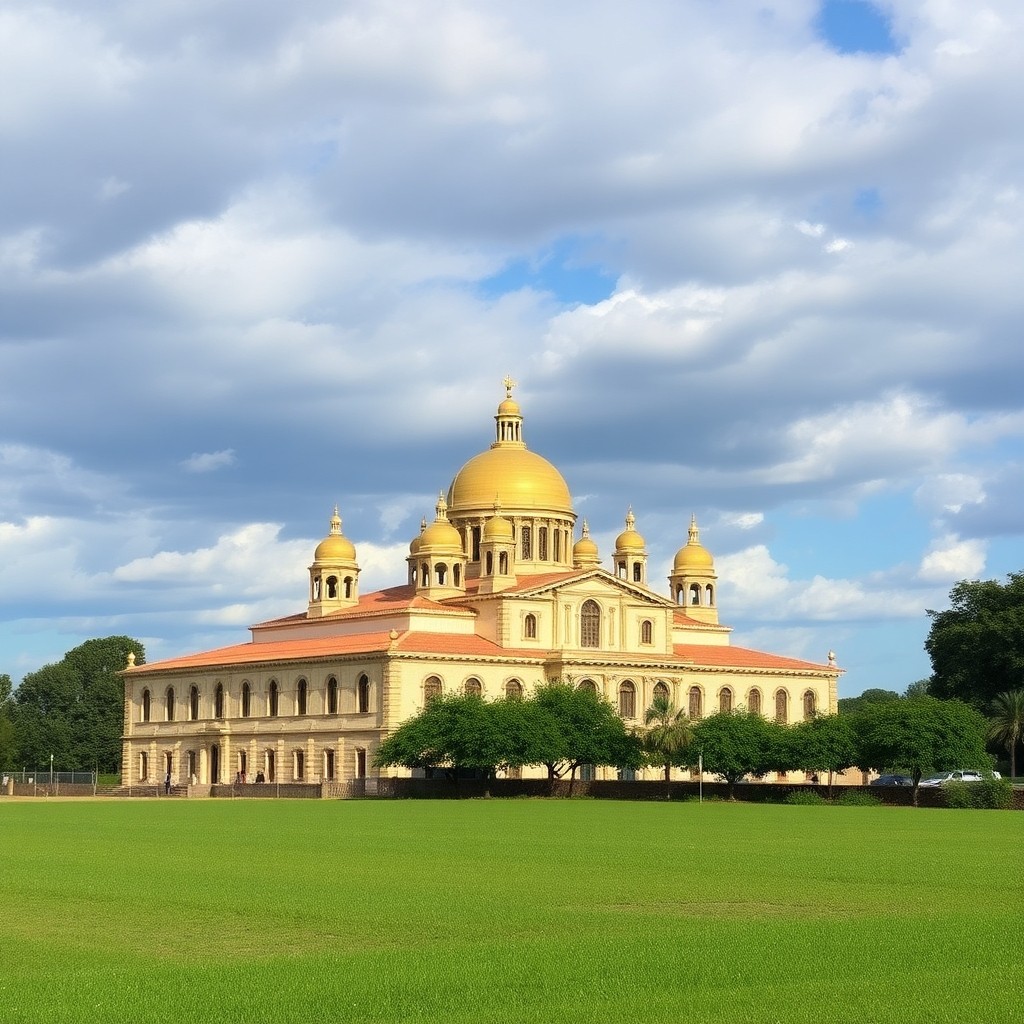
The Club Atlético Ituzaingó, historically known as "El Verde" or "El León del Oeste", is one of the most traditional institutions in Argentine lower-league football. Based in the Ituzaingó district, in the western zone of Greater Buenos Aires, the club currently competes in the Primera C Metropolitana (the unified fourth division for clubs directly affiliated with the Argentine Football Association - AFA), following a painful relegation in 2023. Experiencing a moment of sporting and institutional restructuring, Ituzaingó seeks to recapture the glory of the 1990s, when it challenged the country's giants in the national second division.
1. Origins and Foundation: The Awakening of the "Lion of the West"
The history of Club Atlético Ituzaingó dates back to the beginning of the 20th century, in a context of effervescent urban transition in the province of Buenos Aires. On April 1, 1912, a group of young neighbors and local merchants gathered with the purpose of founding an institution that would serve as a social and sports hub for a locality that still preserved the air of a rural village, but was growing rapidly around the tracks of the old Ferrocarril Oeste railway.
Initially named Social y Deportivo Ituzaingó, the club adopted the colors green and white. The choice of green symbolized hope and the vastness of the fields that characterized the western zone at the time, while white represented the purity of the sporting ideal. The club's name pays homage to the historic Battle of Ituzaingó, fought in 1827 during the Cisplatine War. Throughout its first decades, Ituzaingó limited itself to playing in regional leagues and local friendlies, consolidating itself as the social heart of the neighborhood.
Official affiliation with the Argentine Football Association (AFA) occurred only in 1961. The club began its journey in the old Clasificación de Aficionados (which would later become the Primera D). This transition from neighborhood amateurism to the competitive structure of Argentine professional football required a heroic effort from its directors, who had to adapt the precarious facilities of the time to the federation's requirements.
2. Golden Eras and Historic Campaigns
Club Atlético Ituzaingó wrote its most golden pages between the late 1980s and the early 1990s. After decades of oscillating in the lower divisions, the club structured an ambitious sports project that would culminate in the most glorious period of its history.
Access to the Primera B Metropolitana (1989)
In the 1988/1989 season, under the tactical direction of an obstinate coaching staff and with a squad composed of players identified with the local community, Ituzaingó became the Primera C champion. This title not only guaranteed access to the Primera B Metropolitana (third division) but also injected the club with the confidence needed to aim for even higher flights.
The 1991/1992 Epic: The Miracle at the "Doble Visera"
The absolute peak of the Verde's history occurred in the 1991/1992 season. Ituzaingó had a spectacular campaign in the Primera B Metropolitana, qualifying for the Torneo Reduzido (promotion playoff) that would decide the spot in the Primera B Nacional, the second division of Argentine football, a fully professional category with federal reach.
The playoff final pitted Ituzaingó against the giant Los Andes, one of the most traditional clubs in lower-league football. The confrontation was surrounded by drama:
- First Leg: A 1-1 draw, with Ituzaingó demonstrating impressive defensive solidity away from home.
- Second Leg: Played on April 15, 1992, at the Doble Visera stadium (the former stadium of Independiente de Avellaneda) as a neutral venue. After another 1-1 draw in regulation time and extra time, the decision went to a penalty shootout.
At the penalty spot, goalkeeper Carlos "Lalo" Carrizo grew to legendary proportions by saving crucial shots, allowing Ituzaingó to win 4-1. Under the command of coach Hugo García, the humble club from the west reached the second division of Argentine football, an unprecedented feat for the institution.
The Stint in the Primera B Nacional (1992-1994)
For two seasons, Ituzaingó competed on equal terms with historic Argentine football clubs such as Banfield, Colón de Santa Fe, Quilmes, and Talleres de Córdoba. The small Ituzaingó stadium became a cauldron feared by visitors. Although financial and structural disparity eventually forced the club's relegation in the 1993/1994 season, that squad etched their names forever in the memory of national football.
3. Context and Current Moment of the Team
The present of Club Atlético Ituzaingó is marked by resilience and the search for financial and sporting stability. After spending difficult years in the lower divisions (even falling to the Primera D), the club experienced a rebirth in 2021, when it achieved promotion to the Primera B Metropolitana in dramatic fashion by beating Argentino de Merlo on penalties in the Primera C playoff final.
However, the stay in the third division was brief. In 2023, after an inconsistent campaign plagued by financial problems that limited the signing of major reinforcements, Ituzaingó finished in last place in the annual Primera B Metropolitana table, being relegated back to the Primera C.
Currently, in the 2024 season, the club faces a highly competitive scenario in the Primera C, which was restructured and unified by the AFA. The board focuses its efforts on modernizing the youth categories and fiscal sustainability, aiming to professionalize all areas of the club to avoid the "yo-yo" effect between divisions. The current management's stated goal is to structure the club to return to and consolidate itself in the Primera B in the coming years.
4. Carlos Alberto Sacaan Stadium: The Green Temple
Ituzaingó plays its home games at the Carlos Alberto Sacaan Stadium, originally inaugurated in the mid-20th century and located at the intersection of Mariano Acosta and General Pacheco streets in Ituzaingó. With a capacity for approximately 5,000 spectators, the stadium is famous for its atmosphere of proximity between the fans and the pitch.
The stadium's name is a direct tribute to Carlos Alberto Sacaan, a prominent businessman in the bakery sector and former president of the club, whose leadership and financial contribution were fundamental to the remodeling, expansion, and consolidation of the stadium in the 1980s and 1990s. Under his management, the club built the concrete stands that replaced the old wooden structures, ensuring the necessary conditions for the AFA to approve the venue for major matches.
5. Main Idols and Coaches Who Defined an Era
Ituzaingó's identity was shaped by men who demonstrated a commitment that went beyond tactical or technical professionalism, becoming true symbols of the community.
- Carlos "Lalo" Carrizo: The most important goalkeeper in the club's history. His performance in the penalty shootout against Los Andes in 1992 earned him the status of an immortal legend of the Verde.
- Víctor Hugo "Hueso" Sheron: A striker with grit and a remarkable presence in the box, a goalscorer in decisive moments, and a symbol of the club's fighting spirit in the golden years.
- Adolfo "Fito" Ferraresi: A midfielder with refined technique who dictated the rhythm of Ituzaingó's midfield during the historic promotion campaigns.
- Hugo García (Coach): The strategist behind the historic promotion to the Primera B Nacional in 1992. García assembled a tactically impeccable team, characterized by strong marking and fast offensive transitions.
- Matías De Cicco (Coach): The coach who led the club's recent resurgence in 2021, returning Ituzaingó to the Primera B after nearly two decades of absence with a modern and proactive style of play.
6. Major Rivalries: The Hot Blood of the West
The west of Greater Buenos Aires is one of the most football-dense regions on the planet, which fosters intense and historic local rivalries.
The Western Classic: Ituzaingó vs. Deportivo Merlo
The true and most fervent classic of Ituzaingó is played against Club Social y Deportivo Merlo. The rivalry transcends the sporting realm and has strong territorial roots, as the two cities are neighbors and share geographical boundaries.
The direct confrontation is known as one of the hottest classics in Argentine lower-league football. Episodes of violence off the pitch and extreme passion in the stands have meant that, for many years, these matches were played with severe crowd restrictions and heavy police presence. For the Ituzaingó fan, beating Merlo is a championship in itself.
Other Regional Rivalries
- Ferrocarril Midland: Another intense regional rivalry in the western zone, fueled by decisive clashes in the C and D divisions over the decades.
- Argentino de Merlo: Although less traditional than the confrontation with Deportivo Merlo, the rivalry has grown drastically in recent years, culminating in the 2021 promotion final decided in favor of Ituzaingó.
- Deportivo Morón: A historic rivalry of geographical proximity. Although Morón has spent much of the last few decades in higher divisions, the historic duels from the amateur era and the first professional divisions keep a strong mutual antipathy alive between the fanbases.
7. Honors and Historic Achievements
Below is the organized list of the main official achievements of Club Atlético Ituzaingó throughout its journey in Argentine football affiliated with the AFA:
| Competition | Titles / Achievements | Seasons / Years |
|---|---|---|
| Primera B Metropolitana (Third Division) | Winner of the Promotion Playoff Tournament | 1991/1992 |
| Primera C (Fourth Division) | National Champion (1) | 1988/1989 |
| Primera C (Promotion Playoff) | Winner of the Playoff Tournament (1) | 2021 |
| Primera D (Fifth Division) | National Champion (2) | 1996/1997, 2000/2001 |
Sources Researched
- Argentine Football Association (AFA) - Historical Records and Official Bulletins.
- Historical Archive of Diario Clarín and Diario Olé (Buenos Aires).
- RSSSF (Rec.Sport.Soccer Statistics Foundation) - Argentine Football Statistics.
- Solo Ascenso - Journalistic coverage of Argentine lower-league football.
- Municipal Archive of the Ituzaingó District - Social history of the club.





