



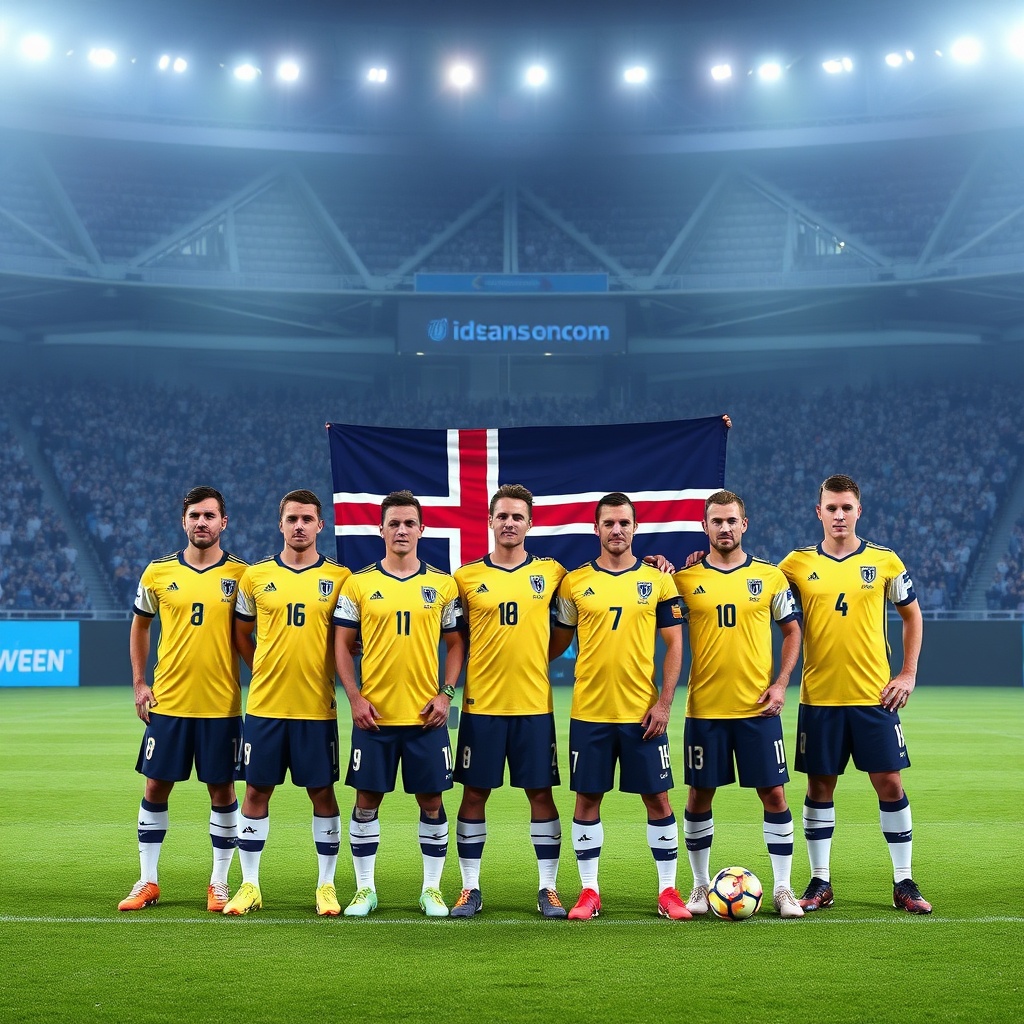
On the northern fringes of the North Atlantic, where geothermal fury defies the rigidity of ice, Icelandic football rose during the last decade as the most unlikely of contemporary sporting epics. A nation of a mere 370,000 inhabitants, historically relegated to the role of bit-player on European pitches, underwent a metamorphosis that defied demographic logic and the laws of geographical determinism. Iceland's meteoric rise, culminating in the quarter-finals of the 2016 European Championship and qualification for the 2018 World Cup, was not a mere whim of fate or an unrepeatable astral conjunction; it was the result of a structural revolution, obsessive state planning, and the conceptualization of a rigorous tactical identity. However, the Arctic fairy tale soon had to confront the gravity of reality. Today, the Icelandic national team is living through a period of painful transition, battered by off-pitch scandals that dismantled its "Golden Generation" and by the urgent need to rebuild its competitive identity. This dossier analyzes the inner workings of a football culture that oscillates between mythical glory and pragmatic reconstruction, investigating its past on dirt pitches, its tactical zenith, and the uncertain horizon taking shape in Reykjavik.
1. Origins and Formation of National Identity
To understand the uniqueness of football in Iceland, it is imperative to look back to the times when the sport was an activity of survival against the elements. For much of the 20th century, the practice of football on the island was severely conditioned by a hostile geography and a merciless climate. With long, dark winters lashed by polar winds, natural grass pitches were a utopia reserved for a few weeks of an ephemeral summer. The vast majority of games and training sessions took place on the dreaded möl — pitches made of packed dirt and black volcanic gravel that punished the joints and skin of young Icelanders. On these abrasive surfaces, where ball control was a lottery and falling was a physical punishment, the character of the national footballer was forged: resilient, combative, and accustomed to ignoring physical pain.
The Football Association of Iceland (Knattspyrnusamband Íslands, KSÍ), founded in 1947, inherited an amateur and deeply isolated structure. Affiliation with FIFA in its founding year and UEFA in 1954 did little to change the landscape for a national team that accumulated categorical defeats in its rare international forays. The national team's first official match took place in 1946, a 3-0 defeat against Denmark, the former colonial power. For decades, clashes against Scandinavian neighbors served only to highlight the enormous technical and structural distance that separated Iceland from the rest of the continent. Football was a summer pastime, played by athletes who, for the rest of the year, dedicated themselves to fishing, agriculture, or liberal professions.
Despite the widespread amateurism, Iceland produced isolated talents who defied geographical fate. The most brilliant name of that pioneering era was Albert Guðmundsson. In the 1940s, Guðmundsson carved out an unthinkable path for an Icelander, playing for Arsenal, Nancy, Nice, and, most famously, AC Milan. Known for his technical elegance — a stark contrast to the roughness of football in his homeland — Guðmundsson became a national icon, demonstrating that Icelandic talent could flourish on the most demanding stages in Europe. Later, after hanging up his boots, he entered politics, serving as Iceland's Minister of Finance, a trajectory that illustrates the deep connection between sport and the country's social and political fabric.
Socially, Icelandic football has always been intrinsically linked to the cultural concept of dugnaður (perseverance and hard work) and the popular expression Þetta reddast, a philosophy of life that translates as "everything will work out in the end." Faced with a scarcity of resources, geographical isolation, and extreme weather conditions, local clubs — such as KR Reykjavík, Valur, and Fram — functioned as vital community centers. Football was not seen merely as a spectacle, but as a tool for social cohesion and the affirmation of a young national identity, as Iceland only declared its full independence from Denmark in 1944. Each international match was an opportunity to assert the sovereignty of a young and proud republic on the world sporting map.
The Impact of Climate on Playing Identity
The impossibility of playing a game of short passes and refined ball possession on gravel pitches shaped, by necessity, a direct and physical approach to the game. The long ball, aerial duels, and compact defensive organization were not aesthetic choices; they were the only viable tactics when playing under 50 km/h winds and sub-zero temperatures. This symbiosis between climate and tactical approach created a collective muscle memory that would perpetuate for generations. The typical Icelandic player was defined by their athletic ability, unwavering tactical discipline, and almost military defensive solidarity, attributes that would become the cornerstone of future successes.
2. Golden Era, Great Campaigns, and Eternal Idols
The beginning of the 21st century brought with it the greatest revolution in the history of Icelandic sport, culminating in a "Golden Era" that placed the nation at the epicenter of world football. This period of splendor had its genesis in the qualification for the 2014 World Cup play-offs, where Iceland fell with dignity against Croatia. However, the true zenith would be reached in the qualification campaign for Euro 2016. Under the command of experienced Swedish coach Lars Lagerbäck and his Icelandic co-manager Heimir Hallgrímsson (a dentist by profession from the Vestmannaeyjar islands), Iceland shocked Europe by qualifying from a group that included the Netherlands, Turkey, and the Czech Republic. The two historic victories over the Netherlands (2-0 in Reykjavik and 1-0 in Amsterdam) signaled the maturity of a team that refused to be intimidated by the continent's giants.
In the tournament held in France, Iceland became the great sensation of world football. After heroic draws against Cristiano Ronaldo's Portugal (1-1) and Hungary (1-1), and an epic victory over Austria (2-1) at the Stade de France, the Icelanders secured their passage to the round of 16. What followed in Nice, on June 27, 2016, remains the most glorious page in the country's sporting history. Facing England, one of the historical superpowers of football, Iceland gave a lesson in pragmatism, organization, and resilience. Despite conceding an early goal from Wayne Rooney, the team reacted immediately. With goals from Ragnar Sigurðsson and Kolbeinn Sigþórsson, the "Vikings" turned the game around and won 2-1, causing one of the greatest humiliations in the history of the English national team and generating a wave of collective catharsis in Reykjavik.
The impact of this campaign went beyond the limits of the pitch. The famous Viking Clap (or "Hú!"), chanted in unison by thousands of fans in the French stands and replicated by nearly 10% of the country's total population who had traveled to France, became a global cultural phenomenon. Iceland was not just displaying competitive football; it was displaying a mystical communion between team, fans, and nation. The run ended in the quarter-finals against hosts France (5-2), but the status of an emerging power was consolidated. Two years later, the team confirmed that 2016 was no fluke, qualifying directly for the 2018 World Cup in Russia, becoming the least populous nation ever to play in a World Cup final stage. In Russia, the 1-1 draw against Lionel Messi's Argentina — with goalkeeper Hannes Þór Halldórsson saving a penalty from the Argentine star — cemented the legendary status of that generation.
The Pillars of the Golden Generation
This golden era was sustained by a group of extraordinary footballers who combined technical talent with an exemplary work ethic. Among them, figures stand out who etched their names in golden letters in the history of Nordic sport:
- Gylfi Sigurðsson: The brain and technical star of the team. With notable spells in the Premier League (Tottenham, Swansea City, and Everton), Sigurðsson was the playmaker par excellence, gifted with superb vision, surgical precision in set-pieces, and a finishing ability that relieved pressure on the strikers.
- Aron Gunnarsson: The undisputed captain. With his long red beard and imposing physical presence, Gunnarsson was the coaches' extension on the pitch. Famous for his long throw-ins, which functioned like short corners, he personified the team's warrior spirit and vocal leadership.
- Eiður Guðjohnsen: The pioneer of the modern era. Although he was already in the final phase of his career during Euro 2016, the former Chelsea and Barcelona striker was the spiritual bridge between the amateur generations of the past and the professionalism of the present. His mere presence in the dressing room conferred an aura of credibility and invaluable experience.
- Hannes Þór Halldórsson: The filmmaker goalkeeper. His personal story — dividing his time between the goal and directing music videos and documentaries — captured the world's imagination. On the pitch, he proved to be a goalkeeper with feline reflexes and monumental coolness in moments of greatest pressure.
- Birkir Bjarnason: Known as "Thor" due to his blonde hair, Bjarnason was the engine of the midfield. A tireless transition player, capable of covering kilometers of ground and appearing in the opposing box to finish, as he demonstrated by scoring Iceland's historic first goal in European Championship final stages, against Portugal.
3. Rivalries, Crises, and Behind-the-Scenes Power
Iceland's meteoric rise to international football stardom did not take place in a geopolitical or social vacuum. Regionally, the country's greatest rivalries are based on deep historical and cultural foundations, particularly with its Scandinavian neighbors. The sporting relationship with Denmark is imbued with a complex post-colonial undertone. Having been under Danish rule for centuries, every clash against the Danish national team is viewed by Icelanders as an opportunity to assert their independence and national pride. Although Denmark has historically dominated the head-to-head record, the Icelandic 2-0 victory in 2020 in the Nations League was celebrated in Reykjavik as a sporting liberation. Similar rivalries, albeit of lesser political intensity, exist with Norway and Sweden, where the clashes are often dubbed "Battles of the North," disputes for tactical and physical supremacy in the Nordic region.
However, the greatest storms faced by Icelandic football did not come from the outside, but from its own institutional bowels. In 2021, the country's football was shaken by the biggest scandal in its history, a systemic crisis that dismantled the federation and the national team itself. A succession of public revelations exposed accusations of sexual assault and harassment against several prominent players of the "Golden Generation." The case took on the contours of a national crisis when it was discovered that the KSÍ leadership, led by then-president Guðni Bergsson, had knowledge of at least one formal complaint and had chosen to hide the case, even offering financial compensation to silence the victims and protect the team's stars.
Public outrage was immediate and devastating. Activists, sponsors, and the fans themselves demanded accountability. Under unprecedented political and social pressure, the entire KSÍ board of directors, including president Guðni Bergsson, was forced to resign en masse in August 2021. Large companies withdrew their sponsorships, leaving the federation in a state of financial asphyxiation. On the sporting front, the impact was catastrophic. Several of the national team's most influential and experienced players, including Gylfi Sigurðsson himself and striker Kolbeinn Sigþórsson, were removed from national team duties due to police investigations and legal proceedings. Almost overnight, Iceland lost the backbone that had taken it to the top of world football, plunging into a crisis of results and identity from which it is still trying to recover today.
Institutional Reconstruction and New Governance
After the collapse of the old leadership, the KSÍ began a painful process of internal reform. The election of Vanda Sigurgeirsdóttir as the first woman to preside over the federation, in October 2021, marked a historic turning point. Her administration focused on implementing rigorous ethical conduct protocols, financial transparency, and re-establishing bridges of trust with Icelandic civil society. Under her mandate, and subsequently under the leadership of Þorvaldur Örlygsson, elected in 2024, the federation sought to redefine the values of national football, ensuring that sporting success would never again be placed above moral integrity and the safety of citizens. However, the loss of an entire generation of elite players left a technical void that the new generations have had immense difficulty filling.
4. The Current Moment: Tactics, Generation, and Challenges
Currently, the Iceland national team is going through an extremely complex period of tactical and generational transition. Under the technical command of experienced Norwegian coach Åge Hareide, who took the job in 2023 after the departure of Arnar Viðarsson, the team is trying to find a balance between the defensive pragmatism that made it famous and the need to adopt a more modern and proactive style of play, consistent with the characteristics of the new talents emerging in the country.
Tactically, the rigid and ultra-organized 4-4-2 in a low block, which characterized the Lars Lagerbäck era, has given way to more flexible systems, such as 4-3-3 or 4-2-3-1. This change is imposed by the profile of the new players. While the 2016 team stood out for its physical strength, ability to suffer in the defensive box, and efficiency in set-pieces, the new generation presents greater individual technical quality, speed of circulation, and dribbling ability, but suffers from a glaring lack of competitive maturity and defensive solidity. Today's Iceland concedes many more goals and demonstrates difficulties in closing the paths to its goal when facing top-tier European teams.
Åge Hareide's greatest challenge has been rebuilding the defensive process without stifling the creativity of the young talents. The team has alternated promising performances with incomprehensible tactical collapses. The qualification campaign for Euro 2024 perfectly illustrated this instability. Despite failing to qualify directly in a competitive group, Iceland managed to reach the play-offs through the Nations League. After a categorical 4-1 victory over Israel in the play-off semi-finals, the team was minutes away from stamping its passport to Germany, but ended up conceding a painful turnaround against Ukraine (2-1) in the final played in Wrocław, Poland. This outcome, although cruel, demonstrated that Iceland has the raw material to compete at the highest level, needing only greater emotional consistency and tactical rigor.
The New Jewels of Icelandic Football
Despite the collective difficulties, the technical future of Iceland rests on the feet of a handful of young footballers who are already shining in top European leagues and who promise to lead the national team in the next decade:
- Orri Óskarsson: The young striker, signed by Real Sociedad from FC Copenhagen for a record fee, is the nation's great hope for goals. Gifted with excellent physical presence, intelligence in movement within the box, and a finishing coolness unusual for his age, Óskarsson has the ideal profile to be the team's offensive reference in the coming years.
- Hákon Arnar Haraldsson: The attacking midfielder for Lille, in France, is the creative engine of the new generation. An extremely dynamic player, capable of operating both in the central corridor and on the wings, he stands out for his acceleration, vision, and ease in linking up with the strikers. He is the natural heir to the number 10 shirt that belonged to Gylfi Sigurðsson.
- Ísak Bergmann Jóhannesson: Currently shining at Fortuna Düsseldorf, Jóhannesson is a versatile midfielder, gifted with excellent passing quality and sharp game reading. His ability to dictate the pace of the match from midfield gives Iceland a ball-possession capability that the old generation rarely possessed.
- Kristian Hlynsson: The young talent trained at the prestigious Ajax academy is a midfielder with modern characteristics, strong in pressing, with excellent arrival in the opposing box and an eye for goal. His development in Dutch football has been closely monitored and he is expected to be one of the pillars of the Icelandic midfield in the short term.
5. Talent Development, Structure, and Future
The success and sustainability of football in Iceland cannot be understood without analyzing the profound revolution in infrastructure and training carried out from the year 2000 onwards. Aware that the hostile climate prevented the technical development of young people for more than half the year, the Icelandic government, in close collaboration with local municipalities and the KSÍ, designed a revolutionary strategic plan: the construction of Knattspyrnuhús (indoor sports complexes with heated synthetic pitches of regulation size).
Currently, there are dozens of these complexes spread across the country, ensuring that any Icelandic child, regardless of their geographical location or outdoor weather conditions, can train in ideal conditions 365 days a year. These "cathedrals of artificial grass" democratized access to high-competition sport and transformed the Icelandic winter from an insurmountable obstacle into a period of intense technical and physical evolution.
Alongside the infrastructure revolution, Iceland implemented a coach training policy unparalleled in the world. The KSÍ decided to subsidize UEFA coaching courses (B, A, and Pro levels), making them accessible to any former player or local enthusiast. The result of this policy is impressive: Iceland has one of the highest per capita rates in the world of UEFA-qualified coaches. In local clubs, from the under-6 levels to the seniors, all children are guided by qualified professionals. There are no "volunteer parents" coaching children's teams; the teaching of football is treated with the rigor of an academic discipline from the child's first steps in the sport. This scientific approach ensured a homogeneous and early technical evolution of the country's young footballers.
Due to the small size of the domestic market and the lack of financial capacity of the local league clubs (the Besta deild karla) to compete with European professional leagues, Iceland has developed a highly efficient export model. Young talents are detected very early and integrated into the main teams of local clubs at 16 or 17 years old. After accumulating early senior experience, they are quickly transferred to academies of mid-sized clubs in Scandinavia — mainly in Denmark (FC Copenhagen, Nordsjælland), Sweden (IFK Göteborg, Malmö), and Norway — which function as intermediate springboards before the leap to the five major European leagues. This export ecosystem ensures that players arrive at the national team already accustomed to the physical and tactical demands of European professional football.
Future Perspectives: Anomaly or Sustainable Power?
The big question hanging over Icelandic football is whether the fabulous campaign of the last decade was an unrepeatable generational anomaly or if the structural foundations created guarantee the country's sustainability in the second tier of European football. Although the path of post-2021 reconstruction is winding and full of setbacks, the quality of the new wave of players suggests that Iceland has the tools necessary to continue being a fearsome opponent and to fight regularly for qualification for the final stages of major tournaments. Iceland proved to the world that the size of a nation is not measured by its demographics, but by the audacity of its ideas, the rigor of its organization, and the unwavering resilience of its people.





