



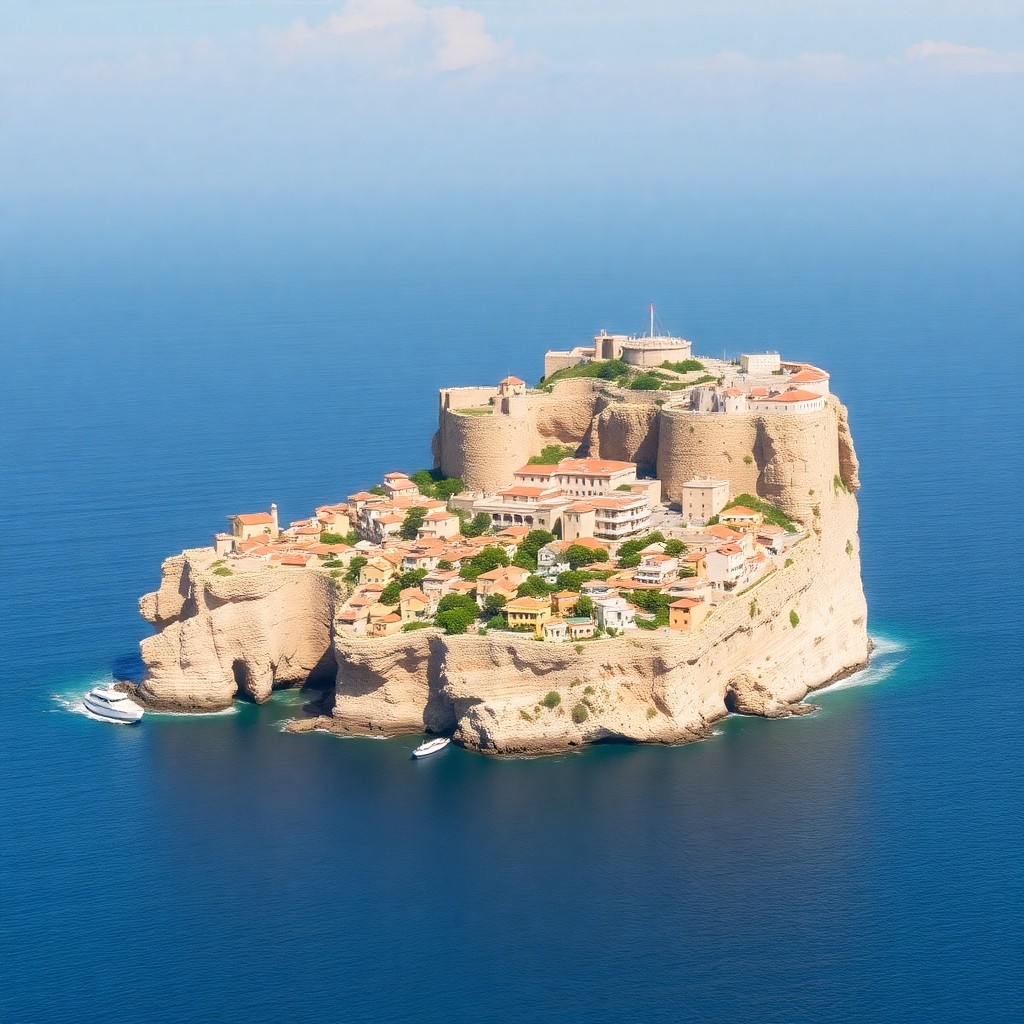
Rising like an imposing limestone sentinel at the transition between the Mediterranean Sea and the Atlantic Ocean, the Rock of Gibraltar is much more than a strategic enclave or a geopolitical anachronism born from the Treaty of Utrecht in 1713. Beyond the sovereignty disputes between the British Crown and the Kingdom of Spain, this territory of just 6.8 square kilometers and little more than 34,000 inhabitants houses one of the most unique, complex, and fascinating narratives in contemporary football. Admitted as a full member of UEFA in 2013 and FIFA in 2016, after a legal battle that dragged on for nearly two decades in the sports courts of Lausanne, the Gibraltar national team represents the essence of football at its purest scale, while simultaneously being highly professionalized under extreme conditions of demographic and structural limitation. Far from being just a "whipping boy" in European qualifying groups, the Gibraltarian team synthesizes the cultural resistance of a people who found in the green rectangle their most unequivocal declaration of national identity. This dossier examines the inner workings of a century-old federation that challenged diplomatic superpowers, structured a model of tactical survival under the baton of pragmatic commanders, and today faces the existential challenge of renewing its pioneering generation while rebuilding its own home under the shadow of the mythical Rock.
1. Origins and Formation of National Identity
To understand the genesis of football in Gibraltar, one must go back to the late 19th century, when the territory functioned primarily as a British military fortress of vital importance to the Empire's maritime routes. As the game was codified in English public schools and spread through the world's ports, British military regiments stationed on the Rock introduced the practice of the British sport to the peninsula. In 1895, the Gibraltar Football Association (GFA) was founded, which chronologically places it as one of the oldest federations on the planet, predating giants like the Italian Football Federation or the Royal Spanish Football Federation (RFEF) itself.
In the early years, local football was dominated by teams formed by British military personnel, but the local civilian population quickly appropriated the game. The creation of the Merchants Cup in 1895 marked the beginning of structured competitions, serving as the embryo of a native footballing identity. Football thus became a space for cultural fusion: the physical rigor, tactical discipline, and fighting spirit inherited from the British military mixed with the creativity, improvisation, and passion inherent to Mediterranean peoples. This cultural amalgam defined the Gibraltarian style of play, characterized by an almost military defensive resilience combined with an non-negotiable physical commitment.
However, for most of the 20th century, Gibraltar remained in an international sporting limbo. Although its local league was highly competitive and clubs from the Rock frequently played friendlies with Spanish teams from Andalusia and crews of passing warships, the national team was limited to competing in the Island Games, a multi-sport competition for non-fully sovereign island and peninsular territories. It was in these amateur tournaments that Gibraltar forged its first heroes and achieved its greatest pre-UEFA glory: the gold medal at the 2007 Island Games, held in Rhodes, Greece, after defeating the Rhodes national team in the final.
The transition from romantic amateurism to the pursuit of official recognition was driven by a deep desire for political and social affirmation. For Gibraltarians, being recognized by UEFA and FIFA was not just a matter of playing qualifiers against Germany or France; it was the recognition of their existence as an autonomous and distinct community. Spain, however, saw this pretension as a direct threat to its territorial claim over the Rock. For years, the Spanish government and the RFEF exerted suffocating political pressure on UEFA to block any attempt at Gibraltar's admission, fearing that this would set precedents for Spanish autonomous regions, such as Catalonia or the Basque Country.
The legal battle that followed was a test of endurance for the small federation. After having its membership application rejected by UEFA in 2007 due to direct political pressure from Madrid, the GFA appealed to the Court of Arbitration for Sport (CAS). In a historic decision, the CAS determined that UEFA should apply the rules in force at the time of Gibraltar's first application in 1997, when the entity's statutes did not require a member to be a sovereign state recognized by the United Nations. It was this legal loophole, defended with tenacity by local lawyers and officials, that forced UEFA to admit Gibraltar as its 54th member on May 24, 2013, opening the doors of a new world for football on the Rock.
2. Golden Era, Great Campaigns, and Eternal Idols
Admission to UEFA marked the beginning of a true "Golden Era" for football in Gibraltar, a period characterized by the abrupt transition of players who balanced their training with daily professions to the illuminated stage of elite European football. The national team's first official match under the UEFA aegis took place on November 19, 2013, a friendly against Slovakia at the Estádio Algarve, in Faro, Portugal. Against all expectations of the international press, which predicted a monumental thrashing, the defensive wall set up by manager Allen Bula secured a historic 0-0 draw. That result sent a clear message to the continent: Gibraltar would not just be an exotic attraction.
The qualifiers for Euro 2016 were the team's baptism of fire in official competitions. Drawn into a group that included Germany (then world champions), Poland, Ireland, Scotland, and Georgia, the team suffered heavy defeats but also recorded moments of pure collective catharsis. March 29, 2015, was forever etched in the memory of Gibraltarian sport. At Hampden Park, in Glasgow, in front of more than 34,000 spectators, striker Lee Casciaro took advantage of a precise pass from Aaron Payas to finish low and across, beating goalkeeper David Marshall and temporarily tying the game against Scotland at 1-1. Although the match ended in a 6-1 Scottish victory, Gibraltar's first official goal in a UEFA competition was celebrated on the Rock as if it were a world title.
The team's competitive consolidation would gain even more dramatic contours with the creation of the UEFA Nations League, a tournament designed to level the playing field between teams of similar tiers. It was in the 2018/2019 edition that Gibraltar achieved its greatest feats. On October 13, 2018, playing in Yerevan against Henrikh Mkhitaryan's Armenia, the team achieved its first official victory in history. A penalty goal converted by left-back Joseph Chipolina secured a 1-0 triumph, on a night where defensive organization and a monumental performance by goalkeeper Kyle Goldwin defied sporting logic. Just three days later, at Victoria Stadium, Gibraltar confirmed its good form by beating Georgia 2-1, with goals from Lee Casciaro and Joseph Chipolina, sparking scenes of delirium in the stands under the Rock.
The pinnacle of this journey of overcoming occurred in the 2020/2021 Nations League, when the team, under the command of Uruguayan coach Julio César Ribas, won promotion to League C undefeated. With victories over San Marino and Liechtenstein, and strategic draws away from home, Gibraltar proved that it had developed a competitive maturity capable of overcoming teams of a similar level on the European stage. This victorious campaign consolidated the status of local legends for a generation of athletes who embodied the amateur spirit adapted to professionalism.
Among these eternal idols, the iconic figure of captain Roy Chipolina stands out. A customs officer by profession, the central defender led the team with a moral authority and physical presence that became the symbol of the squad. Beside him, his brother Joseph Chipolina, a winger of extreme physical strength and precision in free kicks and penalties, and striker Lee Casciaro, a military policeman whose historic goals against Scotland and, later, for his club, Lincoln Red Imps, against Celtic in the 2016 Champions League, turned him into a living legend of European football. No less important is Liam Walker, the midfielder with refined technique and unique vision, whose career included stints in English and Spanish football, serving as the creative brain in a mostly blue-collar midfield.
3. Rivalries, Crises, and Behind-the-Scenes Power
The history of football in Gibraltar is inseparable from the geopolitical tensions surrounding the territory. The most intense and complex rivalry does not develop within the four lines, but rather in diplomatic offices and behind the scenes of political and sporting power. The relationship with Spain is the nerve center of this dynamic. Due to Madrid's sovereignty claims, UEFA and FIFA have adopted, since Gibraltar's admission, a strict draw guideline that prevents the national teams of Gibraltar and Spain, as well as their respective clubs in continental competitions, from being drawn into the same qualifying group or initial stage of tournaments.
This "diplomatic exclusion clause" is a direct reflection of the political discomfort that Gibraltar's sporting existence causes in the neighboring peninsula. For years, Spanish athletes who crossed the border of La Línea de la Concepción daily to work or play in Gibraltar faced informal pressures. At the same time, the Madrid sports press oscillated between condescending contempt and nationalist indignation when Gibraltarian clubs began to achieve significant results in the preliminary stages of European competitions. This constant geopolitical tension turned every match of the national team into an act of political affirmation and cultural resistance against the giant neighbor.
Beyond external geopolitics, the GFA faced severe internal crises and administrative turmoil throughout its recent trajectory. One of the biggest controversies occurred in March 2015, with the dismissal of manager Allen Bula, the man who had led the team in the transition to UEFA. Bula's dismissal occurred amidst a climate of enormous internal strain, with mutual accusations of indiscipline, breach of conduct protocols, and tactical disagreements with the main leaders of the squad. The coach's departure exposed the weaknesses of a structure that was still fumbling in the transition from a local club mentality to the demands of a professional international federation.
Another point of constant friction and public debate lies in the country's sporting infrastructure. The iconic Victoria Stadium, with its capacity for about 5,000 spectators and located a few meters from the runway of Gibraltar International Airport, is the heart of local football. However, for years, the stadium did not meet the strict UEFA Category 4 criteria for major national team official matches. This forced the team to play its Euro and World Cup qualifying matches at the Estádio Algarve, in Portugal, about a four-hour drive away.
This need to play in "exile" on Portuguese soil generated deep logistical, financial, and emotional strain. Local fans were deprived of supporting their team at home, while the athletes lost the intimidation factor that Victoria Stadium, with its unique atmosphere and unpredictable winds blowing from the Strait, exerted on opponents. The purchase of Victoria Stadium by the GFA from the government of Gibraltar in 2017, for about 16.5 million pounds, began a long and complex planning process for a complete reconstruction of the stadium, aiming to transform it into a modern arena fully approved by UEFA, a project that became the greatest infrastructural challenge in the federation's history.
Key Political and Administrative Milestones
- 1997: First formal application for UEFA membership, initiating the legal battle against the Spanish veto.
- 2006: The CAS issues its first favorable decision for Gibraltar, determining that UEFA must analyze the application without political interference.
- 2013: Definitive admission as the 54th full member of UEFA during the London Congress.
- 2016: Admission as a full member of FIFA, allowing participation in the 2018 World Cup qualifiers.
- 2017: Acquisition of Victoria Stadium by the GFA, aiming for the infrastructural self-sufficiency of local football.
4. The Current Moment: Tactics, Generation, and Challenges
The current scenario of the Gibraltar national team is defined by a dual process of transition: tactical and generational. Under the command of experienced Uruguayan coach Julio César Ribas, in the position since 2018, the team has developed an extremely pragmatic playing identity, based on the principles of defensive solidity, compact lines, and collective fighting spirit, characteristics that Ribas imported from the classic South American "garra charrúa" to the context of football on the Rock.
Tactically, Gibraltar plays predominantly in variations of systems with a five-player defensive line, such as 5-4-1 or 5-3-2. Ribas' game plan is based on an extremely low block, where the space between the defensive and midfield lines is reduced to a minimum to prevent opponents from infiltrating through the central corridor. The team deliberately gives up possession of the ball, focusing on closing the paths to the goal and exploring quick transitions through long balls to the target striker or seeking to win free kicks and corners in the offensive half, where Liam Walker's dangerous set-piece deliveries become the team's main offensive weapon.
However, this defensive model taken to the extreme faces severe challenges when the team is exposed to the physical intensity and speed of ball circulation of the world's football powerhouses. The greatest test of this limit occurred on November 18, 2023, when Gibraltar suffered a historic 14-0 defeat to France, in Nice, in the Euro 2024 qualifiers. The match cruelly exposed the physical and technical disparity existing between the top of world football and a team that still relies on semi-professional athletes. The early red card received by defender Ethan Santos completely collapsed Ribas' tactical plan, resulting in an avalanche of goals that served as a harsh reality check and accelerated calls for a deep renewal of the squad.
This generational renewal is Gibraltar's main sporting challenge in the short and medium term. The golden generation that achieved promotion in the Nations League and obtained the first historic victories is in the farewell phase. Roy Chipolina and Lee Casciaro, both over 40, are approaching the end of their international careers, leaving a void of leadership and experience that will not be easy to fill. The responsibility of leading the new era of Gibraltarian football now falls on a new batch of athletes who have already grown up under the aegis of professionalism provided by UEFA membership.
The main exponent of this new generation is striker Tjay De Barr. With stints in English football (Wycombe Wanderers) and currently one of the main figures of local football, De Barr possesses mobility, physical strength, and ball-retention capacity in the attacking half that offer the national team a crucial escape valve in moments of suffocating pressure. Alongside De Barr, young midfielder Nicholas Pozo, trained in the youth ranks of Cádiz CF in Spain, and defender Louie Annesley, who plays in British professional football, represent the hope of a more dynamic, fast, and tactically versatile team for the upcoming competitive cycles.
5. Talent Development, Structure, and Future
For a community of just 34,000 inhabitants to produce athletes capable of competing at the level required by European qualifiers, the efficiency of the training system and the structure of the local league need to operate at levels of almost surgical excellence. Aware of its demographic limitations, the GFA has implemented a series of deep structural reforms in recent years in the Gibraltar National League, the country's top football division.
One of the most impactful measures was the merger of the old first and second divisions into a single unified league in 2019, aiming to concentrate financial and human resources and raise the overall competitive level. In addition, the federation introduced the strict Home Grown Player Rule (HGPR), a rule protecting local athletes that requires teams to keep a minimum number of locally trained players on the pitch during the 90 minutes of play (currently set at four athletes per team). This measure sparked intense debates among wealthier clubs, such as Lincoln Red Imps and Europa FC, who argued that the rule limited their competitiveness in the preliminary stages of UEFA competitions, but it proved vital to ensure competitive playing minutes for the national team's young talents.
Gibraltar's training structure also benefits from a scouting network that monitors young players with Gibraltarian ancestry who play in the youth divisions and lower leagues of England and Spain. Athletes who would hardly have space in the English or Spanish national teams find in Gibraltar the opportunity to play international matches at the absolute level against the best players in the world. This "British connection" and the geographical proximity to Andalusian football function as important channels for technical development for the athletes of the Rock.
However, the growth ceiling for football in Gibraltar always hits the demographic barrier and the scarcity of physical space for the construction of new training fields. With the territory densely urbanized, the GFA has invested heavily in the development of futsal and beach soccer as tools for technical refinement for young players in the early stages of training. Futsal, in particular, enjoys enormous popularity on the Rock and has served as an excellent laboratory for developing ball control under pressure and quick decision-making in tight spaces, characteristics that athletes subsequently transport to the grass pitches.
The future of football in Gibraltar depends directly on the completion of its infrastructural modernization plan and the financial sustainability of its league model. The reconstruction of Victoria Stadium to become a modern and self-sustainable arena is the central pillar of this strategy. When completed, the new stadium will not only bring the national team back to its true home permanently, but will also generate crucial commercial revenues for reinvestment in the youth categories. Gibraltar's challenge for the next decade is not to transform itself into a powerhouse capable of fighting for World Cup spots, but rather to consolidate itself as a respectable, tactically mature, and structurally solid opponent, proving that, even under the shadow of a rocky giant and surrounded by limitations of all kinds, football can flourish as the most beautiful and authentic manifestation of a people.





