



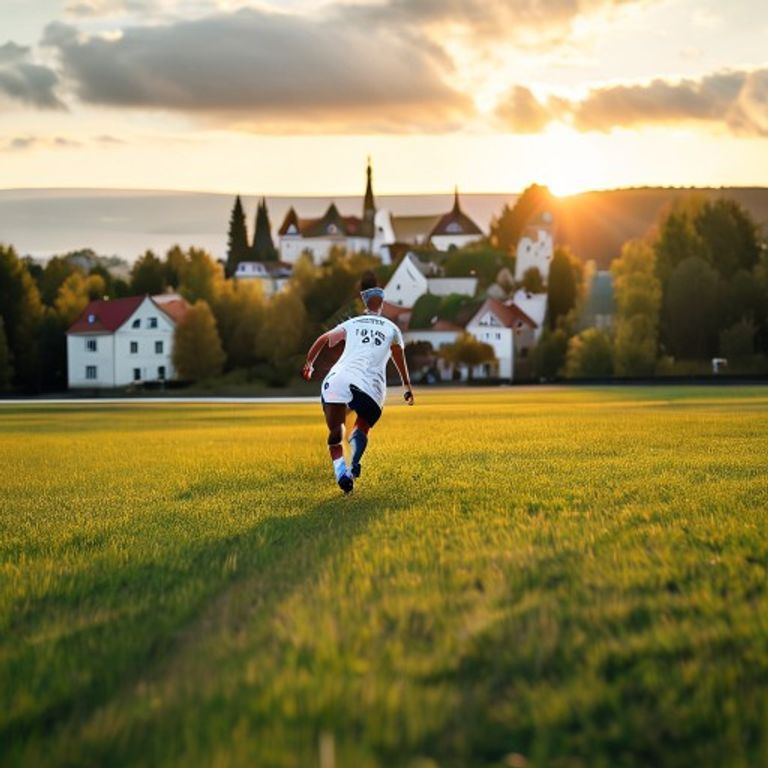
On the icy shores of the Baltic Sea, where winter casts its gray mantle for nearly half the year, football ceases to be just a game and becomes a mirror of sovereignty, resistance, and geopolitical complexity. The Estonia national football team, affectionately known by its fans as Sinisärgid (the "Blue Shirts"), carries on its crest not only the three heraldic lions of its coat of arms but also the weight of a history marked by interruption, silencing, and a constant search for identity. In a nation that reinvented itself spectacularly after the collapse of the Soviet Union, transforming into a global digital powerhouse — the so-called "e-Estonia" — football is still feeling its way toward its own revolution of modernity. Far from the spotlight of the great Western European powers, Estonian football survives and projects itself through a unique resilience, where every victory in Tallinn is celebrated as an act of cultural affirmation in the face of historically oppressive neighbors and a continent that often relegates Eastern Europe to the periphery of the beautiful game.
1. Origins and the Formation of National Identity
To understand Estonia's relationship with football, one must take a deep dive into the first decades of the 20th century, a period when the sport was introduced to the country by British sailors and merchants in the ports of Tallinn and Narva. The founding of the Estonian Football Association (Eesti Jalgpalli Liit - EJL) on December 20, 1921, occurred during a moment of nationalist fervor, shortly after the Estonian War of Independence against the Russian Empire and Baltic-German forces. Football, therefore, was born hand-in-hand with the Republic of Estonia itself. The young nation quickly sought international legitimacy on the pitch, joining FIFA in 1923 and participating in the 1924 Paris Olympic Games. Under the command of Hungarian coach Ferenc Kónya, Estonia played its only Olympic match against the United States, being defeated by a respectable 1-0 score. That pioneering generation, which featured legendary names like goalkeeper Evald Tipner and striker Eduard Ellman-Eelma, established the foundations of a sport that began to rival gymnastics and athletics in popular preference.
However, the promising trajectory of Estonian football was brutally interrupted by World War II and the subsequent Soviet annexation in 1940. Under the Moscow regime, Estonia was wiped off the international football map. The national team was dissolved, and local clubs were integrated into the Soviet league system in a subordinate manner. More than just an administrative change, the Soviet occupation promoted a profound demographic and cultural transformation that affected the perception of the sport in the country. Football came to be seen by many ethnic Estonians as an "occupation sport," a discipline imposed and dominated by Russian-speaking immigrants sent by the regime to work in the heavy industries of Narva, Sillamäe, and the suburbs of Tallinn, such as Lasnamäe. While native Estonians took refuge in sports like basketball, volleyball, and cross-country skiing — disciplines where they felt they better preserved their identity and where local clubs maintained greater autonomy — football in the 1960s, 1970s, and 1980s became a Russophone linguistic and cultural ghetto within Estonian territory.
This social fracture deeply shaped the reconstruction of football after the restoration of Estonia's independence on August 20, 1991. The Estonian Football Association faced the Herculean challenge of recreating a national team practically from scratch, in a country where most of the best local football players did not hold Estonian citizenship due to strict post-independence naturalization laws, which required proficiency in the complex Estonian language. The first official match after the country's rebirth took place on June 3, 1992, against Slovenia in Tallinn, ending in a 1-1 draw. The author of the first historic goal was Aleksandr Puštov, a player of Russian origin, symbolizing the complex ethnic patchwork the team represented. In the early 1990s, the Estonian team was nicknamed the "whipping boy" of Europe, accumulating crushing defeats against continental powers, but every time they stepped onto the modest Kadriorg Stadium, it was a political declaration that Estonia had returned to the concert of sovereign nations.
2. Golden Era, Great Campaigns, and Eternal Idols
The maturation process of Estonian football took nearly two decades of structural investment and tactical patience. The first major leap in quality occurred under the leadership of figures who transcended the status of athletes to become national heroes. The greatest of them is, without a doubt, goalkeeper Mart Poom. Known in England as "The Poominator," he defended the colors of clubs like Derby County, Sunderland, and Arsenal with distinction. Poom was the embodiment of the Estonian work ethic: cool under pressure, extremely professional, and endowed with impressive physical resilience. His monumental performances for the national team in the 1990s and 2000s prevented historic routs and taught a new generation of Estonian defenders that it was possible to compete on equal terms against the best strikers on the planet. Alongside him, striker Andres Oper established himself as the country's great offensive reference, becoming the top scorer in the national team's history with decisive goals scored in the Netherlands and Denmark, where he built his club career.
However, the absolute peak of Estonian football occurred during the qualification campaign for Euro 2012. Under the technical command of charismatic local coach Tarmo Rüütli, Estonia shocked the continent by finishing second in Group C, surpassing nations with greater tradition like Serbia, Northern Ireland, and Slovenia, finishing only behind the powerful Italy. That campaign was an ode to collective football, tactical intelligence, and surgical pragmatism. Estonia achieved memorable victories, such as the historic 3-1 win against Serbia in Belgrade and an exciting 2-1 triumph against Slovenia in Ljubljana. The great maestro of that team was midfielder Konstantin Vassiljev. Endowed with extraordinary peripheral vision and a mid-range shot that defied the laws of physics, Vassiljev scored crucial goals that sealed the team's qualification for the Euro playoffs — an unimaginable feat for a country of only 1.3 million inhabitants.
The dream of playing in the final tournament in Poland and Ukraine, however, collided with the harsh reality in the playoffs against the Republic of Ireland in November 2011. In the first leg, at the A. Le Coq Arena in Tallinn, a combination of nervousness, controversial red cards, and Irish efficiency resulted in a heavy 4-0 defeat, which practically sealed the fate of the tie. In the second leg in Dublin, Estonia said goodbye to its most beautiful campaign with an honorable 1-1 draw, receiving a standing ovation from the thousands of Irish and Estonian fans present at the Aviva Stadium. That generation, which also featured defender Ragnar Klavan — who would later make history by transferring to Jürgen Klopp's Liverpool and playing in a UEFA Champions League final — established a standard of excellence that still serves as a reference and, at times, a burden for subsequent generations.
3. Rivalries, Crises, and Power Behind the Scenes
Football in the Baltic States is inseparable from geopolitical tensions and regional power struggles. Estonia's oldest and most traditional rivalry is played out in the Baltic Cup, the oldest national team tournament still active in Europe, created in 1928. The clashes against Latvia and Lithuania transcend the sporting aspect; they are duels of identity affirmation and regional leadership. Historically, Latvia has been a thorn in the side of the Estonians, boasting a superior record in the regional tournament, which fuels a sense of sporting revenge with each edition of the championship. However, the greatest tensions surrounding the Estonian national team do not come from its immediate Baltic neighbors, but from the complex relationship with the Russian Federation, which reflects the wounds still open from the Soviet occupation and the current European geopolitical situation.
One of the most controversial and divisive episodes in the recent history of Estonian sport occurred in December 2022, amidst the Russian invasion of Ukraine. A photograph published on social media showed several players and former players of the Estonian national team — including then-captain Konstantin Vassiljev, striker Sergei Zenjov, and assistant coach Andres Oper — dining amicably with Valeri Karpin, the coach of the Russian national team and a former player born in Narva, in Soviet Estonia. The image sparked an immediate wave of national outrage. The official fan group of the national team, MTÜ Jalgpallihaigla, issued a scathing statement condemning the meeting, stating that the athletes' attitude was unacceptable at a time of Russian military aggression against a sovereign European state. The crisis required extreme damage control by the Estonian Football Association, culminating in formal public apologies from the players involved and reigniting the debate over national loyalty and the integration of the Russian-speaking minority into Estonian society.
Behind the political scenes, the country's football has been dominated for decades by a centralizing and highly controversial figure: Aivar Pohlak. President of the Estonian Football Association since 2007, but the true "strongman" of the sport in the country since the 1990s, Pohlak is an eccentric figure, known for wearing sheepskin vests even at formal UEFA meetings and for his autocratic management style. Pohlak was the founder and owner of FC Flora Tallinn, the most successful club in the country, which has generated severe accusations of conflict of interest over the years. Critics point out that the federation and the national team were used systematically to favor the commercial and sporting interests of FC Flora, to the detriment of other traditional clubs like FCI Levadia Tallinn and Nõmme Kalju. This concentration of power and the lack of leadership turnover in the EJL are pointed out by local analysts as one of the main factors for the stagnation of elite football development in the country over the last two decades.
4. The Current Moment: Tactics, Generation, and Challenges
Currently, the Estonian national team is going through a period of profound generational transition and redefinition of its tactical identity. The definitive exit of athletes from the "golden generation" of 2012 exposed a vacuum of technical and creative leadership. For years, the team relied excessively on the late brilliance of Konstantin Vassiljev, who continued to be called up and to play as a starter even after turning 39, highlighting the inability of the country's training system to produce a midfielder of a similar creative level. Under the technical direction of Swiss coach Thomas Häberli, who led the team between 2021 and mid-2024, Estonia prioritized a pragmatic defensive system, usually structured in an extremely deep 5-3-2 or 3-5-2, aiming to minimize the technical disparity against higher-ranked opponents in Europe.
The recent transition to the command of Jürgen Henn, a young coach who made history by taking FC Flora to the UEFA Conference League group stage, signals an attempt to modernize the national style of play. Henn seeks to implement a more dynamic game model, with fast offensive transitions and a defensive stance based on compact medium blocks, reducing the reliance on purely reactive "trench" football. However, the implementation of this model runs into the technical limitations of the current squad. The main technical reference and hope for defensive security for the national team is young goalkeeper Karl Jakob Hein. Belonging to Arsenal and having had a loan spell at Real Valladolid, Hein demonstrates exceptional reflexes and maturity unusual for his age, establishing himself as the natural heir to Mart Poom between the Estonian posts.
In the defensive sector, leadership falls on the shoulders of experienced defender Karol Mets, who plays for St. Pauli in Germany. Mets offers the physical solidity and leadership necessary to coordinate a defensive line that is frequently subjected to intense pressure. However, the great Achilles' heel of current Estonia lies in the creation and finishing sector. In midfield, youngsters like Rocco Robert Shein (who plays in Dutch football) and Martin Vetkal (with a spell in Roma's youth system) demonstrate physical potential and good passing ability, but still lack the consistency necessary to dictate the pace of the game at an international level. In attack, the lack of a prolific center-forward and wingers capable of unbalancing in one-on-one situations severely limits the team's firepower, making Estonia a predictable team in its offensive actions and excessively dependent on set-piece plays to find the back of the net.
5. Talent Development, Structure, and Future
The development of football in Estonia faces climatic and demographic challenges that require creative solutions and long-term investments. With a total population of just over 1.3 million inhabitants and a harsh winter that covers the fields in snow from November to April, playing outdoor football becomes unfeasible for nearly half the year. To combat this geographical limitation, the Estonian Football Association, in partnership with the federal government and local municipalities, initiated a true infrastructure revolution with the construction of modern inflatable indoor football gyms (the so-called jalgpallihallid) in all major regions of the country. These closed and climate-controlled structures ensure that young athletes can train in ideal synthetic grass conditions throughout the year, a structural advance that is already beginning to show results in the technical quality of the new generation of players.
The national league, the Premium Liiga (Meistriliiga), has taken significant steps toward full professionalization in the last decade. Historically dominated by three forces from the capital — FC Flora, FCI Levadia, and Nõmme Kalju — the league has sought to increase its internal competitiveness through federation subsidies for professional contracts for young players and improvements in media broadcasting and stadium infrastructure. The emergence of ambitious projects outside Tallinn, such as Paide Linnameeskond, demonstrates a healthy decentralization of football in the country. However, the technical level of the national league is still considered low compared to Scandinavian or Central European standards, which forces the most promising young talents to seek early transfers abroad to continue their sporting development.
The path for exporting Estonian athletes has changed drastically in recent years. If previously the natural destination was the neighboring Baltic countries or the lower-tier leagues of Russia and Ukraine, today the focus is directed toward youth academies in Italy (such as SPAL, Roma, and Torino) and the top divisions of Scandinavia (Sweden, Norway, and Finland). This change of route exposes young Estonians to world-class training methodologies from an early age. The great challenge for the future of football in Estonia is to convert this structural and individual development into competitive consistency for the national team. Estonia's realistic medium-term goal is not regular qualification for World Cups, but rather to establish itself as a competitive team in the UEFA Nations League, capable of challenging for promotion to higher divisions and, eventually, taking advantage of playoff opportunities to expand its presence in future editions of the European Championship, proving that, even under the Baltic ice, the passion for football is capable of flourishing with strength and dignity.





