



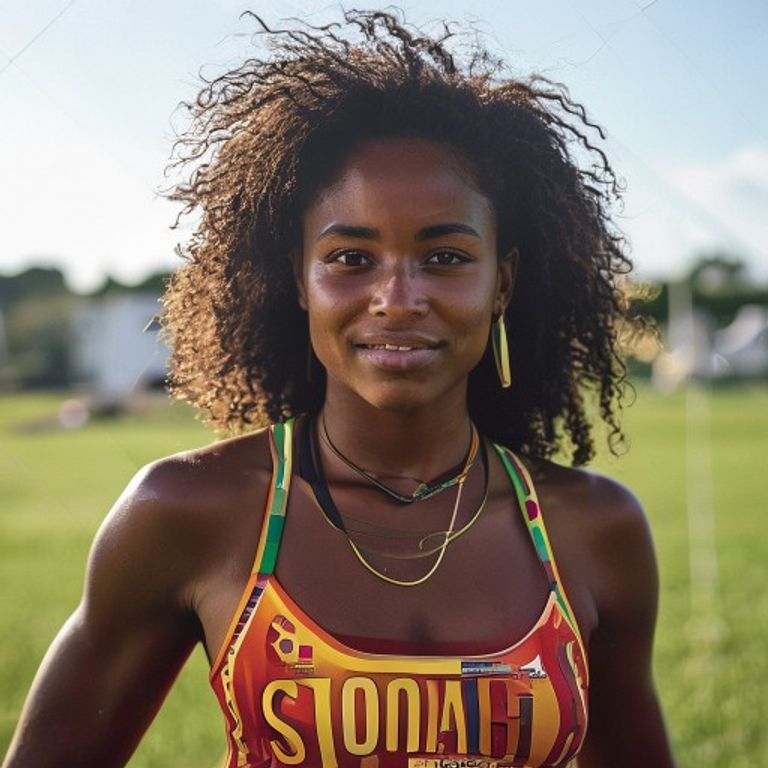
On the eastern fringes of the Caribbean Sea, where turquoise waters collide with the geological brutality of mountains covered by impenetrable tropical forests, lies the Commonwealth of Dominica. Known as the "Nature Island," Dominica is home to a population of just over seventy thousand, a territory battered by devastating hurricanes and a British colonial heritage that enshrined cricket as the archipelago's secular religion. However, it is on the grassy rectangle of the football pitch that a narrative of resistance, tragedy, corruption, and rebirth is drawn with almost literary contours. The Dominica national football team, affectionately nicknamed The Nature Boyz, embodies the herculean struggle of a micro-nation to pin its flag on the geopolitical map of international football. Affiliated with FIFA only in the nineties, the team carries on its shoulders the weight of representing a country without a professional league, whose athletes balance training routines with jobs in agriculture, fishing, and the civil service. This dossier dives into the depths of one of the most unique and unknown trajectories in Caribbean football, analyzing how geopolitics, climate catastrophes, behind-the-scenes intrigue, and unbridled passion have shaped the tactical and social identity of football in Dominica.
1. Origins and Formation of National Identity
To understand the genesis of football in Dominica, it is imperative to decipher the complex social and colonial tapestry that defines the island. Unlike neighbors with Spanish or French colonization, where football was established organically in the early 20th century, Dominica, as a British colony until 1978, had its sporting landscape largely dominated by cricket. Cricket was not just a sport; it was the tool of civility and social distinction imposed by the British Empire. Football, relegated to the working classes and played informally on vacant lots and black volcanic sand beaches, took time to find an institutionalized structure.
The Dominica Football Association (DFA) was founded in 1970, during a period of intense political effervescence that preceded the country's independence. At that time, football began to be seen as an element of identity affirmation, a form of expression for the urban youth of Roseau, the capital, and Portsmouth, the second-largest city. However, the lack of resources and geographical isolation limited the national team's activities to sporadic friendlies against neighboring islands, such as Saint Lucia, Saint Vincent and the Grenadines, and Martinique, within the scope of the historic Windward Islands Tournament.
During the 1970s and 1980s, the Dominica national team operated in near-absolute amateurism. Players traveled by boat between islands, often financing travel expenses out of their own pockets. There were no standardized uniforms, fields with adequate drainage, or any permanent coaching staff. Football was a community passion, played under the shade of palm trees and to the sound of reggae and calypso echoing from improvised stands.
The major institutional turning point occurred in 1994, when the DFA obtained official affiliation with CONCACAF and FIFA. This monumental step inserted Dominica into the global circuit, ensuring access to development funds from football's governing body, such as the Goal program. From this moment on, the national team ceased to be a collection of local enthusiasts and became a sovereign representative in World Cup qualifiers. The debut in qualifiers took place in 1996, aiming for the 1998 World Cup in France. The historic clash against Antigua and Barbuda marked the baptism of fire for the Nature Boyz, who, despite the elimination, showed the continent that the small volcanic island possessed technical raw material worthy of note.
The transition to administrative professionalism, however, collided with the country's socioeconomic reality. Dominica is an island with rugged terrain, which historically hindered the construction of large-scale sports infrastructure. Windsor Park, the country's main sports venue located in Roseau, was for decades a shared ground between cricket and football, with the latter often sidelined in terms of maintenance and calendar priority. Thus, the identity of Dominican football was formed under the sign of improvisation and physical resilience. The players developed a playing style characterized by physical strength, speed in transitions, and psychological endurance shaped by daily coexistence with the climatic and economic adversities of their homeland.
2. Golden Era, Great Campaigns, and Eternal Idols
Although Dominica has never qualified for a World Cup or the final stage of the CONCACAF Gold Cup, the country's football history is punctuated by moments of intense brilliance that remain alive in the collective memory of fans. The late 1990s and early 2000s are often cited as the "Golden Era" of Dominican football, a period in which the team managed to compete on equal terms with regional powers and export its first talents to neighboring leagues.
One of the most memorable chapters of this trajectory occurred in the qualifiers for the 2006 World Cup. Under the technical command of experienced local coach Don Leogal, Dominica overcame the Bahamas in the first round with a 4-2 aggregate score, triggering a wave of national euphoria. The reward was a historic clash against the giant Mexico, one of the greatest powers in the Americas. Although the technical and financial disparity resulted in crushing defeats (10-0 in San Antonio, United States, where Dominica hosted its game due to the lack of a FIFA-approved stadium, and 8-0 at the iconic Estadio Azteca), the experience of facing stars like Jared Borgetti, Rafael Márquez, and Jaime Lozano transformed into a milestone of learning and national pride. For the first time, the youth of Roseau saw their compatriots sharing the same pitch with the elite of world football.
Another unforgettable milestone occurred in October 2010, during the first qualifying round for the Caribbean Cup. Playing in Saint Kitts and Nevis, Dominica achieved a historic 10-0 rout over the British Virgin Islands. In that game, striker Kurlson Benjamin inscribed his name indelibly in the country's sporting mythology by scoring five goals. Benjamin, a striker of immense physical strength and a keen eye for goal, became the greatest scorer in the national team's history, symbolizing an era of competitiveness and respect in the Caribbean region.
In addition to Kurlson Benjamin, Dominica's gallery of eternal idols includes names like Julian Wade. Wade is widely considered the most technical player the country has ever produced. A versatile forward, he was a pioneer in building a solid career outside the island, playing professionally in Guyana, Guadeloupe, and later venturing into Scottish football, where he played for Brechin City. His ability to hold the ball, dictate the pace of the attack, and finish with precision served as a mirror for subsequent generations.
In the defensive goal, the mythical figure of Glenson Prince stands out. A long-time goalkeeper and captain, Prince is not only a technical leader between the posts but also a social leader. A teacher by profession, he embodies the spirit of the athlete-citizen of Dominica, balancing his duties in the classroom with the responsibility of defending the nation's colors in international arenas. His miraculous saves against teams like Canada and Jamaica in past qualifiers earned him the status of a living legend of the national sport.
Dominica Football Hall of Honor
- Kurlson Benjamin: Top scorer in a single national team match (5 goals against the British Virgin Islands in 2010).
- Julian Wade: First Dominican player to play professionally in Europe (Brechin City, Scotland).
- Glenson Prince: Goalkeeper with the most international caps and historic team captain.
- Windsor Park: The temple of sport in Roseau, rebuilt with international aid and the stage for the country's biggest clashes.
3. Rivalries, Crises, and Behind-the-Scenes Power
Football in the Caribbean is inseparable from regional geopolitics and the complex power relations that govern CONCACAF. For Dominica, the fiercest rivalries are micro-regional, fought against its neighbors in the Windward Islands: Saint Lucia, Saint Vincent and the Grenadines, and Grenada. These clashes, known locally as "Channel Derbies," transcend the sporting aspect. They are disputes of prestige between former British colonies that share close cultural ties but compete fiercely for tourism resources, foreign investment, and sporting supremacy.
However, the history of football in Dominica is not just made of sporting rivalries; it is deeply marked by severe administrative crises and political scandals that shook the structures of the DFA. The most controversial and cinematic episode in the history of Dominican football involves the figure of Patrick John.
Patrick John was the prime minister who led Dominica toward independence in 1978. His political trajectory, however, was marked by extreme turbulence, including a failed coup attempt in 1981 that involved foreign mercenaries associated with the Ku Klux Klan (an operation known as "Red Dog"). After serving a prison sentence, John sought public redemption through sport. In 1992, he was elected president of the Dominica Football Association (DFA), a position he held for nearly two decades.
Under Patrick John's management, the DFA obtained FIFA affiliation, but also plunged into a period of power centralization and lack of financial transparency. The peak of the crisis occurred in 2011, when John was banned from football by FIFA for two years and fined after being found guilty of involvement in the bribery scandal that shook CONCACAF during Mohamed bin Hammam's presidential campaign. The scandal revealed that Caribbean officials received envelopes containing forty thousand dollars in cash during a meeting in Trinidad and Tobago. John's suspension exposed the ethical fragility of the federation and left local football in an administrative vacuum.
In addition to political crises, football in Dominica was severely battered by human and climatic tragedies. In April 2013, the country was shaken by the tragic death of the national team coach, Kurt Hector, and player Norran Jno Hope. Both died in a tragic car accident when the highway they were traveling on gave way due to landslides caused by heavy rains, while they were heading to the airport to play in the Windward Islands Tournament in Saint Vincent. The tragedy united the nation in mourning and left deep scars on the group of players.
Four years later, in September 2017, Hurricane Maria, a category 5 storm, devastated Dominica. The hurricane destroyed more than 90% of the island's buildings, including the DFA headquarters and the Windsor Park pitch. Football in the country was paralyzed for nearly two years. Without fields to train on and with communications cut off, the national team was forced to play all its matches as a visitor or on neutral grounds abroad. The physical and psychological reconstruction of Dominican football after Hurricane Maria is one of the most poignant testimonies of resilience in world sport.
4. The Current Moment: Tactics, Generation, and Challenges
The current tactical scenario of the Dominica national team reflects the need to adapt to the demands of modern football, characterized by greater physical intensity and tactical rigor, in a context where most local athletes still lack a daily professional training routine. Currently competing in the CONCACAF Nations League, the team has fluctuated between Leagues B and C, seeking to consolidate a tactical identity that balances its physical strengths with defensive organization.
Under the leadership of recent coaching staffs, who prioritize the modernization of training methods, Dominica usually lines up in a tactical structure based on a 4-2-3-1 or 4-1-4-1. This design aims to protect the defensive line, historically vulnerable to quick attacks from more qualified opponents, and exploit the speed of its wingers in vertical offensive transitions. The team bases its game on a medium-low defensive block, compacting the lines to deny space between the lines and force the opponent to play down the flanks.
The great tactical challenge for the Nature Boyz lies in retaining possession and supported offensive transition. Due to the lack of high-level local competitions, players often find it difficult to remain calm under high pressure, resorting to long balls to the center-forward. When the opponent manages to neutralize the first long ball, Dominica tends to suffer from physical wear and tear resulting from long periods of chasing the ball.
The current generation of players presents an interesting mix of resilient veterans and youngsters trained under the influence of more modern methodologies. Midfielder Briel Thomas is the team's tactical engine in the central sector. With experience in Trinidad and Tobago football, Thomas offers defensive balance, quality in ball distribution, and the ability to dictate the pace of the game. Alongside him, youngsters like Javid George bring irreverence, speed, and dribbling, fundamental characteristics to challenge opposing defenses in one-on-one situations.
However, the prospects for evolution in the short and medium term are severely limited by infrastructure. The absence of a fully professionalized league in the country prevents local athletes from reaching the peak of their physical and tactical form. Most national team players need to reconcile national team training, which takes place at the DFA technical training center in Tarish Pit, with their regular jobs. Accumulated fatigue and the lack of proper post-training recovery are opponents as fearsome as the rivals on the pitch.
5. Talent Development, Structure, and Future
The future of football in Dominica depends intrinsically on the country's ability to structure its youth categories and establish efficient channels for talent export. Without a domestic professional league that is economically viable due to the small size of the consumer market and the scarcity of corporate sponsorships, the salvation of Dominican football lies in the diaspora and the transfer of young athletes to more structured markets in the region and in Europe.
The Dominica Football Association has directed efforts to optimize the use of resources from the FIFA Forward program. The construction of the Technical Excellence Center in Tarish Pit represented a significant advance, offering a high-quality artificial pitch, modern locker rooms, and medical facilities that serve as a base for all national teams, from the under-15 categories to the senior team. This center minimizes dependence on Windsor Park, which continues to be a multi-use space frequently requested for cultural events and cricket matches.
In terms of athlete development, the biggest obstacle is the transition from youth to adulthood. Dominica has dynamic school competitions and active youth tournaments, but the absence of an under-23 league or clubs with professional structures means that many talents abandon the sport upon turning eighteen to prioritize university studies or enter the job market. To circumvent this barrier, the DFA has sought partnerships with universities in the United States and Canada, offering sports scholarships to young Dominican prospects.
Another vital strategy has been mapping the vast Dominican diaspora in Europe, especially in the United Kingdom. Caribbean countries like Jamaica, Montserrat, and Grenada have revolutionized their national teams by recruiting players born or raised in England with direct family ancestry. Dominica has followed this path gradually, identifying athletes who play in the lower divisions of the English Football League (EFL) and the National League (semi-professional). The integration of these "foreigners" brings not only immediate technical quality but also a culture of professionalism, tactical discipline, and physical intensity that raises the level of the national team's training and matches.
The path to be trodden by Dominica is paved with herculean challenges, but also by an unwavering passion. On an island where nature displays its most devastating force through hurricanes and storms, football has learned to be like the Dominican rainforest itself: resilient, capable of regenerating even after the worst devastations. With investments focused on the grassroots, the strategic use of the diaspora, and the consolidation of a transparent administrative structure, the Nature Boyz seek not only to compete but to prove that dignity and passion for the game do not depend on the size of a nation, but on the greatness of its sporting spirit.





