



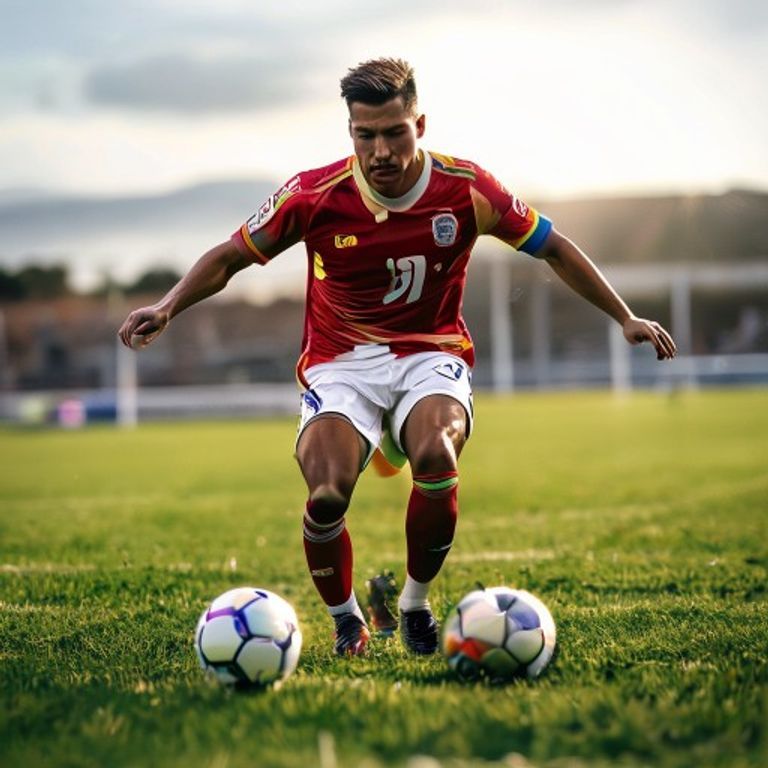
On cold autumn nights in Copenhagen, when the North Sea wind lashes the stands of Parken Stadium, Danish football reveals its true essence: a perfect symbiosis between Scandinavian order and an almost Latin creative insolence. Historically treated as a peripheral force, Denmark has built one of the most unique identities in world football. It is a national team that rejects the gray pragmatism often associated with Northern Europe, preferring aesthetic vertigo, tactical rebellion, and an almost mystical ability to rise to the occasion in the face of the greatest tragedies and adversities. From the revolutionary utopia of "Danish Dynamite" in the 1980s to the unbelievable miracle of the 1992 European Championship, and through the global commotion and tactical rebirth following Christian Eriksen's cardiac arrest in 2021, the history of the Danish national team (Dansk Boldspil-Union - DBU) is not just about sport; it is a sociological treatise on how a small nation of just under six million inhabitants learned to challenge the giants of the planet through collectivism, structural innovation, and unwavering passion.
1. Origins and Formation of National Identity
To understand the uniqueness of Danish football, one must look back to the late 19th century, when the Dansk Boldspil-Union (DBU) was founded in 1889. Denmark was one of the first countries outside the British Isles to embrace football in a passionate and organized manner. However, this early introduction brought with it a dogma that would shape—and, in a way, delay—the development of the sport in the country for nearly a century: strict amateurism.
While the rest of continental Europe professionalized rapidly in the 1920s and 1930s, Denmark clung to a romantic and aristocratic vision of the sport. Football was to be played purely for pleasure and civic virtue. This political and social stance created a competitive abyss. The Danish national team was capable of producing astonishing individual talents, but these players were quickly forced to choose between remaining in the country as amateurs or emigrating to foreign professional leagues, which automatically banned them from the national team, according to the DBU's rigid rules at the time.
The greatest symbol of this anachronism was Harald Nielsen. Nicknamed "Gull-Harald" (Golden Harald), the striker shone at the 1960 Rome Olympics, where Denmark won a historic silver medal playing an offensive and captivating style of football. However, upon signing a professional contract with Bologna in Italy, Nielsen was summarily banned from the national team. The DBU preferred to lose its best players rather than yield to "sports capitalism." This ideological stubbornness meant that Denmark spent decades as an irrelevant force in World Cups and European Championships, unable to compete with fully professional teams.
The 1978 Revolution: The End of Romanticism
The crucial turning point occurred in 1978. Pressured by the constant loss of talent abroad and competitive irrelevance, the DBU finally abolished amateurism and allowed professionalism in domestic football. The decision was driven by the historic sponsorship of the Carlsberg brewery, which injected significant funds into the federation and local clubs. From that moment on, Danish players playing abroad could be called up again.
This transition was not just financial; it was cultural. The Danish player, historically known for refined technique but sometimes lackadaisical attitude, needed to incorporate the discipline and physical demands of modern football. The emergence of Allan Simonsen, who won the Ballon d'Or in 1977 while playing for Borussia Mönchengladbach, served as a beacon that the Danish player could sit on the throne of world football if placed in an elite professional context.
The Roligan Concept: The Antithesis of Hooliganism
Parallel to the professionalization on the pitch, Danish stands developed a unique subculture in the 1980s: the Roligan movement. The term, a portmanteau of the Danish word rolig (meaning calm, peaceful) and the suffix of hooligan, was born as a direct and deliberate response to the violence that plagued English and European football at the time.
Roligans became cultural ambassadors for Denmark. Dressed in red and white, with modified Viking hats, painted faces, and armed with a self-deprecating sense of humor, they turned stadiums into festivals of camaraderie. This philosophy directly reflects the Danish concept of hygge—the pursuit of a warm, welcoming, and communal atmosphere. While other nations saw football as an extension of war by other means, Denmark turned it into a collective celebration of life, a stance that disarmed opponents and won the sympathy of neutral fans around the globe.
2. Golden Era, Great Campaigns, and Eternal Idols
The 1980s witnessed the birth of the team that would forever change the global perception of Scandinavian football. Under the command of German coach Sepp Piontek, hired in 1979, Denmark underwent a tactical and psychological metamorphosis. Piontek, known for his iron German discipline, managed to extract the best from the rebellion and natural talent of the Danes. He organized the team into an innovative 3-5-2 system that favored constant support from the wing-backs, rapid ball circulation, and a devastating offensive transition.
This team was immortalized as Danish Dynamite. The squad was a constellation of generational talents: the elegant sweeper Morten Olsen, the tireless midfielder Søren Lerby, the cerebral Frank Arnesen, the speedy winger Jesper Olsen, and, up front, the lethal duo composed of the indomitable Preben Elkjær and the young prodigy Michael Laudrup.
The 1986 Campaign: Vertigo in Mexico
The international consecration of Danish Dynamite occurred at the 1986 World Cup in Mexico. Drawn into the dreaded "Group of Death" alongside West Germany, Uruguay, and Scotland, Denmark not only survived but haunted the world. The 1-0 victory over Scotland was followed by a gala performance against Uruguay: a crushing 6-1, with a hat-trick from Preben Elkjær and an anthological performance by Michael Laudrup, whose goal dribbling past half the Uruguayan defense remains one of the paintings in the history of the World Cups.
Denmark closed the group stage by defeating the powerful West Germany 2-0. The world was in love with that total attack football, without defensive shackles. However, tactical innocence and overconfidence took their toll in the round of 16 against Spain. After opening the scoring, a disastrous back-pass by Jesper Olsen allowed Emilio Butragueño to equalize. The team collapsed emotionally and ended up being thrashed 5-1. Despite the painful elimination, that 1986 team established an aesthetic standard of offensive football that would influence generations of coaches.
1992: The Miracle of Gothenburg
If the 1986 generation was the most brilliant not to win, fate reserved the greatest glory of Danish football for a team assembled under the sign of pragmatism and improvisation. The story of the 1992 European Championship victory in Sweden is one of the most folkloric and unbelievable narratives in world sport.
Denmark had not even qualified for the tournament on the pitch, finishing second in their qualifying group behind Yugoslavia. However, with the outbreak of the Balkan Wars and subsequent UN sanctions, Yugoslavia was banned from the competition just ten days before kickoff. The Danish players, who were already on vacation or planning their summer trips, were hastily called up by the contested coach Richard Møller Nielsen.
Møller Nielsen had taken the job under heavy suspicion. He had abandoned Piontek's offensive style in favor of an extremely rigid and pragmatic defensive system, which led to the voluntary withdrawal of the country's biggest star, Michael Laudrup, who refused to play under that defensive philosophy. However, his younger brother, Brian Laudrup, accepted the challenge and became the team's technical reference on Swedish soil.
Without any pressure or proper preparation, Denmark started the tournament discreetly, drawing with England (0-0) and losing to hosts Sweden (1-0). Qualification for the semifinals came with a surprising 2-1 victory over the France of Jean-Pierre Papin and Eric Cantona. In the semifinal, the opponent was the reigning European champion, the Netherlands of Marco van Basten, Ruud Gullit, and Dennis Bergkamp. After an electrifying 2-2 draw in normal time, goalkeeper Peter Schmeichel grew in stature by saving the penalty taken by Van Basten, securing the spot in the historic final.
On June 26, 1992, in Gothenburg, Denmark faced the newly unified Germany in the grand final. What was seen was a display of heroic resilience. John "Faxe" Jensen opened the scoring with a violent shot from outside the box in the first half. Schmeichel made miraculous saves that defied the laws of physics to contain the German pressure. In the second half, Kim Vilfort, who traveled constantly during the tournament to visit his seven-year-old daughter who was battling leukemia (and who would unfortunately pass away shortly after), scored the title-winning goal with a cross-shot that hit the post before going in. Denmark won the European Championship 2-0, in one of the greatest upsets and stories of overcoming in the history of the sport.
Eternal Idols: From Schmeichel to Laudrup
The golden era established a pantheon of legends who continue to cast their shadow over Danish football:
- Michael Laudrup: Considered by many the greatest Scandinavian player of all time. A midfielder of aristocratic elegance, whose vision and millimeter-perfect passes (the famous "no-look passes") enchanted the world at Johan Cruyff's Barcelona and Real Madrid. His absence in 1992 remains one of the great paradoxes of his career.
- Peter Schmeichel: "The Great Dane." A goalkeeper who redefined the position with his intimidating physical presence, his "handball star" technique to close the angle of strikers, and his unwavering vocal leadership. He was the rock upon which the success of Manchester United in the 1990s and the 1992 Danish title were built.
- Brian Laudrup: Gifted with a change of pace and disconcerting dribbling ability, Brian was the creative engine of the 1992 conquest and shone intensely at the 1998 World Cup, where Denmark fell standing tall against Brazil in the quarterfinals in an epic 3-2 game.
- Allan Simonsen: The pioneer who proved that the Danish player could compete at the highest European level, being elected the best player on the continent in 1977.
3. Rivalries, Crises, and Behind-the-Scenes Power
The trajectory of the Danish national team is not free from intense conflicts, geopolitical rivalries, and institutional crises that tested the limits of the federation and the passion of the fans. Denmark's main rivalry is, without a doubt, with neighboring Sweden—a classic known as the "Scandinavian Derby." This rivalry transcends football, delving into centuries of territorial wars for control of the Baltic Sea and a constant cultural dispute over which nation represents the true model of social welfare and Nordic progress.
The 2007 Scandal: The Attack at Parken
The most dramatic and controversial chapter of this rivalry occurred on June 2, 2007, at Parken Stadium in Copenhagen, during the Euro 2008 qualifiers. In a frenetic game, Sweden opened a 3-0 lead, but Denmark staged a heroic comeback, tying the match at 3-3.
In the 89th minute, German referee Herbert Fandel awarded a penalty to Sweden and sent off Danish defender Christian Poulsen for punching Swedish striker Markus Rosenberg in the stomach inside the box. Before the kick could be taken, an intoxicated Danish fan invaded the pitch and ran toward the referee, attempting to physically assault him by the neck. He was restrained by Danish full-back Michael Gravgaard, but the damage was done.
Referee Fandel immediately ended the match due to lack of security. UEFA severely punished Denmark, declaring Sweden the winner by forfeit (3-0), imposing a heavy fine, and forcing Denmark to play its subsequent home games at least 140 kilometers from Copenhagen. The incident shocked Danish society, proud of its culture of peace and civility in stadiums, and deeply marked the sporting relations between the two countries.
The Silent Alliance of 2004
On the other hand, the relationship between Danes and Swedes has also been the target of international suspicions of collusion. At the 2004 European Championship in Portugal, both teams faced each other in the final round of the group stage. A 2-2 draw would qualify both teams for the quarterfinals, eliminating the powerful Italy, regardless of the result of the Italians against Bulgaria.
The Italian press expressed immense concern about a possible tacit agreement—the famous "biscotto." On the pitch, the game was extremely contested, but the final score was, in fact, 2-2, with the Swedish equalizer coming in the 89th minute through Mattias Jonson. Although both federations vehemently denied any manipulation, the result fueled conspiracy theories and solidified the perception that, despite internal rivalries, the Nordic countries protect each other when necessary.
Administrative Crises and the 2018 Players' Strike
Behind the scenes, the DBU often clashed with the athletes themselves due to commercial and image rights disputes. The peak of this tension occurred in September 2018, creating one of the most bizarre situations in the history of modern international football.
The federation and the players' union (Spillerforeningen) could not reach an agreement on a new collective bargaining agreement. The central point of the dispute was the commercial use of the players' individual image rights in campaigns for national team sponsors that competed directly with the athletes' personal sponsors (such as the dispute between sports brands and banks).
As a form of protest, the country's main stars, including Christian Eriksen, Kasper Schmeichel, and Simon Kjær, refused to sign the temporary contract and went on strike. Faced with the threat of exclusion from official UEFA competitions if they did not show up for the friendly against Slovakia and the Nations League match against Wales, the DBU took a desperate measure: it called up an emergency national team composed entirely of players from the national third and fourth divisions and athletes from the Danish futsal team.
Coached on an interim basis by former midfielder John Jensen (hero of 1992), this team of amateurs—which included students, plumbers, and insurance salesmen—took the field in Trnava against Slovakia, which featured stars like Marek Hamšík. Despite the technical abyss, the Danish amateurs fought bravely and lost by a dignified 3-0, avoiding a historic humiliation and severe UEFA sanctions. The conflict was resolved temporarily days later, allowing the return of the main stars for the game against Wales, but the crisis exposed the deep fractures and corporate greed that surrounded the management of football in the country.
4. The Current Moment: Tactics, Generation, and Challenges
Contemporary Danish football is deeply shaped by the trauma and catharsis experienced on June 12, 2021. During Denmark's opening match of Euro 2020 against Finland at Parken Stadium, star player and number 10 Christian Eriksen suffered a cardiac arrest on the pitch. The dramatic scenes of the Danish players forming a human shield around their teammate while he received CPR moved the planet.
Eriksen's survival and subsequent triumphant return to the pitch with an implanted internal defibrillator (AICD) became one of the most inspiring stories in world sport. Under the technical command of Kasper Hjulmand, the Danish national team transformed that pain into overwhelming competitive energy. Playing offensive, flexible, and emotionally charged football, Denmark reached the semifinals of that European Championship, falling only to England in extra time at Wembley, under highly controversial refereeing circumstances.
Kasper Hjulmand's Tactical Model
Kasper Hjulmand has structured Denmark as one of the most tactically fluid teams in Europe. The coach rejects rigid systems, preferring an approach based on principles of play that adapt according to the opponent and the moments of the match.
Denmark transitions comfortably between a defensive line of three center-backs (usually structured in a 3-4-2-1 or 3-5-2) and a line of four defenders (4-3-3). This flexibility is anchored by players of high tactical intelligence:
- The three-man build-up: Andreas Christensen (Barcelona) and Joachim Andersen (Crystal Palace) offer a refined ball exit. Christensen, in particular, has the ability to move into midfield, acting as a holding midfielder when the team has possession, emulating the classic role of the modern sweeper.
- The width of the wing-backs: Players like Joakim Mæhle (Wolfsburg) and Alexander Bah (Benfica) are fundamental. In Hjulmand's system, the wing-backs play extremely high up the pitch, almost like wingers, stretching opposing defenses and allowing creative midfielders to infiltrate the inner channels.
- The double pivot and creation: Pierre-Emile Højbjerg offers physical combativeness and positional discipline, while Christian Eriksen acts as the team's metronome. Even with the passing of the years, Eriksen's vision and ability to dictate the pace from deep positions remain the creative backbone of Denmark.
Generational Transition and New Protagonists
After the 2022 World Cup cycle in Qatar—which proved to be a huge disappointment, with an early elimination in the group stage amidst political protests against the human rights situation in the host country—Denmark began a necessary renewal process under the transition command of coach Brian Riemer, hired at the end of 2024 to lead the cycle until the 2026 World Cup.
The great symbol of this new era is striker Rasmus Højlund (Manchester United). Young, physically strong, and endowed with impressive speed for his stature, Højlund represents the prototype of the modern center-forward. He offers Denmark the vertical depth that the team often lacked in previous tournaments, when it relied excessively on slow positional attacks.
However, the team faces the challenge of replacing historic leaders who are in physical decline or who have retired from the national team, such as legendary captain Simon Kjær and dynamic midfielder Thomas Delaney. The transition of leadership to players like Højbjerg and Christensen is vital to maintain the mental resilience characteristic of the group.
5. Talent Development, Structure, and Future
How can a country with a population smaller than many global metropolises consistently produce world-class players and remain competitive at the top of European football? The answer lies in a silent revolution in talent development initiated by the DBU in the early 2000s, structured around the concept of integral youth development and innovative strategic partnerships.
The "Rød Tråd" (The Red Thread) Philosophy
The DBU implemented a unified national curriculum known as "Rød Tråd" (The Red Thread). This philosophy dictates that all youth clubs in the country must follow similar methodological guidelines, focused on technical excellence, intelligent decision-making, and the athlete's psychological well-being.
Unlike highly competitive and ruthless systems like those in other countries, the Danish model prioritizes late development. There are no official league tables or pressure for results in youth tournaments before the age of 12. The focus is on keeping as many children as possible practicing the sport in a fun, low-stress environment, avoiding early burnout and allowing late physical bloomers not to be discarded by the system.
The FC Nordsjælland and Right to Dream Case Study
At the club level, Denmark has become one of the most innovative development laboratories on the planet. The most emblematic example of this vanguard is FC Nordsjælland (FCN), based in Farum.
In 2015, FCN was acquired by the Right to Dream organization, founded by British scout Tom Vernon. Right to Dream operates a completely free elite football academy in Ghana. Under this unique partnership, the best talents trained at the Ghanaian academy are transferred to FC Nordsjælland when they turn 18, integrating into a squad composed mostly of young Danish prospects trained locally.
This model revolutionized the club, which plays ultra-offensive, high-intensity football focused on youth. Nordsjælland has become a massive export showcase for the five major European leagues, revealing players like Mohammed Kudus (West Ham), Kamaldeen Sulemana (Southampton), and Andreas Schjelderup (Benfica). More than that, the model promotes a rich cultural and social exchange between young Africans and Scandinavians, redefining the concept of social responsibility in football.
The Data-Driven Model of FC Midtjylland
Another pillar of Danish innovation is FC Midtjylland. The club was one of the global pioneers in the application of advanced data analysis (Sabermetrics applied to football) for player recruitment and performance optimization, under the influence of its owner Matthew Benham (who also revolutionized Brentford in England).
Midtjylland specialized, for example, in the scientific training of set-pieces, hiring dedicated specialists and using detailed metrics to maximize every corner and free-kick. This focus on extreme efficiency and the mining of undervalued talent in peripheral markets allowed the club to challenge the historical hegemony of FC Copenhagen and Brøndby IF, in addition to achieving regular appearances in the Champions League group stage.
Promises for the Future
Thanks to this robust infrastructure, Denmark continues to produce talents that promise to keep the national team competitive in the next decade:
- Patrick Dorgu (Lecce): A left wing-back of immense physical power, speed, and technical ability. Dorgu is pursued by European giants and represents the evolution of the Danish wide player.
- Albert Grønbæk (Rennes): A dynamic, creative midfielder with an excellent eye for goal, pointed out as one of the potential heirs to the link-up role in the national midfield.
- Maurits Kjærgaard (RB Salzburg): Trained in the Red Bull school, Kjærgaard combines an imposing physical stature with sharp vision, being the prototype of the modern "box-to-box" midfielder.
In short, Denmark enters the second half of the 2020s consolidated not only as an example of sporting success but as a model of sustainability, tactical innovation, and human resilience. Whether through the tactical brilliance of its new generations, the scientific innovation of its clubs, or the unwavering passion of its roligans, Danish football continues to prove that the size of a nation does not limit the greatness of its footballing dreams.





