



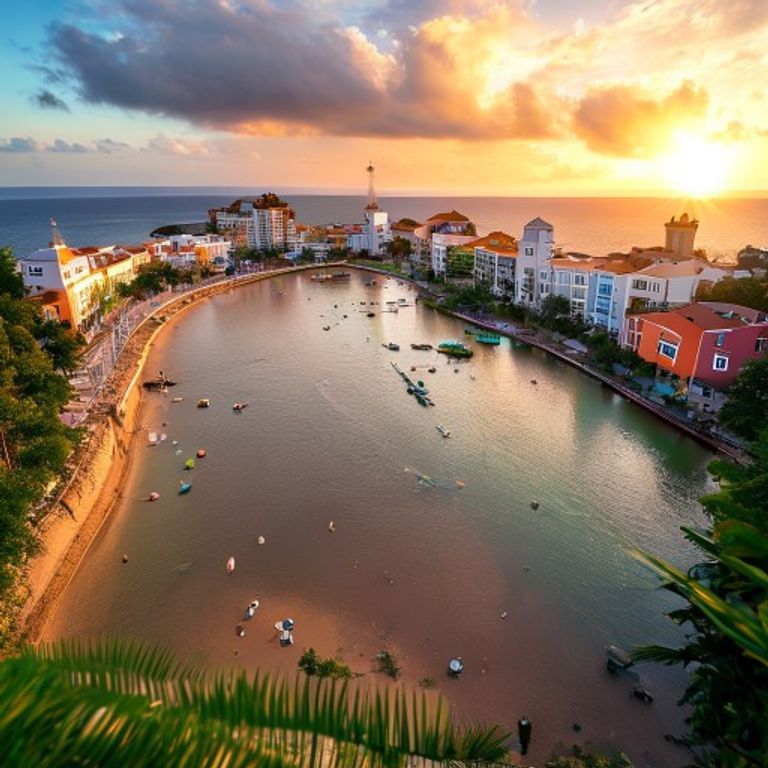
In the narrow streets of pastel-colored colonial facades in Willemstad, the capital of Curaçao, the constant breath of the trade winds carries more than just the scent of Caribbean salt; it echoes the complex and fascinating narrative of one of the most unique footballing identities on the planet. Far from being just another island enclave affiliated with CONCACAF, the Curaçao national team represents a sociopolitical and tactical laboratory where the classic Dutch school of football merges with the flair, resilience, and physical vigor of the Antilles. It is an autonomous territory of the Kingdom of the Netherlands that, following the dissolution of the Netherlands Antilles in 2010, had to refound not only its state structures but its own football as well. The result of this metamorphosis is a hybrid team, composed mostly of athletes born or trained in the elite academies of Amsterdam, Rotterdam, and Eindhoven, who have chosen to wear the blue and yellow of their ancestors' homeland. Under the baton of historical names of the caliber of Patrick Kluivert, Guus Hiddink, and, more recently, the veteran Dick Advocaat, the so-called "Blue Family" has ceased to be a mere extra in Central America to consolidate itself as a competitive force capable of challenging continental giants, constantly balancing between European tactical sophistication and the structural hardships of Caribbean football.
1. Origins and Formation of National Identity
To understand the genesis of football in Curaçao, it is imperative to delve into the complex historical tapestry that unites the island with the Dutch crown. Football was introduced to the territory in the early 20th century, driven by merchant sailors, civil servants, and, fundamentally, by Catholic friars who saw the sport as a tool for social discipline and integration for the local youth. In 1921, the Curaçaosche Voetbal Bond (CVB), the local federation, was founded, marking the beginning of the formal organization of competitions. However, the true catalyst for the island's sporting and economic development was the installation of the Shell (CPIM) oil refinery in Schottegat Bay during World War I. The refinery not only transformed Curaçao's demographics, attracting immigrants from across the Caribbean, but also financed clubs, built football pitches, and sponsored the first international tours of the local national team.
During the 1930s and 1940s, Curaçaoan football experienced a period of isolated effervescence. The team competed under the territory's own name and already demonstrated notable technical superiority over its regional neighbors. In 1948, with political reforms that granted greater autonomy to the Dutch colonies, the team began to officially represent the Netherlands Antilles, a political entity that also encompassed Aruba, Bonaire, Sint Maarten, Sint Eustatius, and Saba. Under this banner, the Caribbean selection achieved its first international glories, participating in the 1952 Helsinki Olympic Games, where they faced Turkey in a historic duel that put Antillean football on the global sports map.
The relationship of dependence and exchange with the European metropolis has always shaped the identity of the Curaçaoan player. Since the mid-20th century, the island's brightest talents migrated to the Netherlands in search of better living conditions and professionalization in football. This two-way migratory flow established the foundations of a diaspora that, decades later, would become the pillar of support for the national team. The political dissolution of the Netherlands Antilles, formalized on October 10, 2010 (the historic "10-10-10" day), marked the end of an era and the rebirth of Curaçao as an autonomous country within the Kingdom of the Netherlands. Sportingly, the Curaçao Football Federation (FFK) inherited the affiliation of the former Antillean federation in FIFA and CONCACAF, taking on the challenge of building a new brand in international football from scratch.
This process of national refoundation exposed a deep sociological duality. On one hand, there was the football played on the island, semi-professional in nature, limited by a scarcity of infrastructure, synthetic grass pitches worn down by the relentless sun, and a low-budget local league. On the other, there was a vast colony of citizens of Curaçaoan origin residing in the working-class suburbs of major Dutch metropolises, whose children were honed in the youth academies of Ajax, Feyenoord, and PSV. Reconciling these two realities and creating a sense of national belonging in athletes who had never resided on the island became the FFK's main political and sporting challenge in the 2010s, setting the stage for the silent revolution that would transform the Curaçao team in the following years.
2. Golden Age, Great Campaigns, and Eternal Idols
The history of Curaçaoan football is punctuated by moments of intense brilliance that defy the territory's geographical smallness. The first great icon of this trajectory was, without a doubt, Ergilio Hato. Popularly known as the "Black Panther" due to his feline agility, impressive elasticity, and preference for wearing black uniforms, Hato is widely considered the greatest footballer in the history of the Antilles. Playing as a goalkeeper in the 1940s and 1950s, he led the team in memorable campaigns in Central America and the Caribbean. His fame was such that major clubs in South America and Europe, including Real Madrid and Fiorentina, tried to sign him. Hato, however, refused all professional offers, preferring to maintain his amateur status in his homeland, where he worked as a civil servant. Today, the country's main stadium in Willemstad proudly bears his name, immortalizing the man who symbolized the dignity and talent of Curaçaoan football.
Under the moniker of the Netherlands Antilles, the team experienced its continental peak in the 1960s and 1970s. In the 1963 and 1969 editions of the CONCACAF Championship (the precursor tournament to the Gold Cup), the team finished in third place, consolidating itself as one of the region's powerhouses. That golden generation was characterized by an offensive, technical, and extremely physical style of play, which mixed the tactical discipline brought by Dutch coaches with the natural creativity of Caribbean players. However, after this period of prosperity, local football entered a long hiatus of international relevance, stifled by a lack of investment and administrative disorganization, until the advent of sporting independence in 2010.
The modern rebirth of Curaçao began to take shape in 2015 with the hiring of Patrick Kluivert as technical director. The former Barcelona and Dutch national team striker used his global prestige to convince dozens of professional players of Curaçaoan origin playing in the Eredivisie and the English Football League to represent the national team. Under Kluivert's command, Curaçao advanced significantly in the 2018 World Cup Qualifiers and paved the way for the historic 2017 Caribbean Cup victory. Under the technical leadership of Remko Bicentini, Kluivert's assistant and successor, the team defeated Jamaica in the final in Martinique, securing the first major trophy in its modern history and ensuring qualification for the CONCACAF Gold Cup.
The definitive consecration of this new era occurred in the 2019 Gold Cup. Drawn into a difficult group alongside El Salvador, Jamaica, and Honduras, the Curaçao team surprised the continent. With a historic 1-0 victory over Honduras and a dramatic stoppage-time draw against Jamaica, featuring a memorable goal by Jurich Carolina, the team advanced to the quarterfinals for the first time. In the knockout stage, they faced the hosts, the United States, in Philadelphia. Despite the 1-0 defeat, Curaçao dominated possession at various moments of the match and was given a standing ovation by the international press, consolidating players like captain Cuco Martina, dynamic midfielder Leandro Bacuna, and goalkeeper Eloy Room as contemporary national heroes.
3. Rivalries, Crises, and Behind-the-Scenes Power
The development of football in Curaçao did not occur in a vacuum of tranquility; on the contrary, it was frequently shaped by regional geopolitical tensions and deep internal administrative crises. The island's main historical rivalry is against Aruba. Originally, both islands were part of the Netherlands Antilles, and clashes between clubs from Willemstad and Oranjestad were charged with an intense local rivalry, fueled by economic and political disputes within the archipelago. When Aruba obtained its "status aparte" in 1986, separating administratively from the Antilles, the sporting rivalry intensified, turning into a classic with strong nationalist appeal. Another major historical rival is Suriname, a former Dutch colony in South America. The duels against the Surinamese, known as the "Diaspora Derby," carry a unique emotional weight, as both federations compete directly for the attention and dual citizenship of the same talents trained on the pitches of the Netherlands.
Behind the scenes at the Curaçao Football Federation (FFK), internal politics frequently threatened to ruin the sporting progress achieved on the pitch. The post-2010 transition was marked by accusations of corruption, embezzlement of funds allocated by the FIFA Forward program, and a chronic lack of transparency in resource management. The local federation was always seen by critics as a stronghold of local elite political power, oblivious to the real needs of the island's grassroots football. Recurring financial crises resulted in delays in paying bonuses to diaspora players, which often led to threats of boycotts by professional athletes accustomed to the extreme professionalism of European clubs.
One of the most controversial and painful episodes in the recent history of Curaçaoan football occurred in September 2020. Amid the COVID-19 pandemic, the FFK board decided to fire coach Remko Bicentini abruptly and without prior notice, replacing him with the renowned Guus Hiddink. Bicentini, who had been the architect of the victorious campaigns in the Caribbean Cup and the Gold Cup, learned of his dismissal through the press, which generated a huge wave of indignation among the national team players. The squad, led by the main technical references, issued public statements repudiating the federation's attitude, highlighting the exposed fracture between the locker room and the board. Although Hiddink's arrival brought international prestige, the transition was troubled, and the legendary Dutch coach eventually stepped down due to health problems, leaving a trail of technical instability.
In addition to political crises, the team also had to deal with immeasurable tragedies that tested the group's psychological resilience. In September 2019, during preparations for a CONCACAF Nations League match against Haiti in Port-au-Prince, reserve goalkeeper Jairzinho Pieter, only 31 years old, suffered a fatal heart attack at the team hotel. Pieter's sudden death shocked the country and the national team squad. Instead of abandoning the match, the players decided to take the field in honor of their deceased teammate, snatching a heroic draw in an environment of extreme emotional pain. This tragic event united the group of players even further, solidifying the motto of "La Familia Azul" as a philosophy of survival and unity in the face of adversities imposed by disorganization and the setbacks of fate.
4. The Current Moment: Tactics, Generation, and Challenges
Currently, the Curaçao national team is undergoing a process of deep tactical and generational transition. Under the command of veteran Dutch coach Dick Advocaat, hired in early 2024 with the clear goal of qualifying the team for the 2026 World Cup, the team is seeking to redefine its playing identity. Advocaat, known for his defensive pragmatism, tactical rigor, and vast international experience, inherited a squad that had been suffering from the aging of its key pieces. The current manager's challenge is to rejuvenate the team without losing the backbone of leadership that sustained the great campaigns of the last decade.
Tactically, Curaçao has historically structured itself in the classic Dutch 4-3-3, prioritizing ball possession, width on the flanks with fast wingers, and rapid offensive transition. Under the leadership of experienced midfielders like Vurnon Anita (formerly of Ajax and Newcastle) and Leandro Bacuna, the team demonstrates a refined ability to dictate the pace of the game and maintain positional organization. However, Advocaat has been implementing variations to a 4-2-3-1 and, occasionally, a five-man defensive line when facing opponents of greater physical weight and intensity, such as Mexico, the United States, and Canada. The intention is to mitigate the team's historical defensive weaknesses, especially in tracking back after losing the ball and defending aerial balls, which have been recurring Achilles' heels in CONCACAF tournaments.
The current generation features names that combine experience in major European leagues with promising youth. Among the main highlights, we can list:
- Juninho Bacuna: A dynamic midfielder gifted with excellent vision, mid-range finishing ability, and physical strength, acting as the creative engine of the midfield.
- Jearl Margaritha: A forward with extreme speed and tight dribbling, fundamental for breaking down compact defensive lines and providing depth to the attack.
- Eloy Room: A goalkeeper with sharp reflexes and vast experience in MLS and the Eredivisie, who remains an indispensable vocal leader between the posts.
- Rangelo Janga: A physical reference center-forward, crucial for direct play and holding up the ball in the attacking third under pressure.
- Sherel Floranus: A modern right-back who offers defensive consistency and constant support in offensive transitions.
The current coaching staff's great tactical challenge is to find the balance between the European positional sophistication of the diaspora athletes and the need to adapt to the adverse conditions of Caribbean pitches. Playing qualifiers in Kingston, San Salvador, or Port-au-Prince requires a level of physical combativeness, mental resilience, and adaptability to the climate that often contrasts with the academic and comfortable training received by players on the impeccable pitches of the Netherlands. Advocaat's ability to instill this spirit of "Caribbean survival" in his players will be the determining factor for the success or failure of the project toward the 2026 World Cup.
5. Talent Development, Structure, and Future
The future of football in Curaçao rests on a delicate equation involving the development of local football and the maintenance of the scouting network in the Dutch diaspora. Historically, the Curaçao League (Promé Divishon) has been an amateur or semi-professional competition, dominated by traditional clubs such as CRKSV Jong Holland, SUBT (Sport Unie Brion Trappers), and Scherpenheuvel. Although these clubs possess a rich local history, they suffer from a chronic lack of training infrastructure, an absence of sports-specialized health professionals, and unstable calendars. The local championship, while revealing players of excellent physical vigor and refined individual technique, lacks the tactical intensity and competitiveness necessary to prepare athletes directly for the national team level.
To mitigate this technical gap, the FFK has sought partnerships with the Royal Dutch Football Association (KNVB) and Eredivisie clubs to implement training programs for local coaches and youth athlete exchanges. The long-term goal is to establish centers of excellence on the island that can replicate, with due proportions of scale and resources, the Dutch training methodology. However, the process is slow and runs up against the macroeconomic limitations of the territory itself, which prioritizes investments in sectors such as tourism and oil refining to the detriment of high-performance sports.
As long as the local structure does not reach the desired maturity, the Curaçao national team will continue to depend vitally on its "second lung": the scouting offices based in Europe. The federation maintains permanent technical observers in the Netherlands, tasked with monitoring young players of Curaçaoan descent who stand out in the youth categories of Dutch football. This search is not limited to the first division, extending also to the Keuken Kampioen Divisie (the Dutch second division), which serves as a true breeding ground for competitive and tactically disciplined athletes. Convincing these youngsters to choose Curaçao instead of waiting for a call-up to the Netherlands' senior national team requires constant diplomatic work, which sells not only the opportunity to play in World Cup qualifiers but also the reclamation of their cultural and family roots.
The prospects for the 2026 cycle are the most optimistic in the country's history. With the expansion of the World Cup to 48 teams and the consequent automatic qualification of the United States, Mexico, and Canada as host countries, three direct spots and two for the intercontinental playoffs have opened up in CONCACAF. For an emerging team like Curaçao, this represents the opportunity of a lifetime. If the federation can ensure administrative stability, if Dick Advocaat can extract the maximum tactical potential from his hybrid squad, and if the generational transition is conducted wisely, the small, sunny Caribbean island may very soon see its "Blue Family" parade on the biggest and most modern stages of world football, crowning one of the most beautiful sporting reconstruction journeys of the 21st century.





