



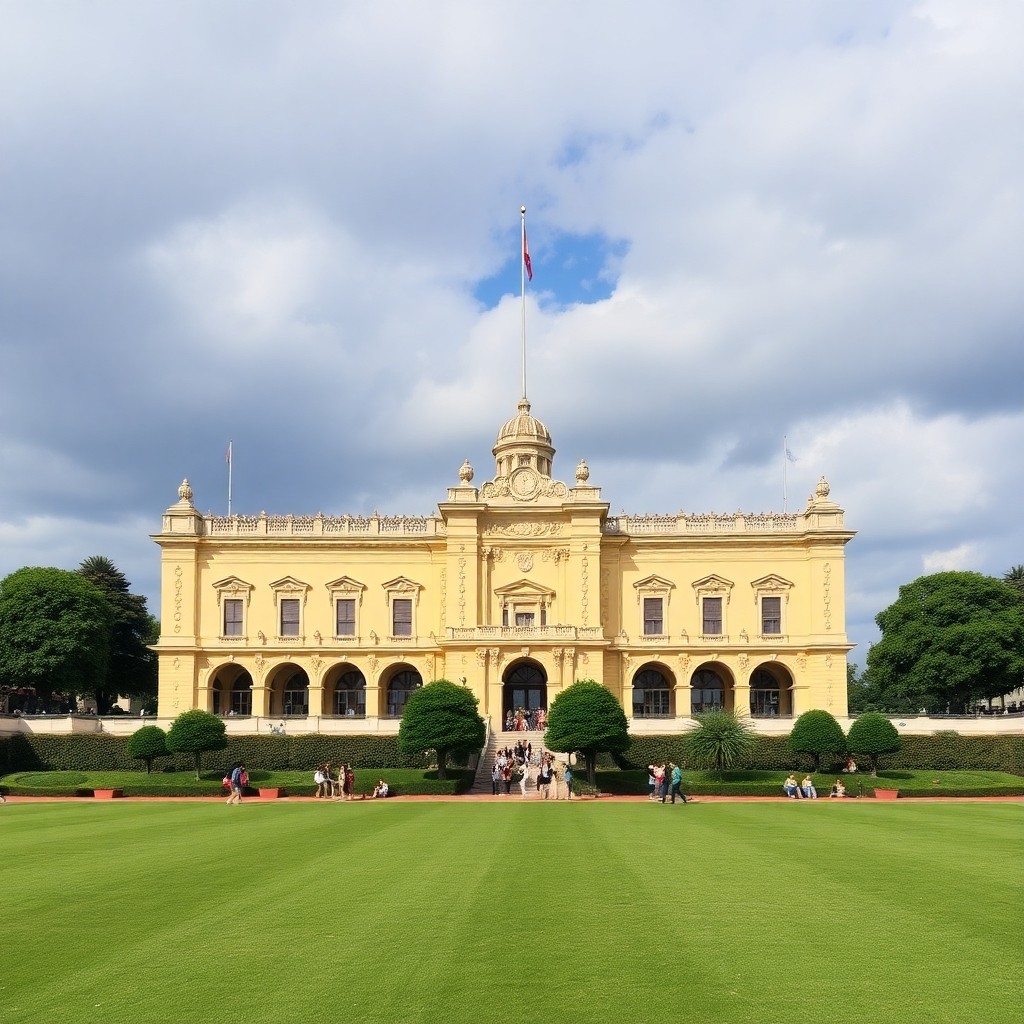
Founded in 1908 under the rebellious spirit of worker anarchism, Club Atlético Colegiales is one of the most unique and traditional institutions in Argentine lower-league football. Based in Munro, in the province of Buenos Aires, the club is currently experiencing the most glorious moment of its modern history after winning the historic Primera B Metropolitana title in November 2024, securing promotion to the Primera Nacional (the second division of Argentine football), ending decades of obscurity and consolidating itself as a bastion of cultural and sporting resistance.
Club History: From Anarchist Origins to the Exodus to the North
The history of Club Atlético Colegiales is inseparable from the social struggles and urban transformations that shaped Buenos Aires in the early 20th century. The club was officially born on April 1, 1908, in the Buenos Aires neighborhood of Retiro. Its founders were young railway workers and militants with anarchist and socialist leanings. For this reason, the association was originally named Club Atlético Libertarios Unidos.
Reflecting its ideological identity, the first colors adopted by the team were red and black, universal symbols of anarcho-syndicalism. However, the early 20th century in Argentina was marked by strong state repression against labor movements. Under pressure from police decrees and residency laws aimed at containing the "red threat," the club was forced to moderate its name and aesthetics to avoid forced dissolution and the loss of its official civil association registration.
In 1919, the institution changed its name to Sportivo del Norte. At the same time, the color palette also had to be modified: red and black were replaced by a tricolor design with blue, red, and white vertical stripes—a transition that, although imposed by the political circumstances of the time, eventually became the definitive and proud identity of the club, known today as "El Tricolor de Munro".
The 1920s brought profound geographical changes. Expelled from its original grounds in Retiro due to the expansion of the railway and port network, the club wandered through different areas until settling in 1925 at the intersection of Teodoro García and Giribone streets, in the traditional neighborhood of Colegiales. It was at this moment that the assembly of members decided to rename the institution definitively as Club Atlético Colegiales.
The stay in the neighborhood that gave it its definitive name lasted until 1948. With the real estate appreciation of the federal capital and the need for larger facilities, Colegiales made its final and definitive exodus, crossing the Avenida General Paz towards the northern zone of Greater Buenos Aires. The destination was the town of Munro, in the Vicente López district. It was there that the club planted its deepest roots, building its temple: the Estadio Libertarios Unidos, whose name is a direct and perennial tribute to its anarchist foundation.
Golden Eras and Historic Campaigns
Colegiales boasts a past of competitive relevance that dates back to the amateur era of Argentine football. Its first great golden era occurred in the late 1920s and early 1930s. Affiliated with the Asociación Argentina de Football (Amateurs y Profesionales), the club had a memorable campaign in 1932, becoming runner-up of the Primera División, finishing only behind Sportivo Barracas. At that time, the "Tricolor" went head-to-head with traditional teams from the Buenos Aires scene, displaying a style of football characterized by strong physical and technical imposition.
After the unification of the championships and the definitive consolidation of professionalism, Colegiales began to move through the lower divisions. In the 1940s, the club experienced moments of great prominence in the Primera C (which then equated to the third level of national football), culminating in the 1947 title, which spurred the physical move to Munro and the consolidation of its sports infrastructure.
Another memorable period occurred in the 1955 season, when the team won the Primera C again, securing a spot in the 1956 Primera B. During the following decades, the club alternated between periods of stability in the third division and painful drops to the Primera D, the last category of metropolitan football.
In recent history, the 2007/2008 season campaign is remembered with extreme devotion by the fans. Under the technical command of Armando "Pipi" González, Colegiales structured an impeccably defensive team and crowned itself champion of the Primera C, setting records for invincibility and points in the category, ensuring a return to the Primera B Metropolitana.
However, no campaign in the modern era equals the epic of 2024. After coming close in previous years (such as the painful final lost to Flandria in 2021), Colegiales designed a perfect season under the technical direction of Leonardo Lemos. By winning the 2024 Clausura Tournament, the team qualified to play the grand promotion final against Los Andes (winner of the Apertura). In the second leg, played in an electrifying atmosphere in Munro on November 16, 2024, Colegiales won 2-0 with goals from Laureano Marra and Mauricio Camargo, sealing the historic return to the Primera Nacional after nearly seven decades away from the second tier of Argentine football.
Context and Current Moment of the Team
The present of Club Atlético Colegiales is one of pure institutional and sporting effervescence. Promotion to the 2025 Primera Nacional has radically transformed the club's financial standing and media visibility. From a neighborhood institution focused on community resistance, Colegiales now projects itself onto the national stage, facing major teams from the interior of the country and the metropolitan region.
At the institutional level, the board presided over by Alejandro Orfila has been working at an accelerated pace to adapt the Estadio Libertarios Unidos to the structural and security requirements of the national second division. The renovation plan includes increasing spectator capacity, improvements to artificial lighting systems for night television broadcasts, and the modernization of press boxes.
The current squad blends the experience of players identified with the club and young prospects formed in the youth academy. Maintaining the 2024 championship core is seen by the coaching staff as the fundamental pillar to ensure survival and competitiveness in the Primera Nacional, a tournament notoriously long, exhausting, and of a high level of physical wear.
The Temple of Munro: Estadio Libertarios Unidos
Inaugurated in 1948, the Estadio Libertarios Unidos is much more than a football field; it is an open-air museum of Argentine neighborhood culture. Located in Munro, the stadium has a capacity for approximately 6,500 spectators. The name of the venue, formally reclaimed to honor the anarchist founders, is a source of immense pride for the fans, serving as a statement of principles against the sanitization of modern football.
The stadium's atmosphere is characterized by the proximity of the public to the pitch, creating suffocating acoustic pressure for opponents. The walls surrounding the stadium are decorated with artistic murals depicting club idols, symbols of the labor struggle, the classic tricolor, and references to the railway heritage of its founders.
Main Idols and Coaches Who Marked an Era
- Ángel "Pulpo" Del Río: An iconic goalkeeper of the 1940s and 1950s, Del Río is considered by many historians to be the greatest goalkeeper in the club's history. His leadership between the posts was fundamental to the promotion campaigns of that period.
- Horacio "El Chino" Torres: A midfielder with refined technique and extreme grit who marked an era in the 1970s and 1980s, becoming the player with the most matches played in the tricolor shirt.
- Sebastian Toshio "Chiche" Bricco: One of the great modern icons of the club. Bricco personified the warrior soul of lower-league football, serving as captain and technical reference in crucial campaigns of the 1990s and early 2000s.
- Laureano Marra: The young forward secured his immortality in the club's gallery of heroes by scoring the goal that paved the way for the 2-0 victory against Los Andes in the 2024 final, sealing promotion to the second division.
- Leonardo Lemos (Coach): The tactical architect of the 2024 miracle. Lemos managed to extract maximum performance from a modest squad, implementing a style of play characterized by defensive solidity, quick transitions, and an unwavering winning mentality.
Historic Rivalries
Colegiales has intense rivalries, forged in the heat of geographical disputes in the Northern Zone and coexistence in the lower divisions of metropolitan football.
The Classic against Excursionistas
This is undoubtedly the most traditional and emotionally charged classic for Colegiales. The rivalry with Club Atlético Excursionistas dates back to the times when both teams were based very close to each other in the Federal Capital (Colegiales and Bajo Belgrano, respectively). The first official match dates back to 1916. Over more than a century of clashes, the duel has transcended the sporting aspect, characterized by a strong territorial dispute and local prestige, with matches often marked by packed stadiums and enormous rivalry between the fan bases (barras).
The Regional Rivalry with Club Atlético San Miguel
Known in lower-league folklore as the "Clásico del Noroeste", the clash against San Miguel gained dramatic contours and extreme tension starting in the 1980s and 1990s. The geographical proximity between Munro and San Miguel (located in the northwest of Greater Buenos Aires) fuels a fierce dispute for the territorial hegemony of the region. Games between the "Tricolor" and the "Trueno Verde" are surrounded by special security schemes and deep popular passion.
Other Notable Clashes
Due to its location in Vicente López, Colegiales maintains neighborly rivalries with Platense (although the latter currently plays in the elite of Argentine football, which has distanced direct clashes) and with Defensores de Belgrano, the latter due to the history of decisive matches in the Primera B Metropolitana and the geographical proximity of their home neighborhoods.
Gallery of Titles and Achievements
| Competition / Category | Titles / Achievements | Years of Achievement |
|---|---|---|
| Primera División (Amateur Era) | Runner-up | 1932 (AAF) |
| Primera B Metropolitana (Third Division) | Champion (Promotion) | 2024 (Annual Champion/Promotion Final) |
| Primera C (Fourth Division / Third at the time) | Official Champion | 1913 (Intermedia), 1947, 1955, 1992/93, 2007/08 |
| Primera D (Fifth Division) | Official Champion | 1970 |
| Primera B Reducido Tournament | Winner | 1999/2000 |
Sources Researched
- Asociación del Fútbol Argentino (AFA) - Historical records of official promotion tournaments.
- Diário Olé - Special coverage of Colegiales' promotion in November 2024.
- Revista El Gráfico - Historical articles on the transition from amateur to professional football in Argentina.
- Centro de Investigación para la Historia del Fútbol (CIHF) - Documentation on the founding of Club Atlético Libertarios Unidos.
- Vicente López municipal archives and Munro neighborhood records.





