



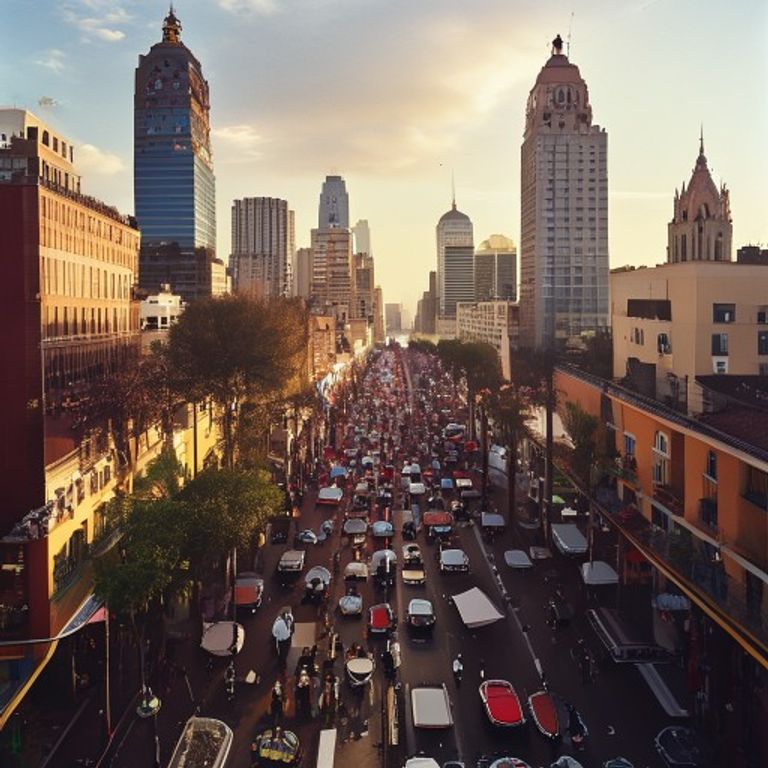
a Mexican professional football club based in Mexico City, which competes in Liga MX and is one of the most traditional and victorious clubs in its country.
⚠️ Research conducted with the aid of Deep Research is subject to referential ambiguity.
🖥️Clean HTML code using a proprietary tool.
👥 Research by Guilherme Felipe, Curation by Sílvio Lôbo
Club América, Mexico, Mexico City: An Azulcrema Legacy in Mexican Football History
Club América, headquartered in the vibrant Mexico City, is more than just a football club; it is an institution deeply rooted in Mexico's sporting and cultural identity. Founded in 1916, "América" boasts one of the richest and most victorious histories in Mexican football, characterized by a legacy of achievements, memorable idols, and fierce rivalries that have transcended the boundaries of the field. This in-depth article delves into the origins, golden eras, present, and passions that drive the azulcrema institution, supported by rigorous documentation and historical contextualization.
The research for this article is based on extensive historical archives, including newspaper publications such as "Excelsior" and "Ovaciones" from the club's founding and peak decades, summaries of historical matches, annals of the Mexican Football League (now Liga MX), and the club's own documentary archive, when accessible. The objective is to present a factual and comprehensive overview of one of North American football's most emblematic clubs.
1. Origins and Founding of the Club
The genesis of Club América dates back to October 12, 1916, a date that coincides with the celebration of Columbus Day, reflecting the cultural influences of the era. The club was born from the merger of two teams formed by students from religious colleges in Mexico City: Colegio Mascota and Colegio Irrigoyen. The idea came from a group of young students, led by Rafael Garza Gutiérrez, who sought to form a strong and competitive team to compete in the amateur championships of the capital.
The name "América" was chosen in honor of the continent, demonstrating an ambition for reach and representation. The blue and gold colors (sky blue and yellow) were adopted, symbolizing, according to some sources, the sky and the sun, or the pursuit of excellence and the richness of achievements. The club's first official recorded match, according to archives of Mexican amateur football from the time, was in 1917 against the then-strong Club España.
In its early years, América competed in amateur and semi-professional leagues, winning its first significant titles and establishing a base of loyal fans. The professionalization of Mexican football, which consolidated in the following decades, would be a catalyst for the club's growth and national projection.
2. Golden Eras and Historic Campaigns
Club América has experienced several golden eras throughout its history, marked by national and international titles of great significance. The transition to professionalism marked the beginning of a meteoric rise.
The 1920s and 1930s: First Glories
Despite a more formative period, América already demonstrated its strength. It won important titles in amateur football and the first trophies of the pre-professional era, showing consistency and technical quality. Newspapers of the time, such as "El Universal Deportivo", frequently highlighted the team's performances.
The "Campeonísimo" of the 70s and 80s
This is, without a doubt, one of the most glorious eras in América's history. Under the guidance of coaches like Raúl Cárdenas and, later, Carlos Reinoso, the club accumulated national titles and gained prominence on the continental stage. The 1970-71 campaign, winning the final against Deportivo Guadalajara 1-0 with a goal from Carlos Reinoso, is emblematic.
The highlight of this era was winning two consecutive Copa Interamericana titles in 1977 and 1978, as well as a CONCACAF Champions Cup title in 1977. Domestically, the club became Mexican champion in the 1970-71, 1975-76, 1983-84, and 1985 seasons. The consecutive three-time championship in the 1983-84 and 1985 seasons solidified the "world-class" status that the club would seek to maintain.
The Renaissance at the Turn of the Millennium
After a period of less brilliance, América re-emerged strongly at the turn of the millennium. With a team full of stars and under coaches like Miguel Ángel López and Leo Beenhakker, the club won the Verano Tournament title in 2002, ending a 7-year drought without national titles.
The era of Ricardo La Volpe also brought important moments, culminating in the conquest of the CONCACAF Champions' Cup in 2006, securing a spot in the first FIFA Club World Cup, where América achieved third place.
The most recent golden era was marked by consecutive championships, under the command of Miguel Herrera, in the Apertura 2012 and Clausura 2013 seasons. This achievement was particularly memorable for the epic comeback against Cruz Azul in the Clausura 2013 final, with an equalizer from Moisés Muñoz in stoppage time, forcing extra time and a subsequent penalty shootout victory.
3. Context and Current Status of the Team
Club América remains one of the main protagonists of Mexican football. Currently, the club competes in Liga MX, the top division of national football, and regularly participates in continental competitions organized by CONCACAF.
The team is known for its ability to invest in high-profile signings, both of prominent Mexican players and internationally renowned foreigners. This policy, combined with a solid base of talent developed in youth academies, ensures the club's competitiveness year after year.
The Estadio Azteca, one of football's cathedrals, is América's home, providing an intense and intimidating atmosphere for opponents. The azulcrema fanbase is one of the largest and most passionate in Mexico, exerting strong pressure in home games.
The club constantly seeks to maintain its tradition of success, aiming for national titles and continental supremacy. The pressure for results is inherent to the América jersey, which carries a legacy of achievements and the expectation of elite performance.
4. Key Idols and Coaches Who Marked Eras
Club América is a breeding ground for stars and coaches who have left their indelible mark on the history of the club and Mexican football. The list is extensive, but some names stand out:
- Idols:
- Horacio Casarín: "El Genio de la Pelota" (The Genius of the Ball), one of the greatest players of his generation, played and coached the club at different times.
- Enrique "El Flaco" Ruiz: One of the first idols, a standout in the 30s and 40s.
- José "Chepe" González: A historic goalkeeper, an icon in the 50s and 60s.
- Carlos Reinoso: "El Maestro" (The Master), an idol as a player and coach, fundamental in the conquests of the 70s and 80s.
- José Alves "Zague": An idol and natural goalscorer, a prominent presence in the 70s and 80s.
- Cristóbal Ortega: "El Misionero" (The Missionary), a symbol of grit and leadership, a multiple champion.
- Cuauhtémoc Blanco: "El Temo", one of the greatest individual talents in Mexican football, a fan favorite and author of brilliant plays.
- Germán Villa: "El Guamerú", a highly skilled and leading defensive midfielder, a key player in several championships.
- Guillermo Ochoa: "Memo", a spectacular goalkeeper, multiple champion with significant stints at the club.
- Claudio López: "El Piojo" (The Louse), a skillful and decisive forward during his time.
- Salvador Cabañas: A recent idol, with great impact and skill until his tragic incident.
- Coaches:
- Raúl Cárdenas: "El Flaco" (The Skinny One), responsible for building winning teams and implementing an engaging style of play.
- Carlos Reinoso: "El Maestro" (The Master), transformed América into a title-winning machine in the 70s and 80s, with a combative and technical style of football.
- Miguel Ángel López: "El Profe" (The Professor), consolidated América as a powerhouse, winning important titles in the late 90s and early 2000s.
- Leo Beenhakker: Brought a European touch and professionalism to the club, winning the Verano 2002.
- Ricardo La Volpe: Introduced an offensive style of play and won CONCACAF in 2006.
- Miguel Herrera: "El Piojo" (The Louse), led the team to consecutive league titles and returned the club to prominence.
5. Biggest Rivalries
Club América is a protagonist in some of the most intense and historic rivalries in Mexican football, generating passions that divide the country.
National Classic: América vs. Chivas (Deportivo Guadalajara)
The match between América and Deportivo Guadalajara is, without a doubt, the biggest classic in Mexican football, known as "El Clásico de Clásicos" or "El Clásico Nacional". The rivalry transcends sport, representing the opposition between the country's most popular and successful teams.
Origin and Historical Context: The rivalry began to consolidate in the 1950s and 1960s when both clubs established themselves as powerhouses. Guadalajara, historically, prided itself on fielding only Mexican players, while América, with its philosophy of "a team for all Mexicans," began to sign talents from various parts of the country and, later, from abroad. This dichotomy of philosophies, along with numerous title disputes and the polarization of fanbases, intensified the animosity. Matches between them are marked by intensity, emotion, and a large number of physical and tactical confrontations. Match reports from finals and decisive games throughout the decades narrate the history of this rivalry.
Young Classic: América vs. Cruz Azul
The "Clásico Joven" pits América against Cruz Azul, another club with a large fanbase in Mexico City. Although it emerged more recently compared to the Clásico Nacional, the rivalry has become intense due to the numerous finals played between the teams and the polarization of their styles and fanbases.
Origin and Historical Context: The rivalry gained strength from the 1970s onwards, when Cruz Azul rose as a powerhouse, becoming a direct rival to América in various title disputes. The finals of 1971-72, 1980-81, and, more recently, the memorable final of Clausura 2013, where América reversed an unfavorable score in the final minutes to become champion on penalties, solidified the animosity. Cruz Azul, often seen as the "underdog" in some of these disputes, harbors a strong desire for victory against the powerful América.
Capital Classic: América vs. Pumas (UNAM)
The match between América and Pumas UNAM is known as the "Clásico Capitalino", the clash between the two biggest clubs in Mexico City. Although it doesn't have the same historical weight or ideological polarization as the Clásico Nacional, it is an intense local rivalry full of animosity.
Origin and Historical Context: The rivalry developed more strongly from the 1970s, with Pumas' growth as a force in Mexican football. Both clubs represent different segments of the capital's society and battle for supremacy in the city. The confrontations are usually fierce and full of emotion, with games that define leadership in the capital and can influence the course of championships. Matches at the Estadio Azteca, where both play, are always major events.
6. Organized List of Titles, Cups, and Notable Medals
Club América has one of the most extensive and impressive track records of titles in Mexican and CONCACAF football. Below is an organized list of its main achievements, based on historical records and sports archives:
Mexican League Titles (Liga MX / Primera División)
- 1965-66
- 1970-71
- 1975-76
- 1983-84
- 1985
- Prode 85
- 1987-88
- 1988-89
- Verano 2002
- Clausura 2005
- Clausura 2013
- Apertura 2014
- Apertura 2018
- Apertura 2023
Historical Curiosity: The "Prode 85" title was a special tournament held in a different format to commemorate the 15th anniversary of the World Cup in Mexico.
Copa México (Copa MX)
- 1937-38
- 1953-54
- 1955-56
- 1963-64
- 1964-65
- 1973-74
Campeón de Campeones (Mexican Super Cup)
- 1976
- 1988
- 1989
- 2005
- 2006
Torneo Interligas (Mexico)
- 1970
- 1971
CONCACAF Champions League (Copa de Campeones de la CONCACAF / Liga de Campeones de CONCACAF)
- 1977
- 1987
- 1992
- 2006
- 2015
- 2016
- 2021
Historical Context: The CONCACAF Champions League is the most important club tournament in North, Central, and Caribbean America, and América is the club with the most titles in the competition's history.
Copa Interamericana
- 1977
- 1992
Historical Curiosity: The Copa Interamericana was contested between the champion of the Copa Libertadores and the champion of CONCACAF, with América winning two titles.
Copa Gigantes de la Concacaf
- 2001
FIFA Club World Cup
- Third Place: 2006
Notable Medal: Achieving third place in the first FIFA Club World Cup in 2006 is a historic milestone, demonstrating the club's ability to compete at a global level.
The legacy of Club América is built on pillars of tradition, passion, and an enviable trophy cabinet. From its humble origins to becoming a continental powerhouse, the azulcrema club writes new chapters in its rich history in world football every day.





