



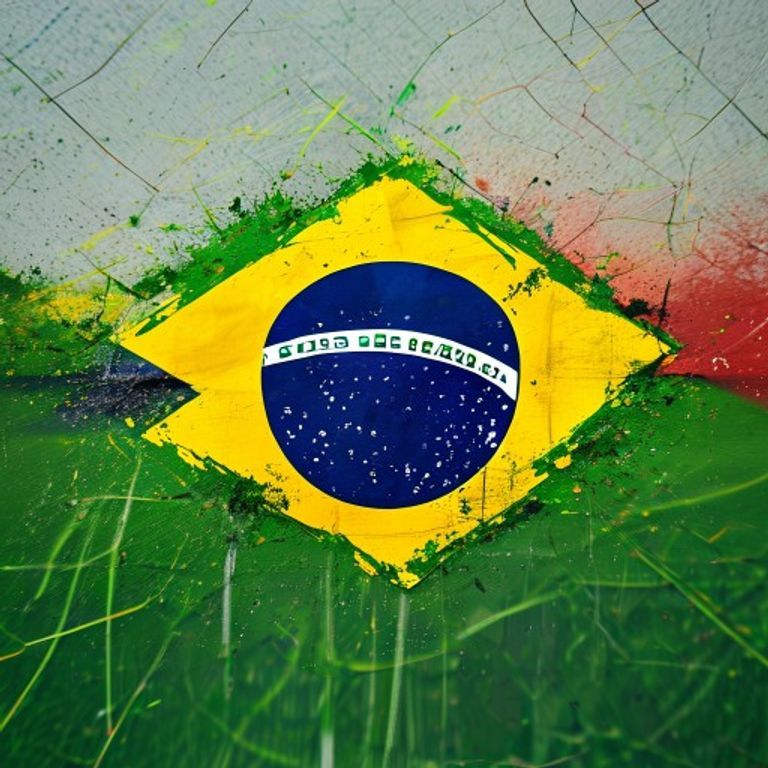
Brazil takes the field not just with eleven players, but under the weight of a folklore that is intertwined with the nation's very identity. The Brazilian National Team, or simply "the Canarinho squad," is currently experiencing one of the most disoriented moments in its century-long history. Caught between the eternal search for a tactical standard that honors the legacy of "Joga Bonito" and the pressing need for pragmatism to survive in a globalized and ultra-analytical football landscape, the five-time world champions are going through a traumatic transition period, marked by a crisis of confidence in the 2026 World Cup Qualifiers and the perennial debate regarding the (dis)connection between the fans and a team that seems increasingly distant from the country's popular soul.
1. Origins and the Construction of Identity (History and Trajectory)
Football arrived in Brazil at the end of the 19th century, brought by the academic and diplomatic elite, with Charles Miller credited as the pioneer who introduced the sport in São Paulo in 1894. However, what was once entertainment segregated within British colonies quickly metamorphosed into an urban social phenomenon. The founding of the Brazilian Sports Confederation (CBD) in 1914 marked the officialization of the entity that would become the seed of the current CBF. It was during this embryonic phase that Brazil defined, via the tragic "Maracanazo" of 1950, that its relationship with the sport would not be merely athletic, but one of symbolic survival.
The national team's visual identity underwent a revolution after the defeat in the 1950 final. The old white uniform, viewed as "devoid of patriotism" by the press of the time, was replaced in 1953 following a contest promoted by the newspaper Correio da Manhã. The "Canarinho" (Little Canary) was born: egg-yolk yellow, green trim, and blue. This aesthetic, later elevated to a sacred status, coincided with Vicente Feola's tactical revolution and the invention of the 4-2-4 formation in 1958, which broke away from rigid European structures and established individual creativity as a national dogma.
Historically, the Brazilian trajectory has been a pendulum between optimism and tragedy—the so-called "mongrel complex" versus the arrogance of being the "country of football." From the triumphant conquests under Pelé's leadership to the traumatic 7-1 loss to Germany in 2014, the green-and-yellow journey is not just told in trophies, but in cultural traumas that redraw the very self-perception of Brazilian society with every World Cup cycle.
2. The Golden Era and Eternal Icons
Edson Arantes do Nascimento, Pelé: The King is the gold standard of unattainability. It was not just because of his record of three World Cups (1958, 1962, 1970), but because of how he revolutionized athleticism and game intelligence. Pelé anticipated modern football, combining physical strength and tactical perception years before the European game professionalized in that sense. He not only put Brazil on the geopolitical sports map; he gave the country a hero who made no mistakes.
Garrincha: The "Angel with Bent Legs" represented the antithesis of the disciplined athlete. If Pelé was science, Mané was the poetry of the dribble, the chaos that dismantled rigid defenses. His solitary and magical performance in the 1962 World Cup, following Pelé's injury, cemented his place in the pantheon. Garrincha was Brazil in its rawest, most visceral, and human form: the kid from the sandlots who reached the top of the world through pure instinct.
Ronaldo Fenômeno: The greatest transitional center-forward in football. The "Phenomenon" personified physical resilience and the ability to dominate the game in very tight spaces. His reconstruction after severe knee injuries to lead the conquest of the "Penta" (fifth title) in 2002 remains the greatest act of overcoming in the national team's history, elevating the role of the number 9 shirt to a position of technical totality.
3. Behind the Scenes, Scandals, and Rivalries
The history of the CBF is marked by administrations that drag on under the shadows of systemic corruption. From money laundering scandals that led former presidents (such as Ricardo Teixeira and Marco Polo del Nero) to FBI wanted lists, to the current turbulence with judicial decisions interfering in the entity's presidency, Brazilian football politics is a minefield. This context directly impacts the locker room: the perception that the federation prioritizes profits from friendlies in Asian or Arab markets over solid preparation for continental tournaments creates continuous friction with fans and athletes.
The historical rivalry with Argentina overflows the pitch. It is not just about football; it is a battle for South American cultural hegemony. While Brazil prides itself on its "five-time championship," Argentina capitalizes on emotional commitment and Messianic leadership. This geopolitical tension, fueled by newspapers on both sides (such as the Argentine Olé and Brazilian portals), frequently ignites qualifiers and Copa América finals, often ending in clashes of very low technical quality but high psychological charge.
4. The Current Moment: Recent Cycle, Tactics, and Challenges
Currently under the command of Dorival Júnior, Brazil is seeking an identity amidst the post-Tite era chaos. Dorival has been trying to implement a more dynamic 4-3-3, but the call-ups this year (2024) reflect a lean period. With Neymar absent due to long-term injuries, the team finds itself dependent on the creative capacity of Vinícius Júnior and Rodrygo, but the difficulty in offensive transition has been notorious.
In the 2024 South American Qualifier matches, the national team displayed below-average performances, with draws against technically inferior teams and difficulties in overcoming low defensive blocks. The big question mark is the midfield: the absence of a classic number 10 and the lack of defensive midfielders who offer the same protection the country produced in the last decade create a structural fragility. The 2024 Copa América was a reflection of this transition: an early elimination that exposed the lack of a consolidated game plan and the impatience of a fanbase that no longer recognizes its own team on the field.
5. Infrastructure and the Future of Local Football
Brazil's youth system is an export machine. Almost all elite athletes play in Europe, which has created a gap: national team players rarely train or live in the country, making it difficult to create a "collective identity" forged by day-to-day interaction. As long as Brazil continues to sell its prospects earlier and earlier (at 17 or 18 years old), local development, often precarious and based only on "natural talent" rather than structured tactics, will struggle to replace pieces at the elite world level.
For the next 5 to 10 years, the scenario is one of forced renewal. The arrival of new talents like Endrick and Estêvão brings fresh air, but the CBF's structure urgently needs professionalization that goes beyond the four lines. If Brazil does not harmonize its youth academy system with the tactical demands of European football, without losing the essence of improvisation, the national team risks becoming just a collection of great individual talents who, unable to play as a system, will continue to be victims of hubris and disorganization.
Researched Sources
- Portal Ge.globo (daily coverage of the CBF and 2024 call-ups)
- The Athletic (tactical analyses on contemporary Brazilian football)
- El País (specials on memory and historical chronicles of the Brazilian National Team)
- Official Conmebol data (2026 Qualifiers Standings)





