



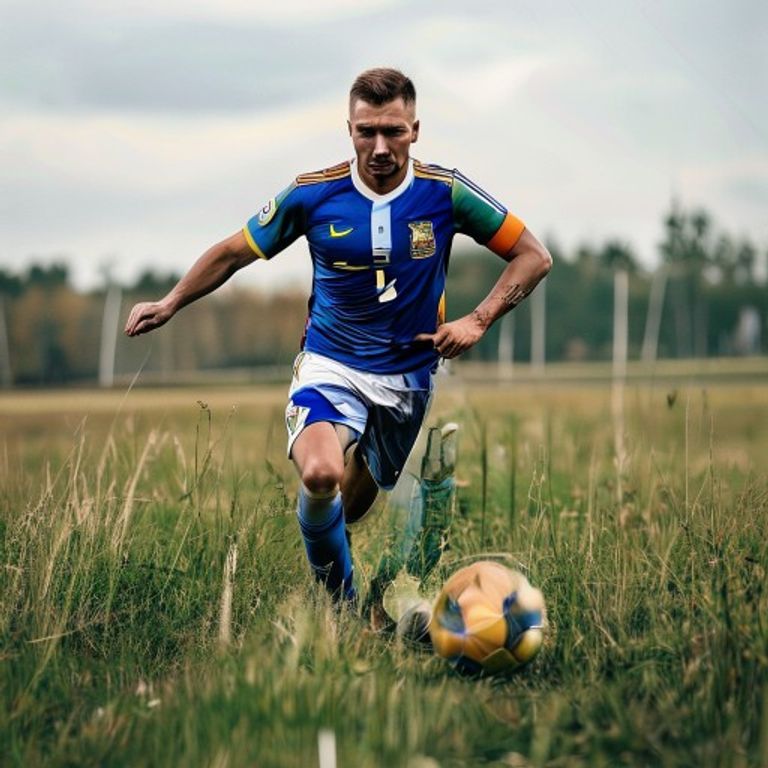
The Belarus national football team is going through a period of stagnation on the European stage, marked by technical limitations, political instability, and the isolation imposed by UEFA sanctions. Currently competing in the UEFA Nations League, the team is seeking to rebuild its identity while facing chronic difficulties in elite tournaments, such as the World Cup and the European Championship.
The Journey of the Belarusian National Team: Between Isolation and the Search for Identity
Since independence from the Soviet Union in 1991, the Belarus national team has trodden a difficult path in continental football. Unlike other nations from the Eastern Bloc that found success, the 'Belye Kryly' (White Wings) have never qualified for the final stages of a World Cup or a European Championship, remaining a mid-level team in the FIFA rankings.
History and Icons
Belarusian football had its brightest moment through figures like Alexander Hleb, the most talented player in the country's history, who shone at Arsenal and Barcelona. Other names such as Sergei Gurenko and Vitali Kutuzov also left important marks, serving as references for a generation that always fell just short in qualifiers. The Dinamo Stadium in Minsk remains the beating heart where the team attempts, without consistent success, to build a fortress against European powerhouses.
Controversies and Political Context
The Belarusian national team is frequently at the center of controversy. The Football Federation of Belarus (ABFF) has been the target of international criticism due to its proximity to the government of Alexander Lukashenko. Following the start of the conflict in Ukraine, UEFA imposed severe restrictions, forcing Belarus to play its home matches on neutral ground and behind closed doors, a punishment that directly affects the sporting performance and morale of the athletes.
Current Situation
Under recent technical management, the team has focused on a gradual renewal, integrating young talents from the local league. However, the lack of high-level competitiveness is evident. In the Nations League, the team fluctuates between draws and defeats, struggling to avoid relegation to lower divisions. The relationship between the fans and the federation is tense, with many supporters boycotting matches as a form of political protest, which drains the atmosphere of national football.
Curiosities
A curious point is the longevity of certain players in the squad and the technical dependence on a few clubs, such as BATE Borisov, which for years was the only representative of the country capable of competing in the Champions League group stage, but which today suffers from the financial and political crisis plaguing Belarusian sport.
Researched Sources
uefa.com/uefanationsleague; fifa.com/fifa-world-ranking; bff.by (Official website of the Belarusian Federation); transfermarkt.com/belarus/startseite/verein/5863; bbc.com/sport/football/european-football





