



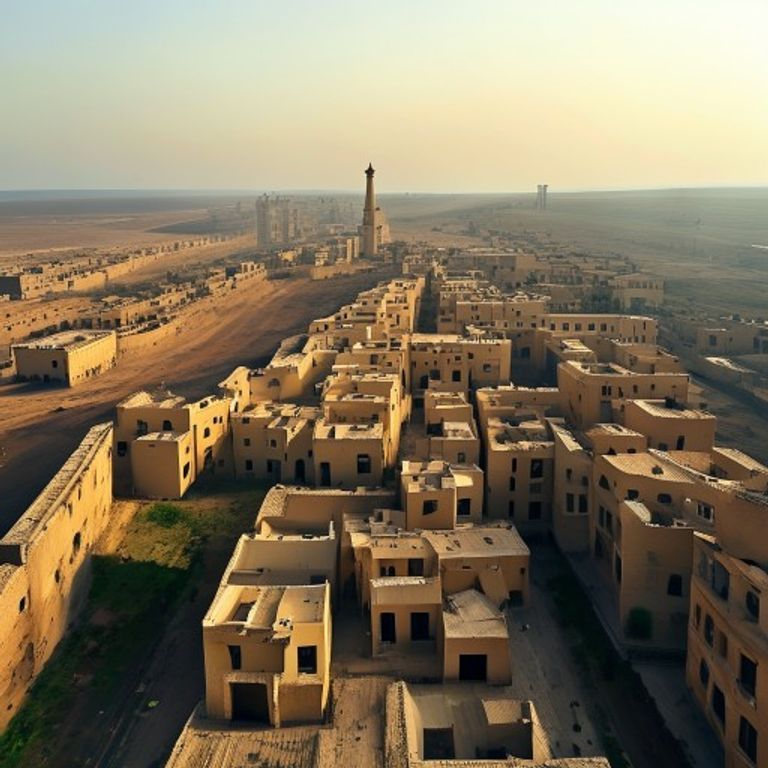
Home to some of the world's oldest inhabited cities, such as Damascus and Aleppo, Syria is an open-air museum devastated by recent war. Once a mosaic of ethnicities and religions coexisting in harmony, the country boasts archaeological treasures like Palmyra. The Syrian people are historically recognized for their education, trade, and refined, resilient culture.
⚠️ Research elaborated with the aid of Deep Research is subject to referential ambiguity.
🖥️Clean HTML code using a proprietary tool.
👥 Research by Guilherme Felipe, Curation Sílvio Lôbo
The Wounded Soul of Syria: A Literary Exploration of Identity and Resilience
Syrian literature, multifaceted and deeply rooted in a millennia-old history of civilizations and conflicts, emerges as a potent mirror of the soul of a nation that, in recent years, has been marked by an unprecedented humanitarian tragedy. This essay aims to delve into the depths of this literary production, exploring its main authors, historical movements, emblematic publications, and the intricate tapestry of local cultural identity woven into its narratives.
Historical Roots and Literary Movements
The origins of modern Syrian literature date back to the 19th-century Arab Renaissance (Nahda) movement, which sought the cultural and intellectual revitalization of the Arab world after centuries of Ottoman decline. In this context, figures emerged who reintroduced poetry and prose in more accessible forms and contemporary themes. The 20th century witnessed the rise of Arab nationalism and, with it, a literature that frequently engaged with issues of national identity, independence, and the impact of colonialism.
Movements such as Arab surrealism and social realism found echoes in Syria, influencing authors to experiment with new narrative forms and to address social and political realities more directly. Poetry, in particular, has always held a prominent place, serving as a powerful vehicle for expressing collective emotions and social criticism.
Emblematic Authors and Their Works
Syria is the birthplace of authors who have left indelible marks on Arab and world literature. Among the most prominent names are:
- Nizar Qabbani (1923-1998): Although his work has pan-Arab reach, Qabbani, born in Damascus, is one of the most celebrated poets in the Arab world. His poetry, often sensual and political, explored love, women, and Arab identity with accessible and impactful language, becoming a voice for generations.
- Adonis (Ali Ahmad Said Esber) (born 1930): Considered one of the greatest living poets in the Arabic language, Adonis, born in Al-Qassabin, Syria, is an intellectual figure of immense prestige. His work, marked by linguistic experimentation and the pursuit of a poetic modernity that transcends cultural boundaries, challenges conventions and delves into philosophical and existential questions.
- Zakaria Tamer (born 1931): A prolific short story writer and novelist, Tamer is known for his sharp prose and for portraying the complexities of urban life and social injustices in Syria. His stories often contain a touch of magical realism and an implicit critique of power.
- Khaled Khalifa (1964-2021): One of the most important contemporary Syrian novelists, Khalifa, born in Aleppo, achieved international recognition with works such as "In the Land of the First Rain" and "The Light of the Darkest Star." His novels explore the historical and social scars of Syria, addressing themes of identity, religion, family, and the brutality of the civil war.
- Rosa Yassin Hassan (born 1974): A relevant female voice in contemporary Syrian literature, Rosa Yassin Hassan, born in Raqqa, addresses in her works the experiences of women, social changes, and the challenges imposed by war.
Publications and the Context of War
Before the conflict that has plagued Syria since 2011, literary production was marked by vibrant local publishing houses, literary magazines, and constant dialogue with the Arab cultural scene. However, the war has radically transformed this landscape. Many publications were interrupted, authors were forced into exile, and access to books and space for writing became a monumental challenge.
Contemporary Syrian literature has, in large part, become intrinsically linked to the experience of war, exile, and loss. New voices, often emerging from refugee camps or displaced communities, use writing as a form of testimony, resistance, and a search for meaning amidst the chaos. Poetry, in particular, has flourished, with verses shared on social media and public readings echoing the pain, resilience, and hope of the Syrian people.
Cultural Identity Reflected in Books
Syrian cultural identity, a complex mosaic of Arab, Kurdish, Armenian, Christian, Muslim, and other minority influences, is a fundamental thread in its literature. Syrian books often explore:
- The dichotomy between tradition and modernity: The tension between ancestral values and the pressures of modern life, ancient cities and urban transformations are recurring themes.
- The importance of family and social relationships: The extended family structure and community ties are central to the narratives, revealing the dynamics of affection, loyalty, and conflict.
- Spirituality and religion: Whether Islamic faith, Christianity, or other beliefs, spirituality permeates Syrian life and finds expression in various works.
- Memory and the past: Syria's rich history, with its ancient ruins and collective memories, is frequently evoked, shaping the understanding of the present.
- Resilience and hope: Faced with historical and recent adversities, the Syrian people's ability to resist, keep hope alive, and dream of a better future is a poignant theme.
In summary, Syrian literature is a vibrant testament to human complexity, resilience in the face of adversity, and the eternal search for identity and meaning. Even in times of profound tragedy, the words written in Syrian continue to echo the soul of a nation, offering glimpses of its beauty, its pain, and its unwavering spiritual strength.





