



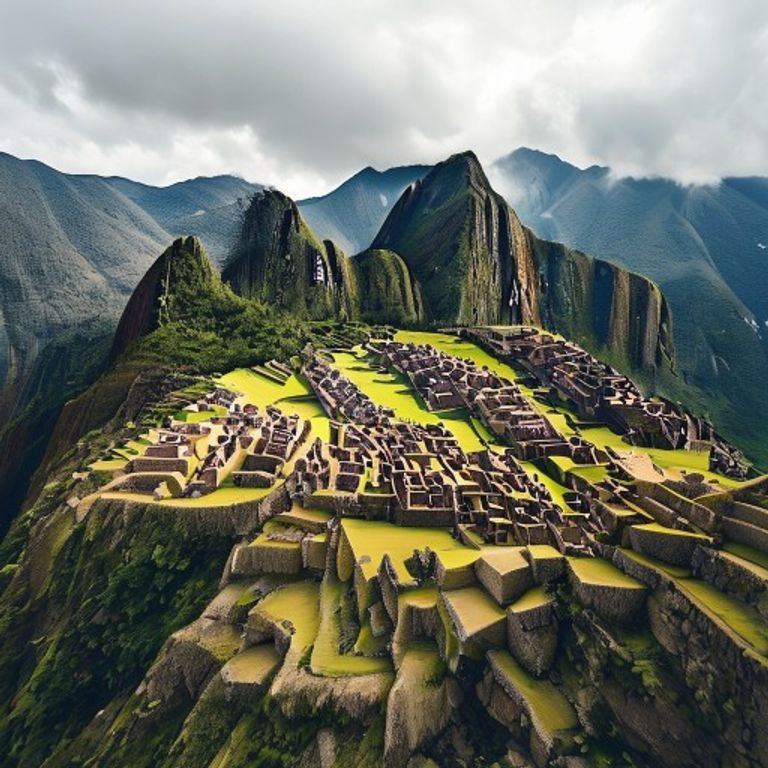
The cradle of the Inca Empire, Peru is an archaeological and gastronomic treasure. World-famous for Machu Picchu and the Nazca Lines, the country offers biodiversity ranging from the desert coast to the dense Amazon. Its cuisine, a fusion of indigenous techniques and immigrant influences, is globally acclaimed. Lima, the capital, is a historic center that preserves the Spanish colonial heritage.
⚠️ Research conducted with the aid of Deep Research may be subject to referential ambiguity.
🖥️Clean HTML code using a proprietary tool.
👥 Research by Guilherme Felipe, Curation by Sílvio Lôbo
The Andean Soul in Words: A Deep Dive into Peruvian Literature
Peruvian literature is a vibrant and complex mosaic, intertwining the voices of an ancestral past with the urgencies of the present. Born and nurtured in a land of profound geographical and cultural contrasts – from the snow-capped peaks of the Andes to the coastal expanses and lush Amazonian rainforests – Peru's literary production reflects the richness of its identity, marked by its pre-Columbian heritage, Spanish colonization, and the continuous search for an authentic voice in a constantly changing world.
Roots and Formation: From Chroniclers to Romantics
The origins of Peruvian literature date back to the chroniclers of the Spanish Conquest. Figures like Pedro Cieza de León and Garcilaso de la Vega, el Inca, though European or of mixed descent, were fundamental in documenting the history, customs, and landscapes of Tawantinsuyu. Garcilaso, in his monumental work Comentarios Reales de los Incas (Royal Commentaries of the Incas), transcended mere chronicle to create an epic and lyrical record of the Inca empire, establishing a dialogue between cultures that would resonate for centuries.
In the 19th century, the romantic period and the struggles for independence brought new themes. Poets like Carlos Augusto Salaverry and Manuel Adolfo de la Cruz Paredes expressed patriotic fervor and individual passions, but it was with Ricardo Palma that Peruvian narrative found a distinctly national tone. His Tradiciones Peruanas (Peruvian Traditions), short and engaging narratives that blend history, legends, and humor, captured the essence of the Peruvian spirit, popularizing a unique literary genre.
The Latin American Boom and the Narrative Revolution
The 20th century witnessed the rise of Peruvian authors who achieved international recognition, becoming part of the celebrated "Latin American Boom." Mario Vargas Llosa, a Nobel laureate in Literature, is undoubtedly the most prominent name. His work, characterized by structural complexity, deep exploration of human psychology, and a critical view of society, ranges from historical novels like La guerra del fin del mundo (The War of the End of the World) to political and social critique in La fiesta del Chivo (The Feast of the Goat).
Other equally important authors from this period include:
- Ciro Alegría: Whose work, such as El mundo es ancho y ajeno (The World is Wide and Alien), gave voice to the indigenous universe and peasant struggles, exploring magical realism with a socially engaged perspective.
- José María Arguedas: Considered one of the greatest representatives of Indigenist literature, Arguedas delved into the soul of the Andean people, merging oral language with writing in novels like Los ríos profundos (Deep Rivers) and El zorro de arriba y el zorro de abajo (The Fox from Above and the Fox from Below). His work is a poignant testament to Peru's cultural and social duality.
- Julio Ramón Ribeyro: A master of the short story, Ribeyro explored the marginality, solitude, and melancholy of urban life in Lima, with an ironic and insightful style. His Cuentos de circunstancia (Stories of Circumstance) and La palabra del mudo (The Word of the Mute) are landmarks of short narrative.
Contemporary Diversity and Identity in Flux
Contemporary Peruvian literature continues to explore the multiple facets of its cultural identity. More recent authors engage with the legacy of their predecessors but also incorporate new concerns and languages.
Alfredo Bryce Echenique, with his peculiar and nostalgic humor, portrays the Lima elite and their peculiarities in novels like Un mundo para Julius (A World for Julius). Laura Esquivel, though Mexican, has roots in shared culinary and cultural traditions, and her influence on Latin American magical realism is undeniable, paving the way for the representation of women in spaces previously dominated by men.
The Amazon, often overlooked, has gained a voice with writers like Héctor Béjar and Rocío Silva-Santisteban, who bring the complexities and challenges of this vast region to the forefront of literary discussion. LGBTQ+ literature has also flourished, with authors like Renato Cisneros and Daniel Salvo addressing issues of sexual and gender identity with sensitivity and strength.
Marked Publications and Literary Movements
Throughout its history, various publications and literary movements have shaped the Peruvian landscape:
- La Revista Amauta (1926-1930): Founded by José Carlos Mariátegui, it was a crucial vehicle for intellectual debate and the dissemination of socialist and Indigenist ideas, profoundly influencing the country's literature and social thought.
- The Indigenist Movement: Although not a formal literary movement, Indigenism, with its exponents like Alegría and Arguedas, represented a milestone in the effort to portray the indigenous person not as a stereotype, but as a complex and integral human being.
- "Novi centrismo": In the 1960s, a group of young writers, including Vargas Llosa, Oswaldo Reynoso, and Luis Goytisolo, sought to renew language and narrative structures, influenced by European currents but with a strong Peruvian identity.
Cultural Identity and the Literary Mirror
Peruvian cultural identity is the thread that unites different eras and authors. The intrinsic relationship with the land, the pre-Columbian heritage, and the scars of colonization are recurring themes. The constant dialogue between the urban and rural worlds, between modernity and tradition, the exploration of mestizaje (racial mixing), and the search for a post-colonial voice are elements that define Peruvian literature.
Ultimately, Peru's literature is a multifaceted mirror of its soul. It is a literature that takes pride in its ancestral roots, courageously confronts its social and political realities, and reinvents itself with each new generation, proving that the power of the word can truly capture and express the complexity of a nation.





