



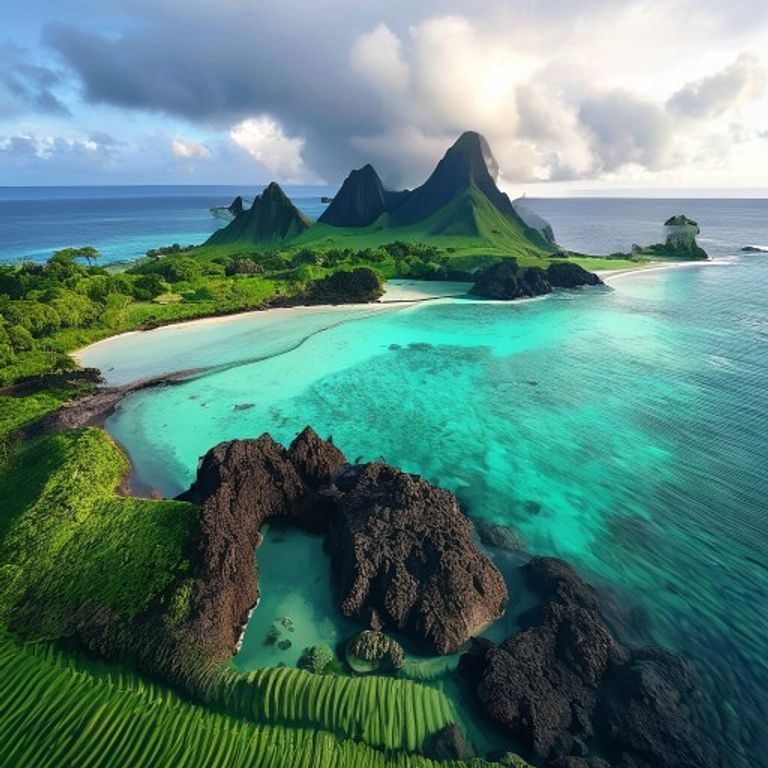
An archipelago of limestone and volcanic islands, Palau is a marine conservation sanctuary, having created the world's first shark sanctuary. Its famous 'Rock Islands' look like green mushrooms in the blue sea. The (stingless) Jellyfish Lake is a unique attraction. The society is matrilineal and focused on protecting its pristine natural heritage, attracting elite divers.
⚠️ Research elaborated with the help of Deep Research is subject to referential ambiguity.
🖥️Clean HTML code using a proprietary tool.
👥 Research by Guilherme Felipe, Curation by Sílvio Lôbo
The Voice of the Pacific: A Deep Dive into Palau's Literature
The literature of Palau, an archipelago of singular beauty in the heart of the Western Pacific, may not boast the same vast output as other island nations, but it is a vibrant reflection of its complex history, rich cultural identity, and the resilience of its people. As a literary critic and researcher, embarking on a journey through the pages of Palauan authors is to unravel narratives that echo the ocean waves, ancestral traditions, and the challenges of modernity.
Deep Roots and Emerging Voices: Key Authors
Although Palauan literary production is relatively recent in terms of formal publications, a growing number of authors have emerged, many with strong ties to the island of Babeldaob, the country's largest. Among the notable names, we can mention:
- Dirk Hendriksen: Although his background is in anthropology, his work "Palau: The Struggle for Independence" (while not strictly fiction) is fundamental to understanding the historical and political context that shaped Palauan identity, serving as inspiration for many writers.
- John Ngiraibelas: Recognized for his contributions to the preservation of Palauan culture, Ngiraibelas has worked on compiling and disseminating traditional tales and legends. His writings, often circulated in local publications and digital versions, help keep oral traditions and founding myths alive.
- Herman F. H. Van Lingen: One of the pioneers in writing in English that addresses Palauan themes, Van Lingen explores the nuances of daily life, generational conflicts, and the intrinsic relationship with the marine environment.
- Umiich Sengebau: This author, known for his poetry and short stories, delves into the stunning landscapes of Palau, capturing the essence of the spiritual connection with the land and sea. His works often celebrate local fauna, flora, and customs.
It is important to note that many literary works in Palau still circulate informally, through oral traditions, restricted-circulation manuscripts, or small-print publications, making the task of cataloging and analysis an ongoing challenge.
Historical Literary Movements and Influences
Palauan literature, in its modern written form, is a relatively recent movement, shaped by the influence of colonization and the pursuit of self-expression after independence. Historically, narratives were predominantly oral, passed down through generations through stories, songs, and rituals.
- Oral Tradition and Myths: Before the advent of formal writing, Palauan culture was rich in creation myths, legendary heroes, and narratives that explained the natural and social world. These elements still resonate deeply in contemporary literary works, serving as thematic foundations.
- Colonial and Post-Colonial Influence: Japanese and later American administration left significant marks on Palauan society and culture. This influence can be seen in themes of adaptation, culture shock, and the pursuit of preserving local identity in the face of external influences.
- Rise of Written Literature: From the second half of the 20th century onwards, with increased literacy and access to publishing media, written literature began to gain ground. The initial focus was often on documenting traditions and exploring post-colonial experiences.
Important Publications and Dissemination Channels
The publishing infrastructure in Palau is limited, making the dissemination of literary works a notable achievement. However, some publications and institutions play a crucial role:
- Academic and Cultural Journals: Publications such as "Pacific Arts" and other periodicals covering the Pacific region often include articles, poems, and short stories by Palauan authors.
- Cultural Organizations and Museums: Institutions like the Belau National Museum play a vital role in preserving and disseminating cultural artifacts, including manuscripts and recordings of oral narratives. They may also sponsor or publish literary works.
- Local and Digital Editions: In more recent times, the internet and digital platforms have enabled Palauan authors to share their work with a wider audience, often through blogs, local news sites, and social media.
- Anthologies and Collections: Efforts to compile Palau's literary output into anthologies are fundamental to giving visibility to these works and presenting them to an international audience.
Palauan Cultural Identity Reflected in Books
The soul of Palauan literature lies in its deep connection to the archipelago's unique cultural identity. This identity is multifaceted and manifests in various ways in literary works:
- The Relationship with the Ocean: The sea is not just a backdrop but a living, omnipresent character. Works explore the Palauan dependence on the ocean for sustenance, their spirituality tied to the waters, and legends of marine beings and ancestral gods. The strength and fragility of marine ecosystems are also recurring themes.
- Ancestral Traditions and Values: Respect for elders, the importance of family and community (known as 'ubael), and codes of honor and reciprocity are pillars that sustain the narratives. Stories often seek to revive or preserve these values in a constantly changing world.
- The Impact of Modernity and Globalization: Many authors address the tension between preserving traditions and the inevitability of modernization. Migration to urban centers, the influence of Western pop culture, and environmental challenges posed by climate change are themes that generate deep reflection.
- The Narrative of Nature: Palau's lush tropical landscape, with its dense forests, mangroves, and iconic rock formations, is an inexhaustible source of inspiration. Literature often describes this natural beauty, while also connecting it with myths and cultural practices.
- Language and Identity: Although many authors write in English to reach a wider audience, there is a growing effort to incorporate elements of the Palauan language (Palauan) into their works, whether through specific vocabulary, idiomatic expressions, or even by exploring stories originally narrated in the native tongue.
In summary, the literature of Palau is a mirror of a vibrant and resilient culture. Its authors, through their words, invite us to delve into a world of stunning natural beauty, rich ancestral traditions, and a continuous search for meaning and identity in a constantly transforming global landscape. With each turned page, we discover not just stories, but the very essence of a people who flourish in the heart of the Pacific.





