



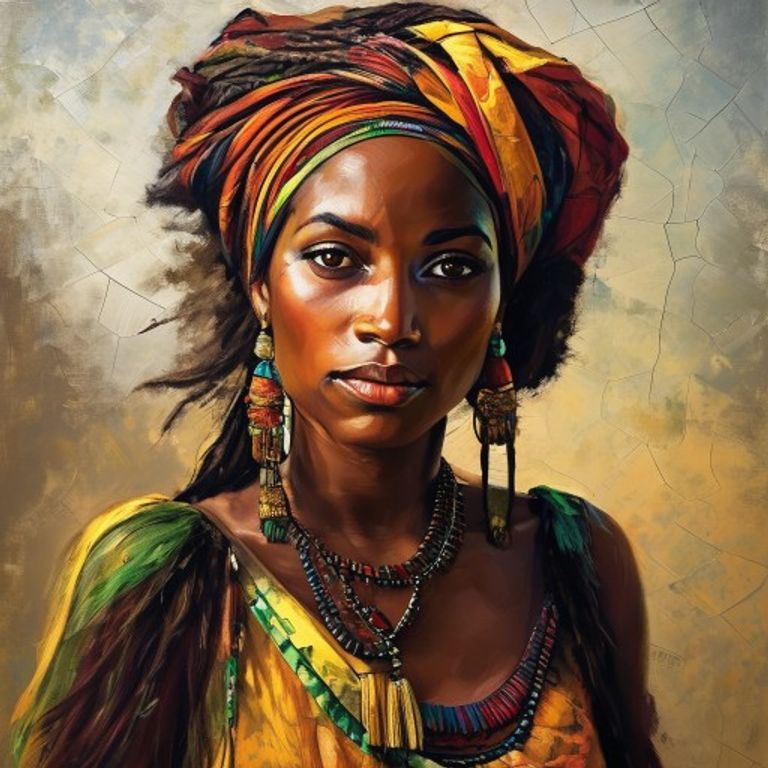
A meeting point between the Maghreb and Sub-Saharan Africa, Mauritania is a nation defined by the desert and Islamic tradition. Famous for the ancient libraries of Chinguetti and the 'Eye of Africa', a geological structure visible from space. The country maintains a strong traditional lifestyle, with nomadic herders and a coastline rich in fishing, preserving a culture of simplicity and faith.
⚠️ Research conducted with the aid of Deep Research is subject to referential ambiguity.
🖥️Clean HTML code using a proprietary tool.
👥 Research by Guilherme Felipe, Curation by Sílvio Lôbo
The Ancestral Voice of the Sahara: An Analysis of Mauritanian Literature
Mauritanian literature, a multifaceted mirror of the soul of a country shaped by the desert, Arab and Berber influence, and a complex legacy of slavery, is a rich and sometimes challenging field of study. Far from being monolithic, it manifests through ancestral voices that echo in oral traditions, contemporary writers who engage with the world, and an incessant search for the expression of local cultural identity.
Deep Roots: Oral Tradition and Classical Poets
The foundation of Mauritanian literature undoubtedly lies in its robust oral tradition. Classical Arabic poetry, particularly the qaṣīda, found fertile ground in Mauritania, where poets played a central role in preserving history, social values, and tribal identity. The art of recitation and memorization was highly valued, ensuring the continuity of narratives and verses that transcended generations.
In this context, figures like Sheikh Abdallahi Ould Daddah and Sheikh Mohamed Salem Ould M’Bârek are unavoidable pillars. Their poems, often with religious, moral, and social themes, reflect the deep Islamic religiosity and the hierarchical social structure that characterized the region. Poetry was, and to some extent still is, a vehicle for prestige and influence.
Contemporary Literary Movements and Effervescence
Although oral tradition continues to be a powerful force, written Mauritanian literature gained prominence with the emergence of authors who progressively moved away from purely classical forms, engaging with more pressing social and political issues. The formation of a national consciousness, especially after independence in 1960, fueled the need for narratives that addressed Mauritanian reality more directly.
A significant milestone was the development of literature in French, driven by the colonial legacy, but which quickly became a vehicle for expressing Mauritanian particularities. Authors like Baba Tounkara, with his evocative prose, and Djibril Tamsir Niane (though Senegalese, his work has strong resonance in the region and in debates on West African history) brought new perspectives. More recently, authors like Massaoud Ould Taleb explore the complexity of inter-ethnic relations and the legacy of slavery, a sensitive and crucial theme in Mauritanian identity.
The search for an authentically Mauritanian voice has also manifested in the exploration of other languages spoken in the country, such as Hassaniyya, the predominant Arabic dialect. However, the publication and dissemination of these works in Hassaniyya face significant challenges compared to works in French, which have greater access to international publishing circuits.
Important Publications and Genre Diversity
Mauritanian literary production encompasses a diverse range of genres, from lyrical and epic poetry to novels, short stories, and essays. Although there isn't a rigidly defined Mauritanian canon, some works have gained recognition:
- Hassaniyya Poetry: Continues to be produced and transmitted orally, with many poems inaccessible to the global public due to the lack of systematic translation and publication.
- French Novels: Works that address themes such as life in the desert, social conflicts, migration, and the search for identity. Novel production has been growing in recent decades.
- Short Stories: A popular form of expressing popular wisdom, moral lessons, and historical narratives.
- Essays and Social Criticism: Critics and intellectuals have used essays to analyze Mauritanian society, its challenges, and its potential.
The lack of robust publishing infrastructure and limited access to international markets are significant obstacles to the dissemination of Mauritanian literature. However, initiatives by small publishers, anthologies, and participation in international literary festivals have helped to showcase some of these talents.
Local Cultural Identity Reflected in Books
Mauritanian cultural identity, complex and multifaceted, is the common thread of its literary production. The desert, with its vastness, unforgiving beauty, and existential challenges, is a character in itself in many works. Nomadic life, hospitality, ancestral wisdom, and resilience are recurring themes.
The influence of Islamic traditions deeply permeates the morality, values, and worldview of the characters. At the same time, Mauritania's history, marked by slavery and its aftermath, ethnic diversity, and the resulting social tensions, emerges as an increasingly explored theme. Authors seek to deconstruct established historical narratives and give voice to marginalized experiences.
The struggle to preserve Mauritanian culture, especially in an increasingly globalized world, is a palpable aspiration. Mauritanian literature, in its various forms and voices, represents a vital effort to tell its own story, to affirm its identity, and to engage with the world, remaining true to its ancestral roots while embracing the future.





