



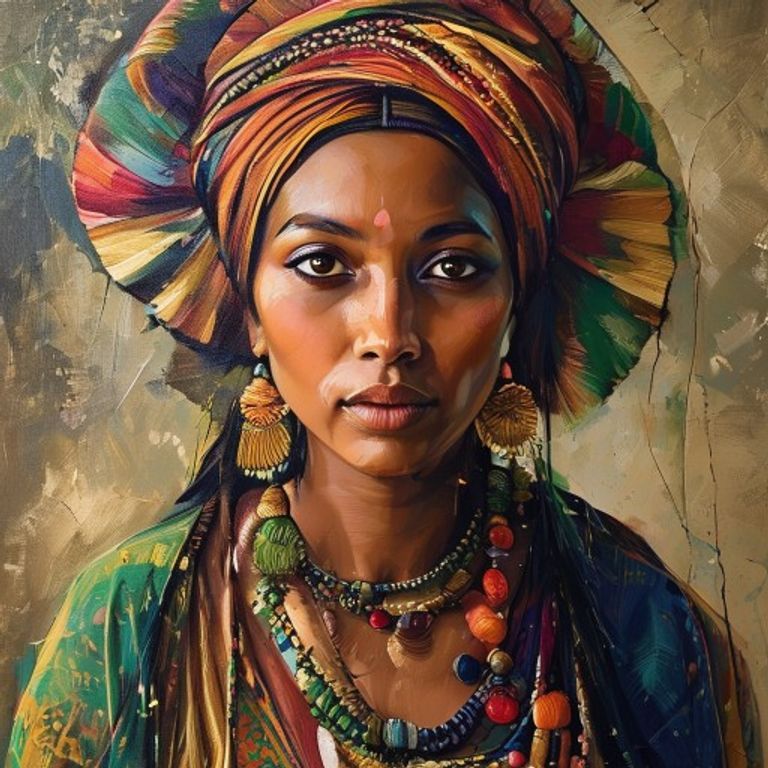
The cradle of ancient empires and the legendary Timbuktu, Mali is a cultural treasure of the Sahel. Famous for the Great Mosque of Djenné (made of mud) and for music that influenced the blues, the country is crossed by the Niger River, vital for life in the desert. Despite security challenges, it keeps alive the heritage of the 'griots' storytellers and the mystique of the salt routes.
⚠️ Research elaborated with the aid of Deep Research is subject to referential ambiguity.
🖥️Clean HTML code using a proprietary tool.
👥 Research by Guilherme Felipe, Curation by Sílvio Lôbo
The Soul of Mali in Letters: An Analysis of Literary Production
Mali, a nation rich in history and oral tradition, pulses with a literary life that, while often underestimated on the global stage, intensely reflects its vibrant cultural identity and the challenges of its journey. As a literary critic and researcher, delving into Malian literary production is to uncover a mosaic of voices narrating West Africa, its struggles, its beauties, and its hopes.
The Deep Roots of Malian Narrative
Oral tradition is the cornerstone of literary expression in Mali. Even before writing became established as a means of record-keeping, stories, proverbs, and epics were passed down from generation to generation through the griots. These storytellers, musicians, and itinerant historians played a crucial role in preserving collective memory and transmitting cultural and moral values. The influence of griots permeates the very structure and style of many Malian writers, who often use poetic, rhythmic language filled with figures of speech, echoing the cadence of oral performance.
Key Authors and Their Contributions
Written literature in Mali, though more recent compared to its rich oral tradition, has been shaped by renowned authors who have become cultural ambassadors for their country. One of the most prominent names is undoubtedly Amadou Hampâté Bâ. Born in 1901, his work, such as Vie d'Amadou Hampâté Bâ and L'Étrange destin d'un roi peul, is a testament to African wisdom, the fusion of cultures, and the importance of preserving ancestral knowledge. Hampâté Bâ not only wrote but also dedicated his life to documenting African oral heritage, becoming a guardian of stories and traditions.
Another notable author is Youssouf Traoré, whose works explore Malian history and society with a critical and humanistic perspective. Although less internationally known than Hampâté Bâ, Traoré contributed significantly to the development of Malian prose.
In poetry, names like Massa Makan Diabaté, who also excelled in prose with works such as Le Lion de Kaffolo, bring to the fore the sonority and strength of the language, exploring themes of identity, land, and destiny.
It is also important to mention the presence of female writers who, despite facing additional challenges in an often patriarchal context, have emerged with powerful voices. Although there are not as many female figures with the same international recognition as the aforementioned authors, contemporary Malian literature is increasingly enriched by their perspectives.
Literary Movements and Important Publications
Historically, Malian literature developed in dialogue with the pan-Africanist and decolonization movements that swept across the African continent in the 20th century. The search for an authentic African identity and criticism of the colonial legacy were recurring themes. The post-independence period marked the emergence of publishing houses and literary magazines that, despite facing financial and logistical difficulties, were essential for the dissemination of new works.
The publication of short story and poetry anthologies has been an important means of giving visibility to new talents and consolidating literary production. Literary events, such as the Bamako International Literature Festival (FILIBAM), although less frequent, play a vital role in promoting Malian literature, connecting authors, readers, and publishers.
Publications in French, the official language inherited from colonization, are still predominant. However, there is a growing interest in valuing and publishing works in Mali's national languages, such as Bambara, Fulani, and Soninké, seeking greater representation and access for the population.
Malian Cultural Identity Reflected in Books
Malian cultural identity is the common thread that weaves through most literary narratives. The strong connection to the land, spirituality, complex social relationships, and ancestral wisdom are recurring themes.
- The Richness of Oral Tradition: As mentioned, the influence of griots is visible in the narrative structure, the use of metaphors and proverbs, and the musicality of the language.
- Resilience and Struggle: Literary works often portray the resilience of the Malian people in the face of adversity, whether historical, economic, or environmental. The struggle for self-determination and the preservation of culture against external influences is a constant theme.
- Spirituality and Mysticism: Elements of spirituality, traditional beliefs, and a sense of mysticism permeate many stories, revealing a deep connection with the transcendent.
- The Complexity of Social Relationships: Family dynamics, social structures, codes of conduct, and ethical dilemmas are explored with sensitivity, offering a panorama of Malian society.
- The Dialogue Between Tradition and Modernity: Many authors address the clash and, at times, the fusion between traditional values and the influences of modernity, seeking a balance in a constantly changing world.
Mali's literature, therefore, is not just a collection of stories; it is a mirror of a people's soul, a record of their history, and a beacon for their future. By delving into its pages, we find not only captivating narratives but also the profound wisdom and unwavering strength of a country that, in its letters, finds a powerful form of expression and self-knowledge.





