



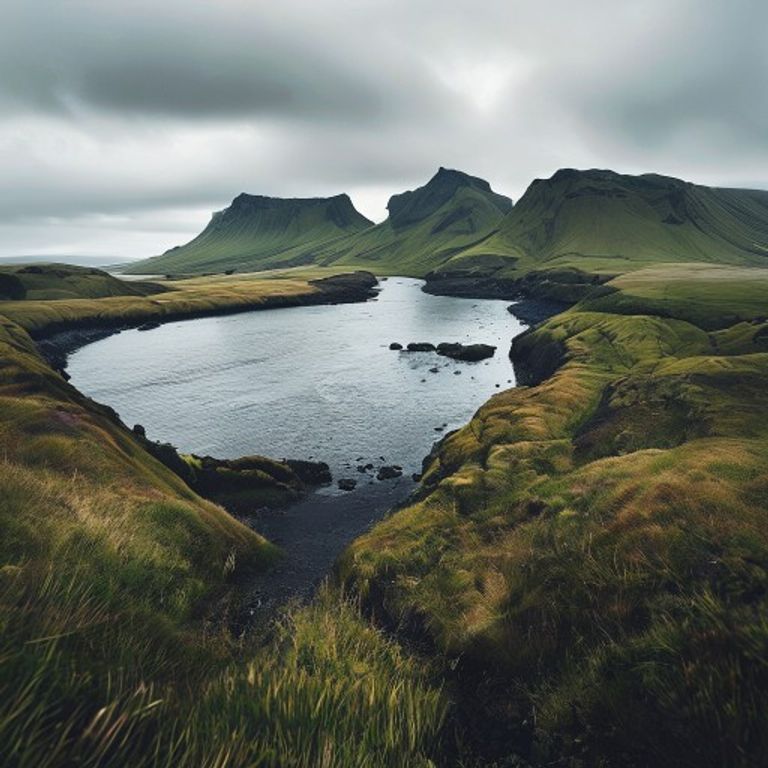
The land of fire and ice, Iceland is a volcanic island of lunar landscapes, geysers, and glaciers. With no army and powered by geothermal energy, it is one of the safest and most literary countries in the world (one in ten people publishes a book). Nature dictates the rules here, and society is small, united, and resilient, direct descendants of the Vikings.
⚠️ Research elaborated with the assistance of Deep Research is subject to referential ambiguity.
🖥️Clean HTML code using a proprietary tool.
👥 Research by Guilherme Felipe, Curation by Sílvio Lôbo
The Icelandic Saga: A Literary Critique and In-depth Research
Icelandic literature, with its deep roots in medieval sagas and its vibrant contemporary production, is a captivating mirror of the cultural, historical, and geographical identity of a unique island nation. This essay aims to explore this rich literary tapestry, highlighting its main exponents, significant movements, and how the Icelandic land and people manifest in its works.
The Roots of the Sagas: The Foundation of Icelandic Narrative
The bedrock of Icelandic literature undoubtedly rests on the sagas, epic prose works from the medieval period (13th and 14th centuries). These historical and legendary accounts narrate the lives of families, the settlement of Iceland, conflicts, and heroic deeds, offering an invaluable glimpse into Viking society. The sagas are not mere historical records; they are complex literary works, with well-developed characters, intricate plots, and a direct and powerful narrative style.
- The Saga of the Volsungs: An epic of love, betrayal, and revenge, centered on the legends of Sigurd, the dragon-slayer.
- The Saga of Egill Skallagrímsson: Depicts the turbulent life of a Viking poet and warrior, Egill, known for his wit and irascible temper.
- Laxdæla Saga: A social saga that explores the complex relationships and intertwined destinies of various families in the Laxárdalur region.
These sagas not only shaped Icelandic prose but also profoundly influenced Scandinavian and European literature, setting a standard for epic narrative and the exploration of universal themes.
The Literary Renaissance and Romanticism
After a period of lesser literary production, Iceland experienced a renaissance in the 19th century, strongly influenced by European Romanticism. Emerging nationalism fueled a renewed interest in Icelandic history and culture, culminating in an explosion of poetry and prose that celebrated the land, folklore, and national identity.
- Jónas Hallgrímsson: Considered the father of modern Icelandic poetry, his works evoke the melancholic beauty of the Icelandic landscape and the indomitable spirit of its people.
- Grímur Thomsen: A poet with a strong romantic inclination, whose verses celebrated Viking history and Iceland's wild nature.
This period was crucial for the reaffirmation of the Icelandic language and the consolidation of a distinct literary identity.
The 20th Century and Contemporary Era: Diversity and Mastery
The 20th century and the early 21st century have witnessed a remarkable diversification in Icelandic literature, with authors exploring a wider range of genres and themes, while maintaining a strong sense of place and identity.
Key Authors Born or Based in Iceland
- Halldór Laxness: The most celebrated Icelandic author, winner of the Nobel Prize in Literature in 1955. His work, such as "Salka Valka" and "Independent People", masterfully addresses the struggle of the Icelandic people against adversity, social exploitation, and the pursuit of autonomy, always with a deep connection to the land and culture.
- Einar Kárason: Known for his works that portray urban life in Reykjavík, often with a dark and realistic tone, exploring the complexities of modern society.
- Sjón: An internationally renowned contemporary author, whose novels such as "The Blue Fox" and "The Little Book of Things" are marked by a lyrical, dreamlike, and often surreal style, blending mythology, science, and a peculiar look at human existence.
- Arnaldur Indriðason: A master of Icelandic crime fiction, his books, such as "The Green Lady" and "The Ice Man", combine suspenseful plots with an exploration of his characters' psychological depths and a portrayal of contemporary Icelandic society.
- Yrsa Sigurðardóttir: Another prominent figure in the crime genre, whose works, often set in remote and dark locations in Iceland, explore the darker side of human nature and the impact of the environment on psychology.
Historical and Contemporary Literary Movements
While Iceland may not have had as defined and broad literary movements as other nations, we can observe striking trends and influences:
- Social Realism: Strongly present in the works of Halldór Laxness, focusing on the struggles of the working class and rural life.
- Modernism: With the introduction of more experimental narrative techniques and an exploration of subjectivity.
- Crime Fiction (Nordic Noir): Iceland has become a prominent hub for this genre, with authors using the Icelandic setting as a character in itself, exploring the desolate beauty and isolation that contribute to the suspenseful atmosphere.
- Experimentalism and Surrealism: Especially visible in authors like Sjón, who challenge narrative conventions and explore imagination freely.
Important Publications
In addition to the sagas and the specific works of authors mentioned, some publications and institutions are of utmost importance:
- Literary Magazines: Publications like Tímarit Mál og Menningar (Magazine of Language and Culture) have played a vital role in disseminating new works and fostering literary debate.
- Icelandic Publishers: Publishers such as Mál og Menning and Forlagið are crucial for the publication and promotion of Icelandic authors both nationally and internationally.
- Translations: The translation of Icelandic works into other languages has been fundamental to the global recognition of the country's literature.
Local Cultural Identity Reflected in Books
Icelandic cultural identity is intrinsically linked to its geography, history, and mythology. This connection manifests profoundly in its literature:
- The Land as a Character: The Icelandic landscape – with its volcanoes, glaciers, Northern Lights, and the vast Atlantic – is not just a backdrop but an active element that shapes the destiny and psychology of the characters. The austerity and wild beauty of Icelandic nature often echo the resilience and isolation of the people.
- Viking Heritage and Mythology: The sagas and Norse mythology continue to resonate, providing archetypes, themes, and inspiration for modern narratives. The sense of ancestry and connection to the past are frequently explored.
- Humor and Melancholy: A notable characteristic of the Icelandic sensibility, often transposed into literature, is a combination of dry humor and a certain underlying melancholy, a reflection of life in a challenging and isolated environment.
- The Icelandic Language: The preservation and richness of the Icelandic language, one of the oldest in Europe, are a source of national pride and a central element in literary identity, influencing the style and musicality of prose and poetry.
- Isolation and Community: Being an island with a relatively small population creates a unique dynamic between isolation and a strong sense of community. This duality is often explored in narratives, whether in family stories or in the characters' interaction with society at large.
In summary, Icelandic literature, from its epic origins to its contemporary expressions, offers a unique testament to the strength, creativity, and profound connection between a people, their land, and their history. It is a literature that, despite its modest origins in terms of population, resonates with universal themes, presented through an unmistakable cultural lens.





