



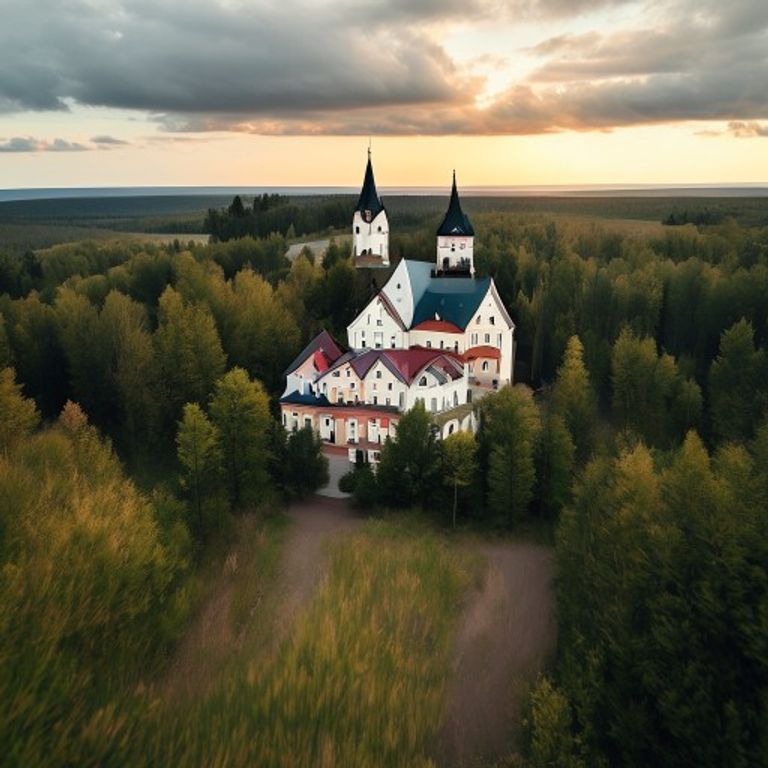
Land of a thousand lakes, saunas, and Santa Claus (Lapland), Finland stands out for having the best educational system in the world. A country of climatic contrasts and technology (Nokia, Linux), it has a reserved but genuine population ('Sisu' - stoic courage). It is a leader in happiness and equality, offering clean design and a deep, silent connection with the forest.
⚠️ Research elaborated with the help of Deep Research is subject to referential ambiguity.
🖥️Clean HTML code using a proprietary tool.
👥 Research by Guilherme Felipe, Curation by Sílvio Lôbo
The Wild Soul of Finland: A Critical Analysis of Finnish Literature
Finnish literature, often shrouded in an aura of melancholy and introspection, is a profound reflection of the land and its people. Characterized by its strong connection to nature, exploration of national identity, and a unique sensitivity to human suffering, it offers a fascinating portal into the soul of Finland. This essay aims to explore the pillars of this rich literary tradition, from its beginnings to contemporary voices, highlighting crucial authors, significant movements, and the intrinsic relationship between the work and local culture.
Historical Roots and National Awakening
The dawn of Finnish literature as we know it is intrinsically linked to the national awakening and the search for a distinct cultural identity. Before the formalization of the written Finnish language and the publication of significant literary works, oral tradition, with its myths, legends, and songs, was the cultural backbone. However, it was with the founding of the Finnish Literature Society in 1831 and, crucially, the publication of Elias Lönnrot's Kalevala in 1835, that Finnish literature gained its foundational milestone. The national epic, compiled from ancient poetic traditions, not only established the literary language but also cemented its own mythology, populated by heroes and supernatural beings, which would echo in future generations of writers.
Monumental Figures and Their Legacies
The history of Finnish literature is punctuated by authors who have transcended borders and defined eras.
- Aleksis Kivi (1834-1872), often considered the father of the Finnish novel, immortalized rural life and the soul of the Finnish peasant in his masterpiece The Seven Brothers (1870). His rich language and deep understanding of the human psyche continue to resonate.
- Minna Canth (1844-1897) was a pioneering figure of social and feminist realism. Her plays and novels addressed pressing social issues, such as women's rights and poverty, challenging the conventions of her time.
- Eino Leino (1878-1926) is one of the most important voices in Finnish poetry, associated with national romanticism and symbolism. His work explores themes of love, death, nature, and the search for identity.
- Väinö Linna (1920-1992) revolutionized Finnish literature with his historical novels depicting the struggle for independence and the Civil War. The Unknown Soldier (1954) is a powerful and raw testament to the human experience in times of conflict.
Literary Movements and Trends
Throughout its evolution, Finnish literature has absorbed and, at times, redefined global literary movements, adapting them to its own reality. National Romanticism, fueled by the Kalevala, sought to glorify the past and nature. Realism, with figures like Minna Canth, brought the complexities of society to the forefront of discussion. In the 20th century, Modernism and Post-Modernism allowed for greater formal and thematic experimentation, reflecting Finland's social and political transformations, including the impacts of wars and subsequent reconstruction.
Cultural Identity in Focus
Finnish cultural identity is an undeniable thread running through its literary production. The deep connection with nature, with its vast forests, serene lakes, and harsh winters, is not just a backdrop but a character in itself. Solitude, resilience in the face of adversity, brutal honesty, and a certain dry humor are traits frequently explored. The theme of sisu – a combination of courage, perseverance, and unwavering determination in the face of the impossible – permeates many narratives. The complex relationship with Russia, a powerful and historically influential neighbor, also manifests, especially in works that address Finnish history and politics.
Contemporary Voices and the Future of Finnish Literature
Contemporary Finnish literature continues to explore and expand its horizons. Authors like Sofi Oksanen, with her novels investigating the scars of Soviet occupation and generational trauma, have gained international recognition. Rosa Liksom, with her concise and often surreal prose, captures the essence of life in the north. Poetry also flourishes, with new generations of poets exploring themes of migration, gender identity, and the anxieties of the modern world. The diversity of voices and themes indicates a vibrant and constantly evolving literature, ready to engage with a global audience.
In summary, Finnish literature is a mirror of its land and its people. It is a literature that invites us to contemplate the austere beauty of nature, the strength of the human spirit, and the complexity of identity. Through its words, Finnish authors offer us a unique and unforgettable glimpse into the wild soul of their nation.





