



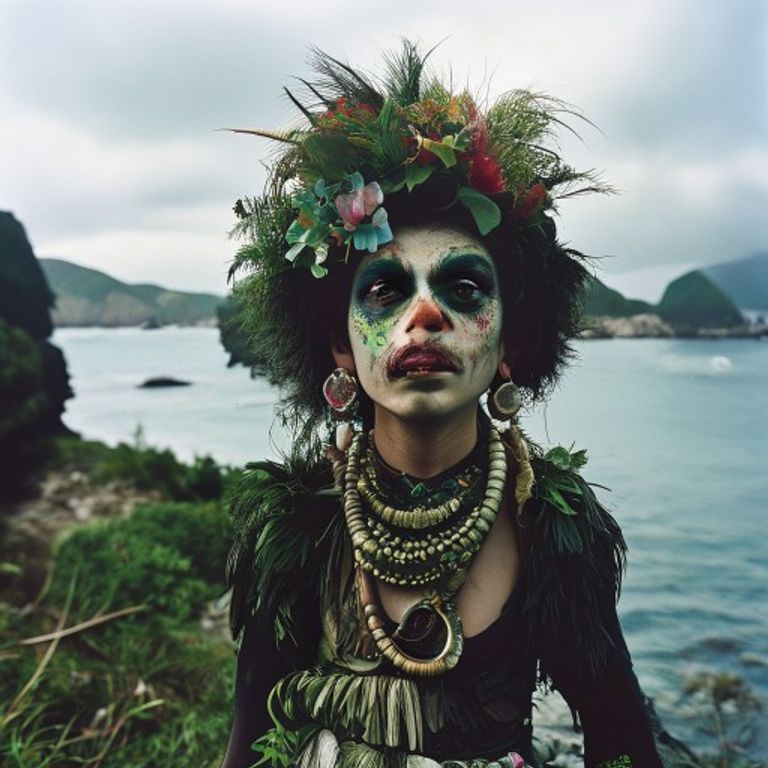
The first new nation of the 21st century, East Timor shares a history of resistance and the Portuguese language with the Lusophone world. Bathed by pristine coral reefs, the country focuses on ecotourism and organic coffee. Its identity was forged in the struggle for independence, blending the Catholic faith with local animist beliefs in a mountainous territory of raw beauty.
⚠️ Research conducted with the aid of Deep Research is subject to referential ambiguity.
🖥️Clean HTML code using a proprietary tool.
👥 Research by Guilherme Felipe, Curation by Sílvio Lôbo
The Submerged Voice of East Timor: A Literary Panorama
East Timor, an island nation marked by a complex history of colonization, struggle for independence, and reconstruction, possesses a literary output that, despite being emergent and often submerged by the tides of sociopolitical circumstances, is rich in depth and identity. Timorese literature, frequently shaped by the experience of Indonesian occupation and the search for its own voice, reflects the scars of the past, the hope of the present, and the aspiration for an authentic future.
The very nature of writing in East Timor, especially during the period of occupation, constituted an act of resistance. The prohibition of national symbols, the imposition of a foreign language, and the repression of any form of cultural expression led many authors to write in veiled ways, use pseudonyms, or seek clandestine platforms to disseminate their works. This clandestinity, far from diminishing the literary value, accentuates the strength and urgency of the narratives, which frequently address themes such as:
- Oppression and resistance
- Loss and memory
- National identity under construction
- The beauty and resilience of the Timorese land
- The complexities of human relationships in times of crisis
Key Authors and Their Landmark Works
Contemporary Timorese literature, although still in formation, already boasts important voices that contribute significantly to the consolidation of its literary production. Authors who, through their narratives, bring to light the nuances of the Timorese experience stand out:
A Light on the Threshold of Darkness: Emerging Young Talents
The new generation of Timorese writers has shown impressive vigor, addressing universal themes through a local perspective. One of the names that stands out is Kai Tana, whose short stories explore social dynamics and the challenges faced by youth in a transforming society. His work The Echo of the Mountains, for example, portrays the search for identity amidst ancestral traditions and modern influences.
Another relevant author is Rui Maria de Araújo, whose poems often resonate with the melancholy and hope of a people rebuilding their future. His verses, sometimes melancholic, other times vibrant with optimism, capture the essence of the Timorese soul.
Names That Forged Resistance: The Legacy of the Previous Generation
Although not all are natives, authors who settled in East Timor during or after the period of struggle for independence also played a crucial role in shaping a local literature. José Ramos-Horta, a Nobel Peace Prize laureate, has, beyond his political activism, ventured into writing, sharing his memories and reflections on his country's history. His memoirs, even in different formats, are precious documents for understanding the Timorese struggle.
While literary production in Portuguese has been historically the most consolidated, there is a growing movement towards valuing local languages, such as Tetum. The translation and production of works in Tetum are fundamental for the preservation and dissemination of Timorese culture.
Historical Literary Movements and Important Publications
Due to its turbulent history, East Timor does not have a linear literary tradition that is easily categorized into well-defined movements like in other nations. However, it is possible to identify phases and trends that have shaped literary production:
- The Colonial Period and the First Generation: During Portuguese rule, Timorese literature manifested in a more diffuse way, often integrated into broader Lusophone literary movements. Texts of a historical and essayistic nature, as well as some poetry, began to emerge.
- The Era of Resistance (Indonesian Occupation): This was undoubtedly the most fertile period for literature as a form of expression and resistance. Production largely occurred clandestinely, circulating in mimeographed copies or in publications abroad. Protest poems, short stories narrating the atrocities of the occupation, and chronicles that kept alive the flame of Timorese identity were common. Poetry, in particular, served as a powerful vehicle for expressing pain, hope, and the yearning for freedom.
- Post-Independence Literature: With the restoration of independence in 2002, a new chapter opened for Timorese literature. There is a growing effort to formalize production, with the creation of publishing houses, literary magazines, and cultural events. Literature begins to explore more diverse themes, reflecting the challenges of reconstruction, the pursuit of a more prosperous future, and the consolidation of national identity.
Important publications, although scarce and often with limited circulation, include anthologies of short stories and poems that bring together the production of various authors. The initiative to publish in Tetum has gained momentum, seeking to democratize access to literature and strengthen local linguistic identity. The magazine A Leste, for example, was an important publication that provided a space for Timorese literary production.
Local Cultural Identity Reflected in Books
Timorese cultural identity is one of the central pillars of its literary production. The land, with its rugged geography, imposing mountains, and paradisiacal beaches, is more than a setting; it is a living character, intertwined with the narratives. The intrinsic relationship of the Timorese people with nature, their ancestral beliefs, and their traditions are recurring elements.
The experience of colonization and the struggle for liberation have left deep marks on the collective psyche, and this pain, this resilience, and this hope overflow onto the pages of books. The search for an authentic Timorese identity, one that transcends external impositions, is a theme that unites different generations of writers.
Linguistic diversity, with Tetum as the national language and Portuguese as one of the official languages, is reflected in the writing itself. The fusion of vocabulary, the sonority of local words, and the peculiar way of expressing feelings in Tetum add a unique layer to Timorese literature.
In summary, the literature of East Timor is a vibrant tapestry woven with threads of history, suffering, hope, and a deep connection to the land and its people. Each book published is a step forward in consolidating a literary voice that, although submerged by decades of adversity, emerges with strength and uniqueness, telling the world its story, its pain, and its unwavering will to exist.





