



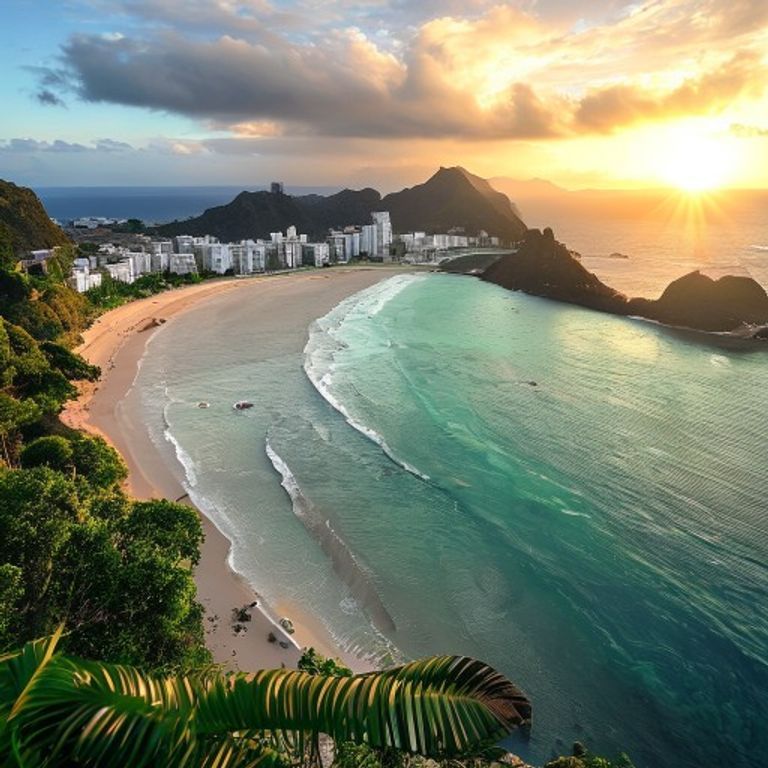
A sanctuary of peace and nature, Costa Rica is famous for having abolished its army and focusing on education and environmental preservation. With one of the highest biodiversities per square meter in the world, it is an ecotourism paradise, full of cloud forests, volcanoes, and surf beaches. The motto 'Pura Vida' reflects the relaxed and happy lifestyle of its inhabitants in Central America.
Costa Rica is globally renowned for its democratic stability and environmental focus, but the country is not immune to scandals and serious challenges. Below are the main controversies that have marked the country's recent history, divided by areas:
1. Political Corruption Scandals
Despite its reputation for transparency, Costa Rica has faced high-level corruption cases that have shaken trust in institutions.
-
The "Cementazo" (2017): Perhaps the biggest political scandal of the decade. It involved the import of Chinese cement by businessman Juan Carlos Bolaños. The controversy revolved around massive influence peddling to alter import regulations and facilitate million-dollar loans from the Banco de Costa Rica (BCR) without adequate guarantees. The case affected all three branches of the Republic (Executive, Legislative, and Judiciary), resulting in arrests and the dismissal of magistrates.
-
Cochinilla Case (2021): A corruption scheme focused on public works. Investigations revealed that construction companies paid bribes (money, vehicles, and even sexual favors) to officials of CONAVI (National Roads Council) in exchange for contracts and expedited payments. The estimated loss was tens of millions of dollars and exposed the fragility of infrastructure oversight.
-
Diamante Case (2021): Known as a branch of the Cochinilla case, it involved mayors from several cantons (municipalities) accused of receiving bribes to favor construction companies in local projects.
2. The "Green Paradox" (Environment)
Although a global leader in conservation, Costa Rica faces environmental contradictions that generate much internal debate.
-
Pineapple Monoculture: Costa Rica is one of the world's largest pineapple exporters. The uncontrolled expansion of these plantations has led to serious accusations of groundwater contamination by pesticides, soil erosion, and illegal deforestation in protected areas.
-
Crucitas Mining: A legal and social battle that lasted years over the permission for a Canadian company to exploit an open-pit gold mine in Las Crucitas. Although mining was judicially blocked, the area later suffered from illegal gold mining invasions, causing an environmental disaster with mercury use.
3. Public Security Crisis (Current)
Historically a "peace oasis" without an army, the country is now experiencing its most acute security crisis.
-
Homicide Record: In recent years (especially 2023 and 2024), Costa Rica has broken historical homicide rate records. The main cause is territorial disputes between local gangs linked to international drug cartels, which use the country as an export route for cocaine to Europe and the US.
-
Drug Trafficking Infiltration: There is a growing controversy about the ability of civilian police forces to contain the firepower of militarized criminal organizations, leading to debates about the need for tougher laws.
4. Migratory Tensions
-
Nicaraguan Crisis: Political instability in neighboring Nicaragua has led to a massive flow of refugees and migrants to Costa Rica. This has created tensions regarding the capacity of public services (health and education) to absorb this demand, as well as sporadic episodes of xenophobia.
1. The Escalation of the Security Crisis (The "Mexicanization" of the Conflict)
Costa Rica, historically peaceful and without an army since 1948, is facing a reality check with transnational organized crime.
-
The Geopolitics of the Route: The country's geographical location is strategic. It serves as a bridge between cocaine producers in South America (Colombia) and consumers in the North. However, the recent change has been the increase in exports to Europe.
-
The Port of Limón (Moín): The container terminal in Moín, on the Caribbean coast, has become the epicenter of the problem. Local criminal organizations, often paid with the drug itself (which generates internal micro-trafficking and disputes over "drug dens"), insert illicit cargo into containers of fruit (especially pineapple and banana) destined for ports like Rotterdam and Antwerp.
-
Impact on Violence: The homicide rate has alarmingly surged (exceeding 17 per 100,000 inhabitants in 2023). The brutality of the crimes (daylight executions, beheadings) is something new to Costa Rican culture and suggests the direct influence of Mexican cartels (like Sinaloa) operating on "Tico" soil.
2. The Cochinilla Case (Structural Corruption in Public Works)
This case is interesting from a legal-administrative perspective because it exposed how corruption can be "institutionalized" within technical bodies.
-
The Mechanism (Modus Operandi): The core of the fraud was not just winning bids, but creating an "artificial bottleneck." CONAVI (roads authority) officials intentionally delayed payments and technical feasibility approvals.
-
The Exchange: Large construction companies (like MECO and H. Solís) paid bribes to get their processes moving. In other words, difficulty was created to sell ease. Furthermore, funds intended for the maintenance of rural roads and peripheral routes were diverted to large projects in the capital, where profit and visibility were greater.
-
Legal Consequences: The case generated intense debate about the Administrative Contracting Law. It was discovered that the oversight system was flawed because construction inspectors were often paid by the very companies they were supposed to inspect. This resulted in preventive arrests of owners of large civil construction empires, something unprecedented in the country's recent history.
3. The "Crucitas" Environmental Controversy (Legal-International)
This case is worth mentioning briefly for its International Law aspect. Costa Rica was sued in international arbitration (ICSID) by the Canadian company Infinito Gold, which sought millions in compensation after the country canceled the mining concession. Costa Rica won the case in 2021, reaffirming its environmental sovereignty, but the Crucitas region continues to be a "no man's land" invaded by illegal gold miners, creating a continuous ecological disaster.
⚠️ Research elaborated with the aid of Deep Research is subject to referential ambiguity.
🖥️Clean HTML code using a proprietary tool.
👥Research by Guilherme Felipe, Curation by Sílvio Lôbo
1. O Agravamento da Crise de Segurança (A "Mexicanização" do Conflito)
A Costa Rica, historicamente pacífica e sem exército desde 1948, está enfrentando um choque de realidade com o crime organizado transnacional.
-
A Geopolítica da Rota: A localização geográfica do país é estratégica. Ele serve como ponte entre os produtores de cocaína na América do Sul (Colômbia) e os consumidores no Norte. No entanto, a mudança recente foi o aumento da exportação para a Europa.
-
O Porto de Limón (Moín): O terminal de contêineres de Moín, na costa caribenha, tornou-se o epicentro do problema. Organizações criminosas locais, muitas vezes pagas com a própria droga (o que gera o microtráfico interno e a disputa por "bocas de fumo"), inserem cargas ilícitas em contêineres de frutas (especialmente abacaxi e banana) destinados a portos como Roterdã e Antuérpia.
-
Impacto na Violência: A taxa de homicídios saltou de forma alarmante (superando 17 por 100.000 habitantes em 2023). A brutalidade dos crimes (execuções à luz do dia, decapitações) é algo novo para a cultura costarriquenha e sugere a influência direta de cartéis mexicanos (como o Sinaloa) operando em solo "tico".
2. O Caso Cochinilla (Corrupção Estrutural em Obras Públicas)
Este caso é interessante do ponto de vista jurídico-administrativo porque expôs como a corrupção pode ser "institucionalizada" dentro de órgãos técnicos.
-
O Mecanismo (Modus Operandi): O núcleo da fraude não era apenas vencer licitações, mas criar um "gargalo artificial". Funcionários do CONAVI (órgão de estradas) atrasavam propositalmente os pagamentos e as aprovações de viabilidade técnica.
-
A Troca: As grandes construtoras (como a MECO e a H. Solís) pagavam subornos para que seus processos "andassem". Ou seja, criava-se a dificuldade para vender a facilidade. Além disso, verbas destinadas à manutenção de estradas rurais e rotas periféricas eram desviadas para grandes obras na capital, onde o lucro e a visibilidade eram maiores.
-
Consequências Jurídicas: O caso gerou um debate intenso sobre a Lei de Contratação Administrativa. Descobriu-se que o sistema de fiscalização era falho porque os fiscais das obras muitas vezes eram pagos pelas próprias empresas que deveriam fiscalizar. Isso resultou em prisões preventivas de donos de grandes impérios da construção civil, algo inédito na história recente do país.
3. A Polêmica Ambiental "Crucitas" (Jurídico-Internacional)
Vale mencionar rapidamente este caso pelo aspecto do Direito Internacional. A Costa Rica foi processada em arbitragem internacional (CIADI) pela empresa canadense Infinito Gold, que pedia indenização milionária após o país cancelar a concessão de mineração. A Costa Rica ganhou o caso em 2021, reafirmando sua soberania ambiental, mas a região de Crucitas continua sendo uma "terra de ninguém" invadida por garimpeiros ilegais, criando um desastre ecológico contínuo.
⚠️ Pesquisas elaboradas com auxílio do Deep Research estão sujeitos a ambiguidade referencial.
🖥️Código html limpo com o uso de ferramenta própria.
👥 Pesquisa por Guilherme Felipe, Curadoria Sílvio Lôbo





