



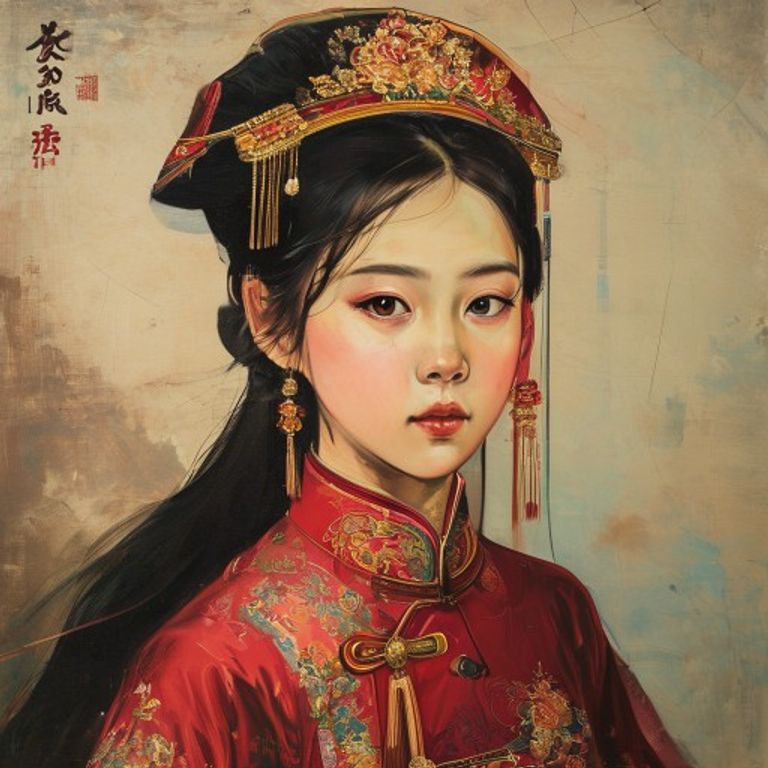
One of the world's oldest civilizations, China combines millennia-old traditions with dizzying modernization. Home to the Great Wall and futuristic metropolises like Shanghai, the country is an economic and industrial powerhouse. Its vast geography ranges from deserts to sacred mountains, while its culture, rich in philosophy, tea, and martial arts, continues to exert a profound global influence.
A work on the history of great China coming soon!
⚠️ Research elaborated with the aid of Deep Research is subject to referential ambiguity.
🖥️Clean HTML code using a proprietary tool.
👥 Research by Guilherme Felipe, Curation by Sílvio Lôbo
Chinese Literature as a Geopolitical Mirror and Tool: An In-depth Analysis
Chinese literature, in its vast and ancient trajectory, is not merely a reflection of its people's soul but also a mirror of the complex geopolitical forces that shape and are shaped by this nation. From imperial times to the present day, Chinese literary works have intrinsically dialogued with power dynamics, national aspirations, external influences, and internal tensions that define China's position on the global stage. This essay will explore this intersection, examining key authors, literary movements, emblematic publications, and local cultural identity, always through the lens of its profound relationship with Chinese geopolitics.
Historical Roots and the Influence of Politics on Literary Creation
The very conception of the "state" in ancient China was already intrinsically linked to social order and harmony, recurring themes in literature. Confucian classics, for example, although primarily philosophical, possessed a normative character that influenced worldview and conduct, reflecting a desire for stability and a model of governance that, in many aspects, can be seen as a primordial form of "power management." Poetry and prose literature, such as the poems of the Tang Dynasty (618-907), frequently explored themes of exile, loyalty to the emperor, and the vastness of Chinese territory, echoing a sense of unity and imperial power. State censorship and patronage, present since antiquity, already indicated the symbiotic relationship between political power and literary production.
The Century of Humiliations and Literature as a Cry of Resistance
The period known as the "Century of Humiliations" (mid-19th century to mid-20th century), marked by foreign interference, the Opium Wars, and the fall of the Empire, caused an earthquake in the Chinese consciousness and, consequently, in its literary production. Authors like **Lu Xun (魯迅)**, considered the father of modern Chinese literature, became dissonant and critical voices. His work, such as the short story "A Madman's Diary" (狂人日記), was a poignant allegory of social oppression and cultural backwardness, a call for the revolution of the mind and society. The literature of this era, often engaged and pamphleteering, sought to awaken nationalism, denounce foreign exploitation, and propose paths for the nation's salvation. Movements like the New Culture Movement (新文化運動) and Social Realism were pillars for literary renewal and the articulation of an anti-imperialist discourse.
The publication of works like "The Orphan of Zhao" (趙氏孤兒), although an ancient theatrical play, resonated in times of crisis, recalling resilience and family unity in the face of political adversity. However, in the 20th century, the focus shifted to direct denunciation of the ills caused by foreign domination and the search for a strong national identity.
The Maoist Era and Literature as Propaganda
With the founding of the People's Republic of China in 1949, literature became heavily instrumentalized by the ideology of the Chinese Communist Party (CCP). Revolutionary literature, with authors like **Mao Zedong (毛澤東)** himself (whose theoretical and poetic writings had an undeniable political impact), served as a tool for propaganda and indoctrination. Works depicted worker and peasant heroes, the struggle against the enemies of the people, and the construction of a new socialism. Authors who deviated from this editorial line faced persecution and severe censorship, as occurred during the Cultural Revolution (1966-1976).
Publications like the "Little Red Book" (Quotations from Chairman Mao Tse-tung) became icons of an era where politics dictated the form and content of artistic expression. The geopolitics of isolation and the pursuit of ideological self-sufficiency were clearly reflected in the thematic and stylistic uniformity of the literature.
The Opening Up and Subtle Criticism: Contemporary Authors and Movements
With the economic reforms and China's opening up from the late 1970s onwards, contemporary Chinese literature entered a phase of effervescence and diversification. Although state control still persists, new voices and approaches have emerged, often using fiction to explore the contradictions of modernization and the complexities of Chinese identity in a globalized world. Authors like **Mo Yan (莫言)**, winner of the Nobel Prize in Literature in 2012, with works such as "Red Sorghum Clan" (紅高粱家族), blend magical realism with social and historical critiques, exploring the brutalities of the past and the complexities of rural life under the pressure of progress. His work, despite international acclaim, faced challenges with internal censorship, demonstrating the persistent tension between artistic expression and political directives.
Other important authors include:
- Yu Hua (余华): Known for novels like "To Live" (活) and "Chronicle of a Blood Merchant" (許三觀賣血記), which portray the lives of ordinary people amidst periods of intense political and social turmoil, often with an ironic and somber tone.
- Wang Anyi (王安憶): Winner of the Man Booker International Prize, her works, such as "The Songs of Everlasting Sorrow" (長恨歌), explore urban life and social changes in Shanghai, the city that represents the cosmopolitan and economically powerful face of modern China, but also its hidden ills.
- Yan Lianke (閻連科): One of China's most controversial and audacious contemporary authors, whose works like "Dream of a Village" (夢的村莊) and "The Day the Sun Turned Cold" (日光流轉) openly challenge taboos and censorship, addressing themes such as hunger, madness, and corruption, often with a surreal and transgressive language.
Movements like "Carnal Realism" (身體寫實主義), although not a formal movement, reflected a quest to explore the physical and visceral dimension of human experience, in contrast to the earlier socialist idealization. "Underground" literature and the production of science fiction have also gained strength, seeking escapism or exploring dystopian scenarios that implicitly comment on political reality.
Cultural Identity and Geopolitics: A Constant Dialogue
Chinese cultural identity, multifaceted and constantly evolving, is a central theme in literature, deeply intertwined with geopolitical narratives. The search for a strong national identity, whether in opposition to foreign domination or in the affirmation of its own development model, permeates literary production. The relationship with the West, Westernization versus the preservation of traditions, economic development versus social well-being, and China's own perception in the world are issues that contemporary authors continue to explore.
Large-scale publications, including historical novels, biographies of political figures, and works celebrating Chinese history and culture, are often state-supported to promote a positive image of China abroad and strengthen national pride. Simultaneously, the circulation of works that question the status quo, even if subtly, demonstrates the persistent strength of literature as a space for reflection and resistance. The growing translation of Chinese authors into other languages also fits into the geopolitical context, allowing China to project its voice and narrative on the global stage.
Conclusion
Chinese literature is a vibrant and dynamic field, inseparable from its geopolitical context. From the classics that reflected imperial order to contemporary works navigating the complexities of globalization and Chinese development, authors, literary movements, and publications have served, and continue to serve, as mirrors of the nation and, at times, as tools in the construction and projection of its power and identity on the world stage. Therefore, an analysis of Chinese literature without considering its intrinsic relationship with geopolitics would be incomplete and superficial.





