



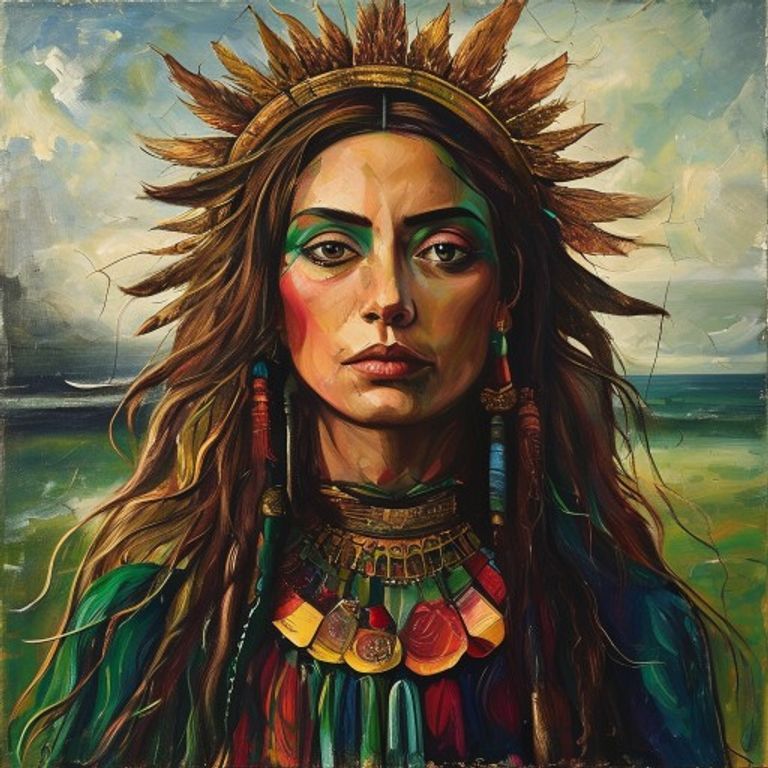
This municipality in the state of Alagoas is the birthplace of Jorge de Lima and carries the epic legacy of Serra da Barriga, serving as inspiration for works that reclaim Zumbi's resistance and the history of Quilombo dos Palmares.
⚠️ Research conducted with the aid of Deep Research is subject to referential ambiguity.
🖥️Clean HTML code using a proprietary tool.
👥 Research by Guilherme Felipe, Curation by Sílvio Lôbo
A Mosaic of Voices: The Literature of Union of Palmares
Union of Palmares, a land of rich history and vibrant culture, has been fertile ground for literary production, reflecting the particularities of its local identity and engaging with the literary movements of its time. This essay aims to explore the nuances of the literature produced in this region, highlighting its main exponents, historical milestones, and how Palmarina culture manifests itself on the pages of books.
Featured Authors: Voices that Echo the Palmarina Soul
The literary production of Union of Palmares is marked by a group of authors who, with their experiences and worldviews, have managed to translate the essence of their land into writing. Among the names that deserve attention, we find:
- Orígenes Lessa: One of the most prominent sons of Union of Palmares, Orígenes Lessa, a novelist and short story writer, is often remembered for his engaging prose and the way he portrayed the daily life and landscapes of Alagoas. His work is a portal to the rural universe, its customs, and its striking characters.
- Maria Valéria Rezende: Although with strong ties to other regions, the influence and recognition of works like "Quase Me Lembro" resonate in the Alagoan cultural identity, touching on universal themes with a sensitivity that dialogues with the regional atmosphere.
- Other Talents: The local literary scene, sometimes less visible on a national level, is rich in poets, chroniclers, and short story writers who keep alive the oral tradition and artistic expression of the region. The search for these talents in local publications and cultural events reveals a vibrant and constantly renewing panorama.
Historical Literary Movements and Union of Palmares
Although Union of Palmares has not yet stood out as the birthplace of an autonomous literary movement with national recognition, its production intrinsically dialogues with the literary currents that have shaped Brazil. Modernism, with its search for a national identity and the valorization of Brazilian vernacular, certainly influenced writers from the region, encouraging the exploration of themes and languages closer to the local reality.
Subsequently, the production that emerged in Union of Palmares, especially from the second half of the 20th century onwards, can be associated with a search for new forms of expression, with traces of realism and regionalism, but also with a growing social concern and focus on identity issues, which have become central in more recent Brazilian literature.
Important Publications: Milestones in Literary Memory
Identifying specific publications as milestones in the literature of Union of Palmares requires a close look at local publishers, collections, and anthologies that bring together regional talents. Works by Orígenes Lessa, such as "O Estranho Hóspede" and "O Galo Cantou na Roça", are significant examples that celebrate Alagoan culture and environment.
The circulation of newspapers, literary magazines, and participation in regional contests and festivals are also important vectors for the dissemination of local literary production. The strengthening of independent publishers and cultural projects that encourage writing in Union of Palmares are crucial for the continuity and recognition of its literature.
Local Cultural Identity Reflected in Books
The cultural identity of Union of Palmares is the common thread that runs through the region's literary production. What is observed on the pages of books is a deep reflection of:
- The Landscape and the Rural: The stunning beauty of the region, its rivers, mangroves, and rural life are frequently portrayed with lyricism and realism, evoking sensations and memories.
- Orality and Daily Life: The people's speech, their stories, beliefs, and popular traditions find echoes in prose and poetry, lending authenticity and flavor to the narrative.
- Struggle and Resistance: The very history of Union of Palmares, linked to the emblematic figure of Zumbi dos Palmares, inspires themes of resistance, freedom, and the pursuit of dignity, echoing a historical legacy of struggle.
- Human Relationships: The complexity of family relationships, loves, frustrations, and joys of the Palmarina people are exposed with sensitivity, connecting the reader to the universality of human experiences.
In summary, the literature of Union of Palmares is a multifaceted mirror of its rich cultural identity. Through the words of its writers, the region presents itself not just as a geographical location, but as a universe of stories, feelings, and struggles that deserve to be discovered and celebrated.





