



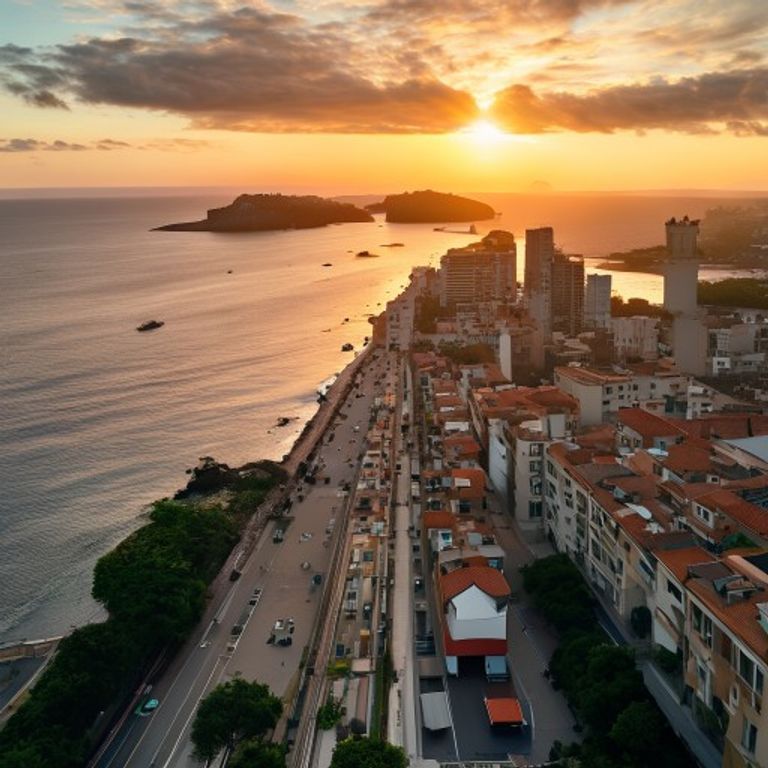
This municipality in the State of Sergipe, the fourth oldest city in Brazil, is an inexhaustible source for historical and religious literature, serving as a backdrop for prose that revives the period of the Iberian Union and the Baroque.
⚠️ Research conducted with the aid of Deep Research is subject to referential ambiguity.
🖥️Clean HTML code using a proprietary tool.
👥 Research by Guilherme Felipe, Curation by Sílvio Lôbo
The Eternal Narrative of Stone and Soul: Literature in São Cristóvão (SE)
São Cristóvão, the fourth oldest city in Brazil and the first capital of Sergipe, is a true repository of history and culture. Declared a World Heritage Site by UNESCO for its Praça São Francisco, the city transcends mere architectural landscape to reveal itself as fertile ground for imagination and literary expression. It is not just a setting; it is a character, a muse, and often, the very text that inspires authors to delve into its layers of time, faith, and memory. Literature in São Cristóvão, whether born from its illustrious sons or reflected in works that address it, is a testament to the rich identity of a people and a place that refuses to be forgotten by time.
Historical Formation and its Literary Resonance
Founded in 1590 by Cristóvão de Barros, São Cristóvão carries the weight of colonization, indigenous struggles, African presence, and nation-building in its stones. This dense historical tapestry is, in itself, a complex narrative that permeates local and regional literary production. For centuries, the city was the political and economic center of Sergipe before yielding its position to Aracaju. This transition and subsequent political, but not cultural, emptying shaped a literary perspective that often oscillates between nostalgia for a glorious past and the celebration of the resilience of its living traditions. Oral history, popular festivities, and strong Catholic religiosity are inexhaustible sources for artistic creation, transforming everyday life into poetry and prose.
Prominent Voices and Authors
Despite its historical and cultural significance, the literary production of São Cristóvão, in the strict sense of authors *born* in the city with national projection, may seem less voluminous than that of major centers. However, its relevance lies in the depth and specificity of its voices, as well as its ability to inspire authors from across the state to explore its themes.
- Padre Antônio Valença (1903-1996): Born in São Cristóvão, he was a highly influential historian, educator, and priest. His work, although predominantly historical and memorialistic, possesses invaluable literary merit by meticulously recording the life and evolution of the city, its customs, and its characters. His writings are primary sources for understanding São Cristóvão in the 20th century, weaving a rich tapestry that revives collective memory.
- Ivo do Prado (1918-2009): Also a native of São Cristóvão, Ivo do Prado was a poet and memorialist dedicated to his homeland. His poetry, often nostalgic and descriptive, captured the essence of the colonial city, its mansions, its legends, and the religiosity of its people. He transformed Praça São Francisco itself and its cobblestone streets into verses, immortalizing a way of life.
In addition to these, many other writers from Sergipe, even if not born in São Cristóvão, have dedicated a significant part of their works to the city, recognizing its central role in the state's identity. Authors like Luís Antônio Barreto, a renowned historian and researcher from Sergipe, have extensive material in their studies on the history of Sergipe that illuminates the importance of São Cristóvão, bridging the gap between historiography and cultural narrative. The city serves as a backdrop for historical novels and short stories that explore the essence of Sergipe, reinforcing its status as a living museum and an inexhaustible source for creation.
Literary Movements and Currents
The literature of Sergipe, and consequently that of São Cristóvão, has been intrinsically linked to national literary movements, but always with a marked regionalist flavor. In the 19th and early 20th centuries, Romanticism and Realism/Naturalism, while present, were often filtered through a strong historical vein and a concern for local identity, manifested in chronicles and descriptions of the landscape and people.
Northeastern Regionalism, at its peak in the 1930s and 1940s, found an ideal setting in São Cristóvão. The colonial city, with its traditions, religious festivals, legends, and the contrast between the opulence of the past and the simplicity of the present, offered abundant material for narratives that explored the particularities of life in the Brazilian Northeast. Although it did not have a formal modernist nucleus like São Paulo or Rio, the literature of Sergipe absorbed the formal freedom of Modernism to express this regionality with greater authenticity and criticality.
In Contemporary Literature, São Cristóvão continues to be revisited by new generations of writers who use it as a metaphor to discuss themes such as memory, national identity, the African diaspora, and the preservation of cultural heritage. The city, with its historical weight, invites reflection on the passage of time and the persistence of culture in a globalized world.
Publications and Dissemination Channels
Throughout history, newspapers and periodicals from Sergipe were crucial channels for disseminating local literature. In São Cristóvão, although there were no major publishing houses, intellectual production found echoes in the capital's newspapers and cultural magazines that, from time to time, emerged in the state. The Academia Sergipana de Letras (Sergipana Academy of Letters), founded in 1929, played and continues to play a fundamental role in preserving and promoting the state's literary production, including that which is inspired by or originates from São Cristóvão.
Currently, universities in Sergipe (such as the Federal University of Sergipe, headquartered in São Cristóvão) and their university presses (Editora UFS) are important centers for research and publication, editing works on the history, culture, and literature of São Cristóvão. Furthermore, literary festivals and book fairs, both in São Cristóvão and Aracaju, serve as stages for the meeting of authors and readers, keeping alive the flame of literary production and appreciation.
São Cristóvão as a Mirror and Text: Cultural Identity
The cultural identity of São Cristóvão, deeply rooted in its colonial history and faith, is the pulsating heart of its literary expression. This identity manifests on several levels:
- Religion and Spirituality: The Feast of the Holy Spirit, with its folkloric manifestations and deep devotion, is a recurring theme. The presence of Baroque churches, the Stations of the Cross, and the people's faith are elements that overflow into short stories, poems, and novels, expressing the city's mystical soul.
- Architecture and Urban Landscape: The colonial mansions, the cobblestone streets, Praça São Francisco (a World Heritage Site) are not just settings, but silent characters that witness and inspire the narrative. Literature often dwells on the description of these elements, evoking the passage of time and the preservation of memory.
- Afro-Brazilian and Indigenous Heritage: The history of São Cristóvão is inseparable from the African and indigenous presence. The marks of slavery, the quilombos (such as Quilombo da Maloca, in the rural area of the municipality), and traditions of African origin find echoes in literature, which seeks to give voice to these often silenced narratives, exploring the richness of cultural miscegenation and the struggles for recognition.
- The Contrast Between Past and Present: The literature of São Cristóvão often explores the tension between the splendor of its past as a capital and the reality of a city that preserves its traditions amidst modernity. This duality generates reflections on loss, resilience, and the search for a place in the contemporary world.
Conclusion
Literature in São Cristóvão, Sergipe, is a multifaceted mirror of its own existence: historical, resilient, and deeply cultural. Although it may not boast a vast pantheon of universally recognized names, its richness lies in the depth with which its authors, born there or inspired by it, have managed to translate the soul of a place into words. São Cristóvão is not just a heritage of stone and mortar; it is a heritage of stories, verses, and memories that continue to be written and rewritten, ensuring that its eternal narrative endures in Brazil's cultural consciousness.





