



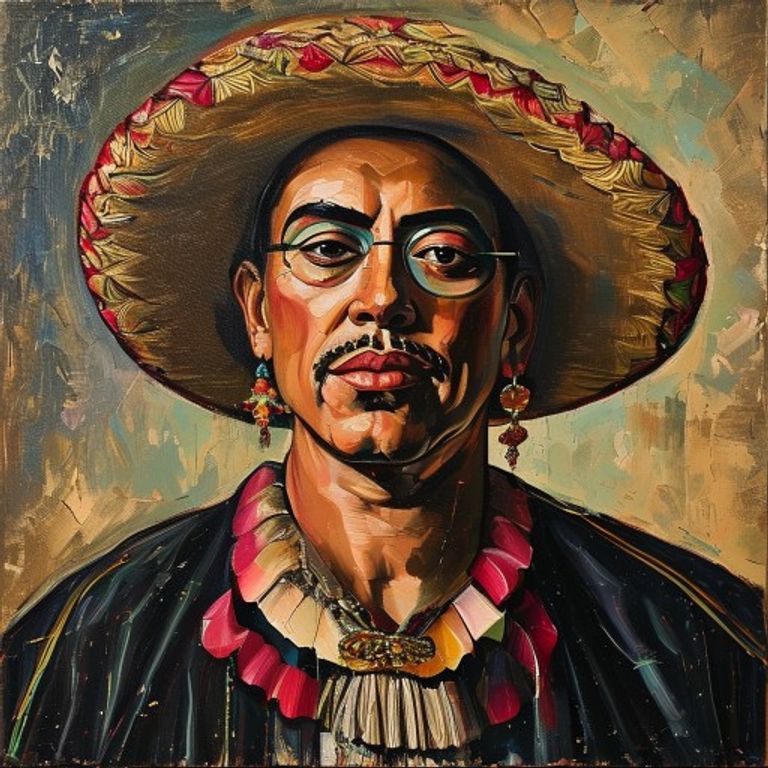
This municipality in the State of Bahia is the birthplace of Gregório de Matos, the 'Mouth of Hell', and was the setting and home of Jorge Amado, who immortalized the legends and the Bahian people in works such as 'Mar Morto'.
⚠️ Research elaborated with the aid of Deep Research is subject to referential ambiguity.
🖥️Clean HTML code using a proprietary tool.
👥 Research by Guilherme Felipe, Curation Sílvio Lôbo
A Golden and Deep Mirror: The Literature of Salvador
Salvador, the first capital of Brazil, is much more than a mere geographical point; it is a universe of cultures, histories, and identities that, over the centuries, have manifested indelibly in its literary production. Birthplace of Africanity on the American continent, stage for unique syncretisms, and repository of a deep colonial and slave-owning memory, the city of Bahia emerges in the pages of its authors as a multifaceted, pulsating, and inexhaustible character. This essay seeks to unravel the rich literary tapestry of Salvador, focusing on its main exponents, movements, publications, and how local cultural identity is reflected in its lyrics.
Historical Roots and the First Voices
Salvador's literary history dates back to colonial times, where cultural effervescence and social tension already found echoes. The greatest exponent of this period is Gregório de Matos e Guerra (1636-1698), the "Boca do Inferno" (Mouth of Hell). His baroque poetry, with its biting satirical verve, incisive social criticism, and amorous and religious lyricism, already captured the contradictions of a Salvador in formation. Gregório, albeit incipiently, laid the foundations for the criticism and sharp observation that would become hallmarks of Bahian literature.
In the 19th century, Romanticism flourished, and Salvador was home to one of the movement's most powerful and engaged voices: Castro Alves (1847-1871). Known as the "Poet of the Slaves," his work was an eloquent cry against slavery, with poems like "Navio Negreiro" (Slave Ship) and "Vozes d'África" (Voices of Africa) echoing the pain and social injustice. Castro Alves's poetry, deeply humanistic and political, transcended the regional to become a pillar of national literature, and Salvador, with its predominantly Black population and the striking presence of an Afro-descendant culture, was the natural setting for such a clamor.
Bahian Modernism and the Amado Era
The 20th century brought Modernism, and in Salvador, the movement took on its own contours, often more linked to a rediscovery of deep Brazil and regionalism than to the radical formalist rupture seen in the Southeast. However, it was the colossal figure of Jorge Amado (1912-2001) who catapulted Bahia and, by extension, Salvador, to the center of the global literary imagination. Although born in Itabuna, his life and work were intrinsically linked to Salvador, a city he knew how to portray like no other. His narratives, from the social realism of Capitães da Areia (Captains of the Sands) to the sensual effervescence of Gabriela, Cravo e Canela (Gabriela, Clove and Cinnamon) and Dona Flor e Seus Dois Maridos (Dona Flor and Her Two Husbands), painted a vivid and passionate picture of the culture, people, colors, and flavors of the Bahian capital. Amado knew how to celebrate the Africanity, religious syncretism, cuisine, sensuality, and resilience of the Bahian people, transforming Pelourinho, Elevador Lacerda, and the steep streets into settings for unforgettable novels.
Another giant, although from Ilha de Itaparica, but deeply rooted in Salvador's cultural atmosphere, is João Ubaldo Ribeiro (1941-2014). With his biting, ironic, and profoundly Brazilian prose, Ubaldo explored the history, politics, and idiosyncrasies of the Bahian people in works such as Sargento Getúlio (Sergeant Getúlio) and Viva o Povo Brasileiro (Long Live the Brazilian People). His writing, laden with orality and sharp humor, captured the essence of Bahian "malandragem" (street smarts) and popular wisdom, often set in landscapes that refer to Salvador itself and its surroundings.
During this period, other authors also enriched the panorama, such as Adonias Filho (1915-1990), who, although focusing more on cocoa and the southern region of Bahia, brought a mystical and poetic regionalism that connected with the deep soul of the state. José Cândido de Carvalho (1914-1989), with his humor and refined prose, also contributed to the richness of the Bahian literary scene, even if with less direct focus on Salvador.
Beyond Amado: Contemporary Voices and Diversity
Salvador's literature did not stop in the shadow of its giants. Subsequent generations continued to explore and expand the thematic and formal repertoire. Authors like Antônio Torres (1940-), from Medeiros Neto, but whose work often echoes the social and existential complexity of urban and rural Bahia, demonstrate the persistence of a narrative rooted in local identity but with universal projection. Myriam Fraga (1937-2011), a poet and tireless cultural articulator, was an important lyrical voice and guardian of Jorge Amado's legacy at the Foundation dedicated to him.
Bahian poetry, moreover, has always maintained a particular vitality, with names like Ruy Espinheira Filho (1942-), with his intimate and philosophical lyrics, and Pena Filho (Franklin de Almeida Pena) (1939-), who explored the surreal and the fantastic. More recently, the literary scene has diversified even further, embracing new aesthetics and themes. Lívia Natália (1979-), with her contemporary poetry that moves between the existential and the social, and Sérgio P. Sampaio (1975-), who explores science fiction and the fantastic with elements of Bahian culture, are examples of this renewal.
This new generation of writers also reflects a more complex Salvador, dealing with issues of gender identity, race, urbanization, and globalization, without losing connection with its roots.
Literary Movements and Thematic Characteristics
Salvador's literature does not fit easily into a single box of movements. It drew from various sources and adapted them to its own reality:
- Bahian Baroque: With Gregório de Matos, marked by duality, contrast, and criticism.
- Engaged Romanticism: With Castro Alves, focused on the abolitionist cause and social lyricism.
- Authentic Regionalism: Unlike the dry regionalism of the northeastern hinterland, Bahian regionalism, especially with Amado, is exuberant, sensual, mythical, and deeply humanistic, mixing the popular with the political.
- Social and Critical Realism: Present in Amado, Ubaldo, and many contemporary authors, who expose the city's inequalities and social ills.
- Orality and Humor: A striking characteristic, reflecting the liveliness of Bahian speech and way of being, present from Ubaldo to popular poets.
- Fantasy and the Marvelous: Although not a Latin American "magical realism," there is a strong presence of the mystical, the folkloric, and the marvelous, especially in Amado, which permeates daily life.
Important Literary Publications and Institutions
The sustenance of Salvador's literary scene has also been through important media and institutions:
- The Academia de Letras da Bahia (Bahian Academy of Letters) (founded in 1917) has been a bulwark in preserving and promoting Bahian literary culture, bringing together authors and scholars.
- The Fundação Casa de Jorge Amado (Jorge Amado House Foundation), located in Pelourinho, is a vital center for preserving the writer's memory and fostering Bahian literature, holding events, publications, and hosting researchers.
- Local and university publishers, such as Edufba (Publisher of the Federal University of Bahia), play a crucial role in publishing works by new authors and disseminating academic research on Bahian literature. Independent and smaller publishers have also emerged, ensuring diversity of voices.
- Historically, literary supplements in newspapers like "A Tarde" and "Correio da Bahia" were vital spaces for criticism, essays, and the publication of short stories and poems, revealing new talents. Literary magazines, such as the classic "Os Novos," were also important in the early 20th century.
Local Cultural Identity Reflected in Literature
Salvador's soul is, without a doubt, the heart of its literature. Local cultural identity is the richest and most constant raw material:
- Africanity and Syncretism: The African heritage is omnipresent. Candomblé, the orixás, the rituals, the music, the cuisine (acarajé, vatapá), and the language itself (with the incorporation of African terms) are recurring elements, often central to the narratives. The religious syncretism between Catholicism and African-matrix religions is a theme explored in its complexity and beauty.
- The City as a Character: The steep streets, the colonial houses, the smell of dendê oil, the sea, Pelourinho, Barra, the sailboats — all of this is not just scenery, but an integral part of the plot and the characters' psyche. The literature conveys the city's unique atmosphere, its light, its sounds, its mysteries.
- The Bahian People: Resilience, joy, sensuality, "malandragem" (in the sense of shrewdness and intelligence for survival), but also poverty, racial discrimination, and the struggle for dignity are themes that humanize the pages. Racial and social diversity is shown in its nuances.
- Music and Orality: The presence of music (samba, axé, afoxé) and orality in the construction of literary language is notable, giving a particular rhythm and sonority to Bahian prose and poetry.
- Social and Political Criticism: Since Gregório de Matos, Salvador's literature has not shied away from criticizing injustices, elites, and abuses, revealing an attentive and often combative view of social and political reality.
Conclusion
Salvador's literature is an invaluable treasure, a mirror that reflects the deep and colorful layers of a city that is a symbol of Brazil. From the incisive rhymes of Gregório de Matos and the abolitionist verses of Castro Alves, through the vibrant and sensual prose of Jorge Amado and the sharp irony of João Ubaldo Ribeiro, to the contemporary voices that continue to explore the multiple facets of its identity, the Bahian capital asserts itself as a literary hub of continuous and relevant production.
More than just recording stories, Salvador's literature creates worlds, celebrates life, denounces injustices, and perpetuates the memory of a people and a culture that have become universal. It is a literature that is read with the eyes, the palate, the ears, and the heart, transporting the reader to the sunny streets, the mysterious nights, and the indomitable soul of one of the most literary cities in the world.





