



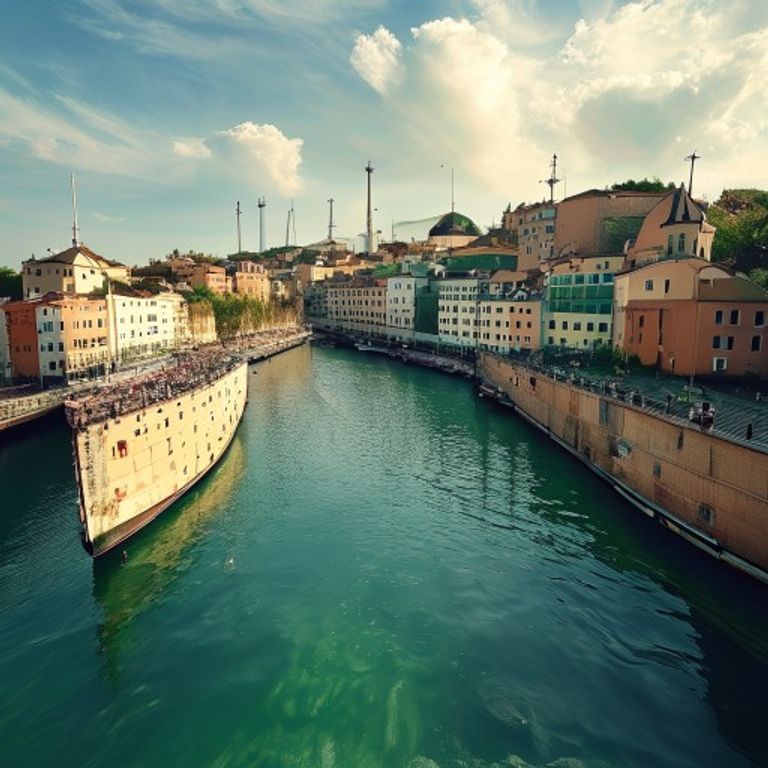
This municipality in the state of Tocantins is considered the intellectual cradle of the region, with a literary tradition dating back to the 19th century and authors who preserve the memory of navigation on the Tocantins River and the history of the former northern Goiás.
⚠️ Research elaborated with the aid of Deep Research is subject to referential ambiguity.
🖥️Clean HTML code using a proprietary tool.
👥Research by Guilherme Felipe, Curation by Sílvio Lôbo
The Ancestral Voice of the Araguaia: A Panorama of Literature in Porto Nacional
Porto Nacional, a historic city on the banks of the mighty Araguaia River, is not just a cradle of memories and stunning landscapes, but also fertile ground for literary production that echoes the cultural identity of its people and its land. As a literary critic and researcher, delving into the literary universe of Porto Nacional is to unravel a web of narratives that seek, in different ways and periods, to capture the essence of a region marked by colonization, riverine bravery, and rich oral tradition.
The literature of Porto Nacional, while perhaps not having the same national projection as other Brazilian literary centers, is a valuable testament to the diversity and cultural resilience of Tocantins. Its authors, whether native or long-term residents, forge in their works a constant dialogue with the past, with geographical specificities, and with the social nuances that shape life in the region.
Literary Roots and Emblematic Authors
The founding of Porto Nacional in the mid-19th century initiated a process of occupation and narrative that initially manifested more orally, through chronicles and travelers' accounts. However, over time, this orality translated into more structured texts, driven by the growing formation of intellectuals in the region. Identifying the beginnings of a formally organized literary production is a challenge, but it is possible to trace an evolutionary line that culminates in authors who became pillars of the local literary identity.
One of the names that resonates strongly in the literary memory of Porto Nacional is Luiz Vieira, a chronicler and journalist who captured the soul of the city, its transformations, and its daily life in his writings. His chronicles are a faithful portrait of an era, interweaving factual events with poetic sensitivity.
Another author of note is Francisco Ribeiro de Almeida, whose work, often focused on the history and geography of the region, offers a deep look into the origins and challenges faced by the pioneers. His texts contribute to the preservation of historical memory and the understanding of Porto Nacional's identity.
It is also important to mention authors who, despite not being born in Porto Nacional, became an intrinsic part of its intellectual and literary life. The city has always attracted and welcomed talents, and the exchange of experiences enriched the cultural scene.
Literary Movements and Important Publications
Although Porto Nacional has not been the stage for major national literary movements with well-defined regional characteristics like other centers, local literary production has always been in sync with the general trends of Brazilian literature, adapting them to its reality. Modernism, for example, influenced the search for a language closer to everyday speech and for themes that portrayed life in the sertão and riverine regions.
In recent decades, there has been a flourishing of small publishing houses and anthologies that have given voice to new talents and revived works by older authors. These publications, often with limited circulation, are fundamental for the maintenance and dissemination of Porto Nacional's literature.
The following publications, while not exhaustive, represent important milestones in the city's literary trajectory:
- Anthologies of short stories and poems: Frequently organized by literary groups or local initiatives, these anthologies bring together diverse voices, addressing themes such as life on the Araguaia, regional legends, and urban experiences.
- Historical and social chronicles: Books that delve into the history of Porto Nacional, its notable figures, and the customs that have shaped the city over time.
- Works by authors with strong regional ties: Books by poets and prose writers who, through their experiences, imprint the indelible mark of Porto Nacional's landscape and culture in their texts.
Cultural Identity: The Araguaia on the Pages
The cultural identity of Porto Nacional is deeply intertwined with the Araguaia River. This symbiotic relationship is undoubtedly one of the central themes that permeate the local literary production. The force of the waters, the floods and droughts, the lives of the riverine people, fishing, boats, and legends of aquatic creatures compose a rich imaginary that finds echoes in the narratives.
Porto Nacional authors, aware of this connection, explore in their works:
- The exuberant and sometimes relentless nature: The detailed description of the Araguaia's fauna, flora, and landscapes gives the works an almost documentary character, while evoking a sense of admiration and respect for nature.
- Riverine culture and its traditions: Narratives often address the customs, popular knowledge, festivals, and beliefs of the communities living on the riverbanks, revealing a unique and resilient way of life.
- Legends and mysticism: The region's rich folklore, with its stories of enchanted beings, mythical creatures, and supernatural events, is a fertile source for fiction, adding a touch of magic and mystery to the works.
- History and memory: Literature in Porto Nacional also dedicates itself to rescuing the history of colonization, economic cycles (such as rubber), and the figures who contributed to the city's formation, strengthening the sense of belonging.
In summary, the literature of Porto Nacional is a multifaceted mirror of its cultural identity. Through its pages, one can glimpse not only the natural beauty and historical richness of a city on the banks of the Araguaia but also the soul of its people, their struggles, their joys, and their strong connection to the land that shelters them. The continuity of this literary production is vital for the preservation and appreciation of a unique cultural heritage.





