



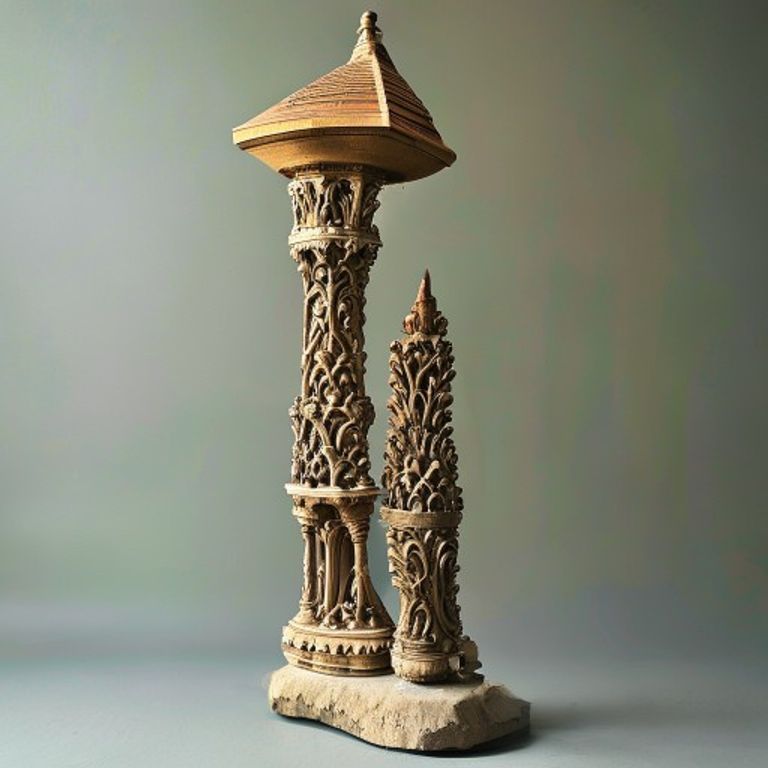
This municipality in the State of Paraíba is world-renowned as the birthplace of novelist José Lins do Rego, author of the Sugar Cane Cycle and the masterpiece Menino de Engenho, which immortalized life on the old sugar mills.
Pillars of the Word: The Literary Fervor of Pilar, Zé Lins do Rego's Cradle
There are cities that breathe literature. Not just because they house bookstores or events, but because the written word seems to be part of their historical fabric and the daily lives of their inhabitants. Pilar, in the Paraíba's Mata region, is one of those rare places. Nationally known for being the birthplace of the giant José Lins do Rego, the city reveals, beneath the surface of tradition, a vibrant contemporary scene, driven by independent authors who transform longing and memory into art.
In this article, we delve into Pilar's literary production to show that, far from the spotlight of the Rio-São Paulo axis, Brazilian literature lives and reinvents itself with vigor.
1. Roots and Tradition: The Cradle of the Sugar Cane Novel
To understand Pilar's literary soul, one must go back to the sugar cane cycle. The city, once a vital economic hub of the province and the "Mother City" of several municipalities in the region, carries the memory of sugar mills in its geography. It was in this environment that, in 1901, José Lins do Rego was born, an immortal author of Brazilian literature and patron of chair 25 of the Brazilian Academy of Letters.
Zé Lins is the cornerstone. His work, which transcends regionalism to touch the universal, immortalized the world of the slave quarters, life on the sugar mills, and the decline of the sugar cycle. Pilar appears in his novels not just as a setting, but as a living character. Besides him, local oral tradition celebrates names like Manoel Xudu (repentista poet), Zé Augusto Brito (chronicler and poet), and Damião Ramos Cavalcanti, figures who kept the flame of poetry alive in the following decades.
However, the great surprise for a researcher arriving in the city is not just the reverence for these masters, but the realization that local literary production is far from being a museum piece.
2. The Contemporary Scene: The Fervor of Independent Publishing
The main focus of this analysis falls on the present. And here, one name stands out as a central figure and catalyst of Pilar's contemporary literary scene: Antonio Costta (Antonio da Costa Silva).
Costta is a rare phenomenon in the national literary circuit. A poet, educator, visual artist, and former councilman, he embodies the essence of the independent Brazilian author. With over 30 books published, all available on platforms like Clube de Autores, Costta did not wait for validation from major publishers to promote his work. He simply built, with discipline and love for his land, a monumental body of work.
What makes the Pilar scene so rich is that Costta has formed a true collaboration network. Instead of writing in isolation, he organized a literary galaxy. His most emblematic work in this regard is the anthology "Os Pilares do Brasil - Poemas & Crônicas".
A National Integration Project: This book is a rare case of regional success. Costta united 17 writers from all six Brazilian cities named "Pilar" (PB, AL, SP, GO, MG, RS). Among the authors, alongside Antonio himself, are the acclaimed José Lins do Rego and local unknowns like Riso Maria, Lucimário Augusto, and Sérgio Moraes. The project was launched at events that toured Alagoas, São Paulo, and, of course, the José Lins do Rego Cultural Week in Paraíba, demonstrating how the geographical periphery can dialogue with itself through literature.
In addition to curation, Costta is a literary production machine. An analysis of titles published between 2003 and 2017 reveals an impressive variety of genres, ranging from intimate poetry (Lira dos Quarenta Anos) to Christian literature (Poesia Cristã), including sonnets and trovas.
3. Themes and Works: The Poetics of the Sugar Mill and Longing
If José Lins do Rego wrote about the "Boy from the Sugar Mill", the new generation of writers from Pilar (led by Costta) writes about the longing for that sugar mill. The predominant theme is rural memory and the appreciation of the deep Northeast.
Antonio Costta's poetry, in particular, is a laboratory for analyzing the interior soul. In his verses, available in digital and printed anthologies, he revives objects and flavors that have disappeared from the urban imagination.
Examples of Works and Recurring Themes:
-
Memorialism and Childhood: In the poem "No Chão da Saudade" (On the Ground of Longing), Costta uses precise affection rather than ornate language. He sings of the "ground of memory" where he played with "marbles, toy cars, and spinning tops" and fished for "piaba with my jereré". It is an archaeology of a poor and happy childhood, typical of the sugarcane region.
-
Cuisine and Identity: Northeastern cuisine is a symbol of belonging. In "O Sabor da Minha Terra" (The Taste of My Land), the poet declares his love for specific items: "goat tripe stew," "coconut-fried trahira," "chicken pirão," and "rapadura." By listing these elements, he is not just describing habits but building a barrier against forgetting.
-
Historical Appreciation: Costta and his colleagues act as true "scribes" of local memory. The book "Visita de D. Pedro II à Pilar-PB e Outros Poemas Pilarenses" (Dom Pedro II's Visit to Pilar-PB and Other Pilar Poems) is a clear example of how local literature recovers historical episodes (the emperor's passage through the village in 1859) that are often ignored by official historiography.
-
Nature as a Subject: The Paraíba River is a constant presence. In the sonnet "Águas da Poesia" (Waters of Poetry), Costta creates a beautiful and inevitable image: he tries to forget the land, but the waters of his poetry, like the river, "have to pass through Pilar." The geographical landscape dictates the rhythm of artistic production.
4. The Specific Case: Pilar is Literature (Even Off the Map)
During the research, it was necessary to filter out important international homonyms, such as the Basílica del Pilar in Buenos Aires (immortalized by Jorge Luis Borges) and the Argentine-Canadian writer Pilar Miralles, or even the children's series "Diário de Pilar" by Flávia Lins e Silva from Rio de Janeiro. All these "Pilares" are literary, but they do not refer to our city.
However, the existence of these homonyms serves to illustrate a curious phenomenon: while the world knows "Pilar" as a name of a church or a character, in Paraíba, Pilar is a verb, an act of creation. The city does not just appear in works; it produces works.
The production of Antonio Costta and his network of collaborators demonstrates a significant cultural phenomenon: the strengthening of cordel and poography (social photography poetry) as a tool of resistance. Costta is a member of the Cordel Academy of the Paraíba Valley, and his verses often adopt the redondilha meter (the rhythm of cordel), as seen in "Seja Bem Vindo à Pilar" (Welcome to Pilar), which functions as an affectionate tourist guide to the city.
Final Considerations
Pilar, Paraíba's literary scene can be summarized in one word: resilience. In a country where independent publishing is still viewed with reservations by some sectors of criticism, Antonio Costta and his partners transform geographical and financial limitations into creative power.
They do not write to please the market; they write to affirm their own existence. Each book published on Clube de Autores, each poem recited at the city's cultural weeks, is an act of affirmation that Brazilian literature does not fit solely on the shelves of large bookstores. It also breathes on the hot sidewalks of Pilar, in the memory of the sugar mills, and in the longing that, for these authors, is raw material for art.
If José Lins do Rego showed the boy from the sugar mill to the world, Antonio Costta shows the poet from the sugar mill who insists on singing about the ground he walks on.
References
-
COSTTA, Antonio. Visita de D. Pedro II à Pilar-PB e Outros Poemas Pilarenses. Literary Highways, 2020.
-
Blog Tribuna do Vale. "Escritor de Pilar lança livro sobre cidades homônimas" (Pilar writer launches book about homonymous cities). Dec. 25, 2017.
-
COSTTA, Antonio. "Poemas em Homenagem à Pilar-PB" (Poems in Homage to Pilar-PB). Recanto das Letras, 2018.
-
Blog Pilar-PB (Notícias). "Livro ‘Os Pilares do Brasil’ é lançado em Pilar - AL" (Book 'The Pillars of Brazil' is launched in Pilar - AL). Apr. 13, 2018.
-
Blog Pilar-PB (Notícias). "Poeta Antonio Costta lança ‘Os Pilares do Brasil – Poemas & Crônicas’" (Poet Antonio Costta launches 'The Pillars of Brazil – Poems & Chronicles'). Dec. 23, 2017.
⚠️ Research conducted with the aid of Deep Research is subject to referential ambiguity.
🖥️ Clean HTML code using proprietary tools.
👥 Research by Guilherme Felipe, Curation by Sílvio Lôbo
This municipality in the State of Paraíba is world-renowned as the birthplace of novelist José Lins do Rego, author of the Sugar Cane Cycle and the masterpiece Menino de Engenho, which immortalized life on the old sugar mills.
Pillars of the Word: The Literary Fervor of Pilar, Zé Lins do Rego's Cradle
There are cities that breathe literature. Not just because they house bookstores or events, but because the written word seems to be part of their historical fabric and the daily lives of their inhabitants. Pilar, in the Paraíba's Mata region, is one of those rare places. Nationally known for being the birthplace of the giant José Lins do Rego, the city reveals, beneath the surface of tradition, a vibrant contemporary scene, driven by independent authors who transform longing and memory into art.
In this article, we delve into Pilar's literary production to show that, far from the spotlight of the Rio-São Paulo axis, Brazilian literature lives and reinvents itself with vigor.
1. Roots and Tradition: The Cradle of the Sugar Cane Novel
To understand Pilar's literary soul, one must go back to the sugar cane cycle. The city, once a vital economic hub of the province and the "Mother City" of several municipalities in the region, carries the memory of sugar mills in its geography. It was in this environment that, in 1901, José Lins do Rego was born, an immortal author of Brazilian literature and patron of chair 25 of the Brazilian Academy of Letters.
Zé Lins is the cornerstone. His work, which transcends regionalism to touch the universal, immortalized the world of the slave quarters, life on the sugar mills, and the decline of the sugar cycle. Pilar appears in his novels not just as a setting, but as a living character. Besides him, local oral tradition celebrates names like Manoel Xudu (repentista poet), Zé Augusto Brito (chronicler and poet), and Damião Ramos Cavalcanti, figures who kept the flame of poetry alive in the following decades.
However, the great surprise for a researcher arriving in the city is not just the reverence for these masters, but the realization that local literary production is far from being a museum piece.
2. The Contemporary Scene: The Fervor of Independent Publishing
The main focus of this analysis falls on the present. And here, one name stands out as a central figure and catalyst of Pilar's contemporary literary scene: Antonio Costta (Antonio da Costa Silva).
Costta is a rare phenomenon in the national literary circuit. A poet, educator, visual artist, and former councilman, he embodies the essence of the independent Brazilian author. With over 30 books published, all available on platforms like Clube de Autores, Costta did not wait for validation from major publishers to promote his work. He simply built, with discipline and love for his land, a monumental body of work.
What makes the Pilar scene so rich is that Costta has formed a true collaboration network. Instead of writing in isolation, he organized a literary galaxy. His most emblematic work in this regard is the anthology "Os Pilares do Brasil - Poemas & Crônicas".
A National Integration Project: This book is a rare case of regional success. Costta united 17 writers from all six Brazilian cities named "Pilar" (PB, AL, SP, GO, MG, RS). Among the authors, alongside Antonio himself, are the acclaimed José Lins do Rego and local unknowns like Riso Maria, Lucimário Augusto, and Sérgio Moraes. The project was launched at events that toured Alagoas, São Paulo, and, of course, the José Lins do Rego Cultural Week in Paraíba, demonstrating how the geographical periphery can dialogue with itself through literature.
In addition to curation, Costta is a literary production machine. An analysis of titles published between 2003 and 2017 reveals an impressive variety of genres, ranging from intimate poetry (Lira dos Quarenta Anos) to Christian literature (Poesia Cristã), including sonnets and trovas.
3. Themes and Works: The Poetics of the Sugar Mill and Longing
If José Lins do Rego wrote about the "Boy from the Sugar Mill", the new generation of writers from Pilar (led by Costta) writes about the longing for that sugar mill. The predominant theme is rural memory and the appreciation of the deep Northeast.
Antonio Costta's poetry, in particular, is a laboratory for analyzing the interior soul. In his verses, available in digital and printed anthologies, he revives objects and flavors that have disappeared from the urban imagination.
Examples of Works and Recurring Themes:
-
Memorialism and Childhood: In the poem "No Chão da Saudade" (On the Ground of Longing), Costta uses precise affection rather than ornate language. He sings of the "ground of memory" where he played with "marbles, toy cars, and spinning tops" and fished for "piaba with my jereré". It is an archaeology of a poor and happy childhood, typical of the sugarcane region.
-
Cuisine and Identity: Northeastern cuisine is a symbol of belonging. In "O Sabor da Minha Terra" (The Taste of My Land), the poet declares his love for specific items: "goat tripe stew," "coconut-fried trahira," "chicken pirão," and "rapadura." By listing these elements, he is not just describing habits but building a barrier against forgetting.
-
Historical Appreciation: Costta and his colleagues act as true "scribes" of local memory. The book "Visita de D. Pedro II à Pilar-PB e Outros Poemas Pilarenses" (Dom Pedro II's Visit to Pilar-PB and Other Pilar Poems) is a clear example of how local literature recovers historical episodes (the emperor's passage through the village in 1859) that are often ignored by official historiography.
-
Nature as a Subject: The Paraíba River is a constant presence. In the sonnet "Águas da Poesia" (Waters of Poetry), Costta creates a beautiful and inevitable image: he tries to forget the land, but the waters of his poetry, like the river, "have to pass through Pilar." The geographical landscape dictates the rhythm of artistic production.
4. The Specific Case: Pilar is Literature (Even Off the Map)
During the research, it was necessary to filter out important international homonyms, such as the Basílica del Pilar in Buenos Aires (immortalized by Jorge Luis Borges) and the Argentine-Canadian writer Pilar Miralles, or even the children's series "Diário de Pilar" by Flávia Lins e Silva from Rio de Janeiro. All these "Pilares" are literary, but they do not refer to our city.
However, the existence of these homonyms serves to illustrate a curious phenomenon: while the world knows "Pilar" as a name of a church or a character, in Paraíba, Pilar is a verb, an act of creation. The city does not just appear in works; it produces works.
The production of Antonio Costta and his network of collaborators demonstrates a significant cultural phenomenon: the strengthening of cordel and poography (social photography poetry) as a tool of resistance. Costta is a member of the Cordel Academy of the Paraíba Valley, and his verses often adopt the redondilha meter (the rhythm of cordel), as seen in "Seja Bem Vindo à Pilar" (Welcome to Pilar), which functions as an affectionate tourist guide to the city.
Final Considerations
Pilar, Paraíba's literary scene can be summarized in one word: resilience. In a country where independent publishing is still viewed with reservations by some sectors of criticism, Antonio Costta and his partners transform geographical and financial limitations into creative power.
They do not write to please the market; they write to affirm their own existence. Each book published on Clube de Autores, each poem recited at the city's cultural weeks, is an act of affirmation that Brazilian literature does not fit solely on the shelves of large bookstores. It also breathes on the hot sidewalks of Pilar, in the memory of the sugar mills, and in the longing that, for these authors, is raw material for art.
If José Lins do Rego showed the boy from the sugar mill to the world, Antonio Costta shows the poet from the sugar mill who insists on singing about the ground he walks on.
References
-
COSTTA, Antonio. Visita de D. Pedro II à Pilar-PB e Outros Poemas Pilarenses. Literary Highways, 2020.
-
Blog Tribuna do Vale. "Escritor de Pilar lança livro sobre cidades homônimas" (Pilar writer launches book about homonymous cities). Dec. 25, 2017.
-
COSTTA, Antonio. "Poemas em Homenagem à Pilar-PB" (Poems in Homage to Pilar-PB). Recanto das Letras, 2018.
-
Blog Pilar-PB (Notícias). "Livro ‘Os Pilares do Brasil’ é lançado em Pilar - AL" (Book 'The Pillars of Brazil' is launched in Pilar - AL). Apr. 13, 2018.
-
Blog Pilar-PB (Notícias). "Poeta Antonio Costta lança ‘Os Pilares do Brasil – Poemas & Crônicas’" (Poet Antonio Costta launches 'The Pillars of Brazil – Poems & Chronicles'). Dec. 23, 2017.
⚠️ Research conducted with the aid of Deep Research is subject to referential ambiguity.
🖥️ Clean HTML code using proprietary tools.
👥 Research by Guilherme Felipe, Curation by Sílvio Lôbo





