



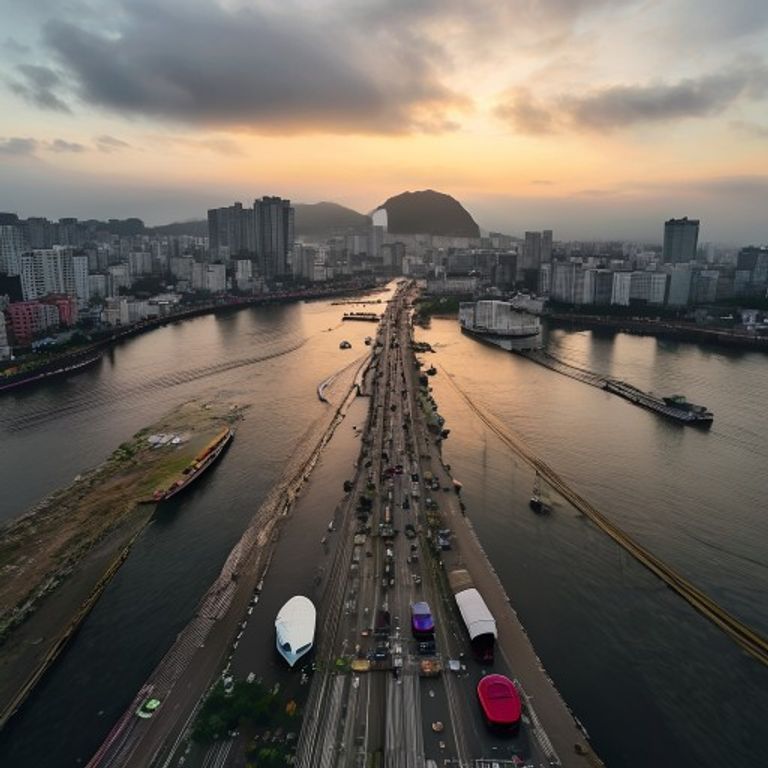
The chronicler José Condé and the poet and journalist Márcio Souza lived in this city; the municipality is recognized for its strong intellectual production and for housing various institutions that foster literature and arts.
Niterói, the "Smiling City," has always been much more than a beautiful viewpoint of Rio de Janeiro. On the other side of Guanabara Bay, a literary ecosystem pulsates, combining the academic rigor of its historical institutions with the freshness of a vibrant independent scene.
As a researcher and journalist, I present an overview of the strength of Niterói's literature, from its stone foundations to the potent ephemerality of contemporary literary gatherings.
1. Roots and Tradition: Niterói's Firm Ground
Niterói's literary tradition is inseparable from its political and geographical identity. For decades, as the capital of the former State of Rio de Janeiro, the city attracted intellectuals who shaped Brazilian thought.
-
Antônio Callado: One of the country's greatest novelists, author of Quarup, was born in Niterói. His profound and engaged writing is the ethical pillar of local literature.
-
José Cândido de Carvalho: Although from Campos, in the state of Rio de Janeiro, it was in Niterói that he consolidated his career and directed cultural organizations. The author of O Coronel e o Lobisomem left an indelible mark on regionalist language and the Academia Niteroiense de Letras (ANL).
-
The ANL and Niterói Livros: Founded in 1943, the Academy remains a guardian of memory. In addition, the municipal imprint Niterói Livros (founded in the 90s) is a rare case of successful public policy, having published hundreds of titles documenting the city's history and fiction.
2. The Contemporary Scene: The Effervescence of the Margins
If tradition resides in the immortal, life pulsates in collectives and small presses. The focus today is on local literature and the occupation of public spaces.
Independent Publishers and Local Curation
Nitpress, led by journalist and writer Luiz Antonio Mello, is an example of resistance. It serves as an outlet for authors who escape the commercial circuit, focusing on biographies, music, and urban chronicles. Another highlight is Editora Itapuca, which has dedicated itself to giving voice to new talents from the region, organizing anthologies that bring together dispersed voices.
Collectives and Authors to Watch
Outside the mainstream, names emerge with strength on social media and in artisanal publications:
-
Ana Beatriz Manier: One of the most powerful voices in contemporary local prose, author of Onde terminam os dias. Her writing navigates the intimate and the everyday with surgical precision.
-
Sávio Aguiar: A representative of fantastic and horror literature, showing that Niterói also has its dark and speculative tones.
-
Erick de Azevedo: A poet who moves between performance and the page, very active in the independent collective scene.
-
Wanderlino Teixeira de Carvalho: A chronicler who preserves the soul of neighborhoods (like Fonseca and Icaraí) in narratives that mix nostalgia and social observation.
Street Movements: Literary Gatherings and Slams
The Sarau da Paschoal, traditionally held in and around Campo de São Bento, is the heart of spoken poetry. It is there that fanzines and self-published editions circulate from hand to hand. The Slam movement (poetry battles) in Niterói has also been growing, occupying squares and connecting peripheral youth with the tradition of the spoken word, often in dialogue with the Paschoal Carlos Magno Cultural Center.
3. Themes and Works: The Bay as Mirror and Conflict
Niterói's new authors do not just write in the city, but about the experience of being a Niterói resident in a globalized world.
-
Urban "Insularity": A recurring theme is the ambiguous relationship with Rio de Janeiro. Local literature often explores the "view from there," the crossing of the bridge or ferries as a rite of passage, and the construction of an identity that does not want to be just the capital's suburb.
-
Memory and the Sea: Recent works, such as the poetry of Renato Guimarães, frequently evoke the maritime landscape not as a postcard, but as an element of melancholy and existential reflection.
-
Genres on the Rise: There is a vertiginous growth in Chronicles (a legacy of a city that likes to converse) and Women's Authorship Literature, which addresses gender issues and the occupation of space in the city, as seen in the publications of the collective Escritoras de Niterói.
Examples of Recent Publications:
-
Antologia de Contos de Niterói (Editora Itapuca): Gathers new authors exploring the city's diverse neighborhoods.
-
Niterói em Fatos e Fotos (Luiz Antonio Mello): Although documentary, it reflects the independent scene's effort not to let local history die under real estate development.
Niterói proves that a city's literary density is not measured solely by its mall bookstores, but by its writers' ability to transform every corner into a living page.
The chronicler José Condé and the poet and journalist Márcio Souza lived in this city; the municipality is recognized for its strong intellectual production and for housing various institutions that foster literature and arts.
Niterói, the "Smiling City," has always been much more than a beautiful viewpoint of Rio de Janeiro. On the other side of Guanabara Bay, a literary ecosystem pulsates, combining the academic rigor of its historical institutions with the freshness of a vibrant independent scene.
As a researcher and journalist, I present an overview of the strength of Niterói's literature, from its stone foundations to the potent ephemerality of contemporary literary gatherings.
1. Roots and Tradition: Niterói's Firm Ground
Niterói's literary tradition is inseparable from its political and geographical identity. For decades, as the capital of the former State of Rio de Janeiro, the city attracted intellectuals who shaped Brazilian thought.
-
Antônio Callado: One of the country's greatest novelists, author of Quarup, was born in Niterói. His profound and engaged writing is the ethical pillar of local literature.
-
José Cândido de Carvalho: Although from Campos, in the state of Rio de Janeiro, it was in Niterói that he consolidated his career and directed cultural organizations. The author of O Coronel e o Lobisomem left an indelible mark on regionalist language and the Academia Niteroiense de Letras (ANL).
-
The ANL and Niterói Livros: Founded in 1943, the Academy remains a guardian of memory. In addition, the municipal imprint Niterói Livros (founded in the 90s) is a rare case of successful public policy, having published hundreds of titles documenting the city's history and fiction.
2. The Contemporary Scene: The Effervescence of the Margins
If tradition resides in the immortal, life pulsates in collectives and small presses. The focus today is on local literature and the occupation of public spaces.
Independent Publishers and Local Curation
Nitpress, led by journalist and writer Luiz Antonio Mello, is an example of resistance. It serves as an outlet for authors who escape the commercial circuit, focusing on biographies, music, and urban chronicles. Another highlight is Editora Itapuca, which has dedicated itself to giving voice to new talents from the region, organizing anthologies that bring together dispersed voices.
Collectives and Authors to Watch
Outside the mainstream, names emerge with strength on social media and in artisanal publications:
-
Ana Beatriz Manier: One of the most powerful voices in contemporary local prose, author of Onde terminam os dias. Her writing navigates the intimate and the everyday with surgical precision.
-
Sávio Aguiar: A representative of fantastic and horror literature, showing that Niterói also has its dark and speculative tones.
-
Erick de Azevedo: A poet who moves between performance and the page, very active in the independent collective scene.
-
Wanderlino Teixeira de Carvalho: A chronicler who preserves the soul of neighborhoods (like Fonseca and Icaraí) in narratives that mix nostalgia and social observation.
Street Movements: Literary Gatherings and Slams
The Sarau da Paschoal, traditionally held in and around Campo de São Bento, is the heart of spoken poetry. It is there that fanzines and self-published editions circulate from hand to hand. The Slam movement (poetry battles) in Niterói has also been growing, occupying squares and connecting peripheral youth with the tradition of the spoken word, often in dialogue with the Paschoal Carlos Magno Cultural Center.
3. Themes and Works: The Bay as Mirror and Conflict
Niterói's new authors do not just write in the city, but about the experience of being a Niterói resident in a globalized world.
-
Urban "Insularity": A recurring theme is the ambiguous relationship with Rio de Janeiro. Local literature often explores the "view from there," the crossing of the bridge or ferries as a rite of passage, and the construction of an identity that does not want to be just the capital's suburb.
-
Memory and the Sea: Recent works, such as the poetry of Renato Guimarães, frequently evoke the maritime landscape not as a postcard, but as an element of melancholy and existential reflection.
-
Genres on the Rise: There is a vertiginous growth in Chronicles (a legacy of a city that likes to converse) and Women's Authorship Literature, which addresses gender issues and the occupation of space in the city, as seen in the publications of the collective Escritoras de Niterói.
Examples of Recent Publications:
-
Antologia de Contos de Niterói (Editora Itapuca): Gathers new authors exploring the city's diverse neighborhoods.
-
Niterói em Fatos e Fotos (Luiz Antonio Mello): Although documentary, it reflects the independent scene's effort not to let local history die under real estate development.
Niterói proves that a city's literary density is not measured solely by its mall bookstores, but by its writers' ability to transform every corner into a living page.





