



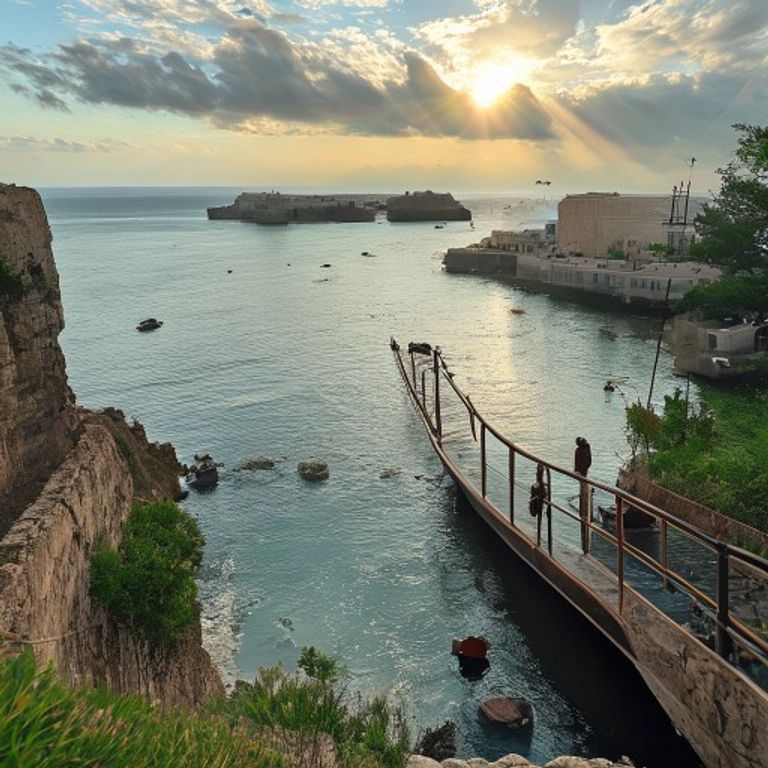
This municipality in the State of Pernambuco holds literary importance due to its colonial historical accounts and for being the birthplace of several intellectuals who documented the economic formation of sugar mills.
⚠️ Research conducted with the aid of Deep Research is subject to referential ambiguity.
🖥️Clean HTML code using a proprietary tool.
👥 Research by Guilherme Felipe, Curation by Sílvio Lôbo
The Literature of Cabo de Santo Agostinho: Voices, Histories, and the Soul of Pernambuco
Cabo de Santo Agostinho, a historic and strategic municipality on the southern coast of Pernambuco, is more than a geographical landmark of Brazil's discovery by Vicente Yáñez Pinzón in 1500 or a rising industrial hub with the Suape Port Complex. It is also a fertile cultural ground where literature takes root, flourishes, and reflects the complex identity of a people who navigate between the colonial past, African heritage, rural life, and modernity. Although the literary production of Cabo may not have the same national projection as the capital, Recife, it possesses a unique richness, expressed in voices that narrate history, celebrate the landscape, and question the present.
Historical Context and Cultural Cradle
The history of Cabo de Santo Agostinho is an open book. From the arrival of the Europeans, through the Dutch invasions, the presence of sugar mills, and the formation of quilombos like Algodões, the territory accumulates narratives. This historical density is an inexhaustible source for literary creation. Oral tradition, with its legends, folk tales, and songs, precedes and often fuels formal writing, serving as the foundation of a robust cultural identity.
Cabense literature, in this sense, is intrinsically linked to collective memory, the preservation of knowledge, and the affirmation of belonging. It develops in an environment where folklore, popular festivals, and artistic manifestations like maracatu, coco de roda, and ciranda are part of daily life, directly influencing the themes and language of local writers.
Main Authors and Their Legacies
Identifying "great names" in local literary production is a challenge that often reveals the importance of historians and poets who dedicate their lives to their homeland. In Cabo de Santo Agostinho, literature is manifested through figures who delve into the memory, landscape, and social issues of their community:
- Francisco Braz: A historian with profound dedication to Cabo de Santo Agostinho, Francisco Braz is the author of fundamental works such as "História do Cabo de Santo Agostinho," which serves as a pillar for any study on the region. His rigorous research and passion for his homeland make him an indispensable reference for understanding the municipality's past and present.
- Nildes da Paz: A poet who translates Cabense sensibility and experience into verse. Her work, imbued with lyricism, frequently evokes the coastal landscape, local traditions, and human emotions, contributing to the poetic expression of Cabo's identity.
- Aderbal Gouveia: Another important name in Cabense poetry, Aderbal Gouveia, through his writings, captures the essence of local life, natural beauty, and reflections on daily life. His work is a testament to the lyrical richness present in the region.
- Contemporary and Emerging Authors: The local literary scene is dynamic and includes several other writers who, often independently or with the support of local entities, publish poetry, prose, and chronicles. Many of these authors gather in collectives or academies to promote their work and foster reading.
In addition to book authors, it is crucial to mention the figures of popular culture masters, whose oral narratives, songs, and performative poems, such as those of Severino Miguel da Silva (Mestre Miguel) in Maracatu Rural, are living forms of literature that permeate the Cabense imagination.
Literary Movements and Recurring Themes
The literature of Cabo de Santo Agostinho does not strictly adhere to national literary movements but absorbs influences and reinterprets them from a local perspective. There is a strong tendency towards Regionalism, manifested in the detailed description of the landscape (beaches, coconut trees, rivers, sugar mills), customs, and typical dialect.
Historicism is another pillar, with many authors dedicated to rescuing and retelling the events that marked the municipality's formation, from the indigenous peoples to contemporary challenges. Social Poetry and Protest Poetry also find resonance, especially when addressing the urban and social transformations brought about by economic development, such as the expansion of the Port of Suape, and their impacts on the lives of traditional communities.
Recurring themes include:
- Maritimity: The relationship with the sea, fishing, sea legends, and the coastal landscape.
- Afro-Brazilian Heritage: The memory of quilombos, religious and cultural manifestations of African origin.
- Life on the Sugar Mill: The sugarcane cycle, the lives of rural workers, and colonial architecture.
- Legends and Folklore: Ghost stories, local myths, and popular characters.
- Identity and Belonging: The search for a place in the world and the celebration of roots.
Important Publications and Cultural Initiatives
Literary production in Cabo de Santo Agostinho is driven by some publications and, above all, by cultural institutions:
- Historical Works: Books like the aforementioned "História do Cabo de Santo Agostinho" by Francisco Braz are essential references.
- Local Anthologies: Many authors publish in collections organized by institutions or cultural groups, aiming to give visibility to the region's poetic and prose production.
- Academies of Letters: The Academia Cabense de Letras e Artes (ACALA) plays a fundamental role. Founded with the objective of bringing together writers, artists, and intellectuals from the municipality, ACALA promotes culture, encourages literary creation, organizes events, and publishes works by its members, serving as a beacon for local intellectualism.
- Literary Fairs: The organization of events like the Feira Literária do Cabo de Santo Agostinho (FLICAB) is vital for bringing books closer to the public, promoting exchange between authors and readers, and fostering reading and writing in the municipality.
- Local Newspapers and Magazines: Although not always exclusively focused on literature, local newspapers and magazines often provide space for chronicles, poems, and short stories by Cabense authors, serving as an important dissemination channel.
Cultural Identity Reflected in Books
The literature of Cabo de Santo Agostinho is a mirror of its multifaceted and vibrant cultural identity. It reflects the resilience of a people who built their history at a crossroads of civilizations, where the sacred and the profane, the old and the new, the rural and the urban coexist.
Cabense books bring to the surface the beach-dweller's soul, with its rhythmic speech and seafood-rich cuisine. They reveal the strength of popular faith, expressed in processions and religious festivals. They document the memory of slavery and the struggle for freedom, present in quilombola culture. And, more recently, they confront the paradox of development: the progress brought by the port and industry versus the need to preserve nature and traditions.
By reading the literature of Cabo de Santo Agostinho, the reader not only unravels narratives but also immerses themselves in the essence of Pernambuco, realizing how the locality, in its uniqueness, dialogues with major human and historical issues. It is a literature that, although often of local reach, possesses the universality of feelings and the strength of truth of a place.
Conclusion
The literature of Cabo de Santo Agostinho, although perhaps still in the process of consolidating a unified voice and greater external projection, is an invaluable cultural heritage. It is the guardian of memory, the chronicler of the present, and the visionary of the future of a region of profound historical and social relevance. The Cabense authors, historians, and poets, with the support of institutions like ACALA and events like FLICAB, continue to weave the rich literary tapestry of the municipality, ensuring that the stories, verses, and reflections on Cabo de Santo Agostinho remain alive, vibrant, and accessible to future generations. It is in the valorization of these local voices that the true strength and authenticity of Brazilian literature lie.





