



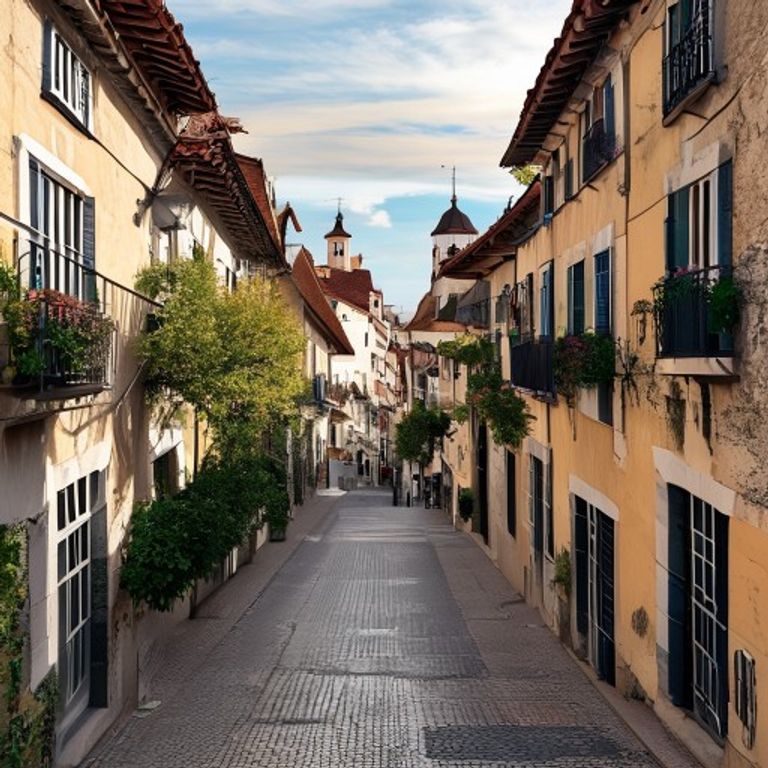
This municipality in the State of Pará stands out for its rich oral and religious tradition, influencing writers who seek the essence of their prose and poetry in the Marujada and the legends of the northeastern Pará.
⚠️ Research elaborated with the aid of Deep Research is subject to referential ambiguity.
🖥️ Clean HTML code with the use of a proprietary tool.
👥 Research by Guilherme Felipe, Curation by Sílvio Lôbo
The Transmontane Soul in Verses and Prose: A Critical Look at Bragança's Literature
Bragança, a land of grand landscapes and a people forged by resilience and tradition, boasts a rich and multifaceted literary heritage, an intrinsic reflection of its Transmontane cultural identity. Far from being just a backdrop, the region of Bragança, with its imposing mountains, its mighty rivers, and the ancestral wisdom of its people, serves as a cradle and muse for a pleiad of authors who, born or settled in its soil, have woven narratives that echo the soul of this land. This essay seeks to unravel the layers of this literary production, exploring its main exponents, historical movements, significant publications, and its deep connection with local cultural identity.
Essential Authors and Their Transmontane Voices
Bragança's literature is marked by voices that have masterfully captured the essence of the region. Among the names that deserve attention, we find:
- Miguel Torga: Although his work transcends regional and national borders, Miguel Torga (Adolfo Correia da Rocha) has his roots deeply planted in São Martinho de Anta, in the municipality of Vila Real, but his influence and admiration in Bragança and throughout Trás-os-Montes are undeniable. His diaries, poems, and short stories, such as those found in "Diário" and "Contos da Montanha," celebrate the land, the simple man, the wild nature, and the struggle for dignity, elements intrinsically linked to the Transmontane imagination. His rustic and poetic prose, charged with a primordial force, resonates with the harshness and beauty of Bragança.
- José Saramago: Even though his work has universal reach, Nobel laureate José Saramago held a special affection for Bragança and Terra Fria. In his works, such as "Memorial do Convento" or "The Gospel According to Jesus Christ," one can perceive a sensitivity towards rural landscapes, popular traditions, and narratives from a time that seems frozen in the heart of the mountains.
- Manuel António Pina: A poet and essayist, Manuel António Pina, although born in Coimbra, had a strong connection with the region, where he developed part of his work and literary research. His poetry, marked by melancholy, existential reflection, and musicality, dialogues with the silences and introspection that the vastness of Bragança can inspire.
- Luís de Camões: Although not originally from Bragança, the passage of the Portuguese epic poet through the region, especially in the context of the War of Restoration, left its mark on his work. Descriptive elements and geographical references can be traced, albeit less explicitly, in his poems.
- Contemporary Authors: Bragança continues to be a breeding ground for talent. Authors like Arnaldo Pires, with his prose that explores Transmontane memory and identity, or Leonor Louro, with her poetry that evokes the strength of nature and human relationships, represent the literary vitality of the region. The list of active contemporary authors is extensive and deserves further in-depth study, including names of poets, short story writers, and novelists who continue to enrich Bragança's literary landscape.
Literary Movements and Significant Publications
Bragança's literary history, as in other regions, is not defined by strict and isolated movements. However, it is possible to identify trends and publications that have shaped the literary panorama over time.
Portuguese Modernism, with its search for new forms of expression and the valorization of national identity, found an echo in Bragança. Authors like Miguel Torga, in his early phase, were influenced by this effervescence, seeking a more authentic language rooted in local reality.
Neo-realism also left its mark, with a concern for portraying the lives of the people, social difficulties, and injustices. The harshness of rural work, emigration, and power relations in rural communities were recurring themes.
In terms of publications, various local magazines and newspapers played a crucial role in promoting new talents and perpetuating literary culture. From 19th-century publications to contemporary literary journals, these periodicals serve as showcases for Bragança's production. The magazine "O Mensageiro de Bragança", for example, throughout its decades of existence, has been an important vehicle for disseminating literary, historical, and cultural texts from the region.
Books by Bragança authors, such as collections of short stories that explore local legends and customs, or novels that depict rural life and social transformations, represent important milestones. The publication of works that delve into the history of Bragança, its castles, and its traditions also contributes to the consolidation of a regional literary identity.
Local Cultural Identity Reflected in Books
The strength of Bragança's literature undoubtedly lies in its deep connection with local cultural identity. Trás-os-Montes, with its unique character, is more than a backdrop; it is a living character on the pages of books.
- Wild Nature and the Land: The Transmontane landscape, with its austere mountains, deep valleys, rivers, and wild vegetation, is constantly evoked. The relationship between man and the land, hard work in the fields, the force of natural elements, and the ancestral wisdom passed down through generations are central themes.
- The People and Their Customs: Literary characters often embody the resilience, frugality, solidarity, and popular wisdom of the people of Bragança. Legends, superstitions, popular festivals, proverbs, and orality are elements that enrich the narratives, giving them authenticity.
- Memory and History: Bragança's literature is also a guardian of collective memory. The exploration of the past, the struggles, the traditions, and the social changes that have shaped the region is an important thread. The history of Bragança, with its medieval legacy and strategic importance, often serves as inspiration.
- Language and Orality: The musicality of the Transmontane speech, with its characteristic accents and expressions, is often reflected in prose and poetry. The valorization of orality, of stories told by the fireside, lends an authentic and emotional tone to the literature.
- Struggle and Hope: Despite the harshness of many depicted landscapes and living conditions, Bragança's literature also carries a strong element of struggle for dignity and perseverance. Hope, even in difficult times, is a feeling that pulses between the lines.
In summary, Bragança's literature is a multifaceted mirror of the Transmontane soul. Through the work of its authors, we perceive the strength of nature, the wisdom of the people, the richness of traditions, and the permanence of a culture that, despite adversities, flourishes in every verse and on every page. To study Bragança's literature is to immerse oneself in a universe of deep meanings, where local identity manifests itself in its purest and most authentic form.





